Case notes
A grocery-anchored listing is not a LoopNet slot and a one-page PDF.
Most grocery-anchored neighborhood centers go to market as a portal slot and a one-page flyer. A tenant-rep who opens that file still has to call for availability, co-tenancy, and any demographic that was not sourced. The first conversation restates facts that should have been on the page.
Marbella Plaza is that asset class. 66,124 square feet, open-air, built 1992, twenty-seven tenants, at 31103–31115 Rancho Viejo Road, San Juan Capistrano, CA 92675. Anchored by Irvine Ranch Market. Dining includes Sol Agave, Limoncello, Totoya Sushi, and The Olives Branch. 493 feet of frontage on Rancho Viejo Road, with I-5 visibility. Inline space on the market as of this writing, NNN, rate upon request. Suites, sizes, and dates live on the listing, not in this note.
This note walks what shipped — shoot, site with live availability, flyer, listing line — and why a tenant-rep can underwrite from the listing without a first call.
What the default package asks the reader to do
What the tenant-rep is doing: eliminating. They have a size, a use, and a timing. They need the vacancy named, the neighbors named, the plan labeled, and the trade area sourced.
Where this work fails: availability in the broker's head, a site plan with no vacancies marked, demographics with no source, a sign that dumps a driver into a portal search. Shopping center marketing fails in the same place. A single-property website is the file that holds those facts in one URL the portals cannot format for you.
What shipped
The public case page states the production calendar: one half-day on site, aerial, ground, and 3D, live in five business days. That is the timeline we will stand behind here.
Photography. Ground coverage of the center, courtyard, and available suites. Aerials of the six-building layout, the Rancho Viejo frontage, and the freeway. 3D walkthroughs of the vacancies. A short property film on the listing. The photographs have to answer whether the storefronts read from the court and whether the vacant inlines are leftover bays or ordinary shop space.
The site. Live at endcap.design/listing/marbella. Suites, sizes, and dates live on that page so this note cannot go stale. NNN. Rate upon request. A site plan with vacancies marked. Co-tenancy named. Trade-area figures as published on the listing — 217,166 residents, $188,995 average household income, and 32.2% of households earning $200K+ inside five miles, sourced there to US Census ACS 5-Year 2018–2022. An inquiry form that routes to the listing team with the suite attached.
The flyer. The document a broker actually forwards. Same design system as the site, hosted at a stable URL on the listing. Anatomy is in flyer design.
The flyer is a door. The page is the underwrite.
The listing line. A property-specific leasing sign: center name, enough size to be useful at a glance, a number a driver can read from Rancho Viejo Road. The destination is the listing URL.
Ordinary inline vacancies. That is the point. This package is not reserved for a flagship disposition. It is what this asset class usually under-packages.
What the tenant-rep can finish from the link
Open the listing. Confirm the vacant suites, sizes, and dates. See that both are NNN and that rate is on request. Read who occupies the center. Find the vacant suites on the plan. Walk the interiors in 3D. Check the five-mile figures, source on the same page. Download the flyer. Inquire on a specific suite.
If a competent tenant-rep still has to call to learn which suite is deliverable, or who the grocer is, the package did not ship. This note does not claim that either suite leased, that inquiries arrived in any volume, or that the site closed anything. Those figures are not public.
The pattern underneath
An owner of a neighborhood center is deciding whether go-to-market is a portal slot plus a PDF, or a single link a tenant-rep can work from. The first is cheaper on day one and more expensive in broker hours. The second front-loads production — a half-day shoot, a site that can hold live availability, a flyer that matches it, a line on the building — and then stops answering the same four questions. The specimen is live. Use it as a document, not as a sales page.
Common questions
Does a grocery-anchored center need its own listing site, or is LoopNet enough?
LoopNet is a slot. A tenant-rep who opens a portal listing and a one-page flyer still has to call for availability, co-tenancy, and any demographic that was not sourced. A single-property website is the file that holds those facts in one URL the portals cannot format for you. The first conversation should not restate facts that should have been on the page.
What has to be on the page before a tenant-rep will stop calling?
The vacancy named, the neighbors named, the plan labeled, and the trade area sourced. Suites, sizes, and dates. NNN, rate on request. Co-tenancy. The vacant boxes marked on the plan. Interiors they can walk in 3D. Five-mile figures with the source on the same page. A flyer to download. An inquiry form that carries the suite. If a competent tenant-rep still has to call to learn which suite is deliverable, or who the grocer is, the package did not ship.
How long does a package like this take?
One half-day on site — aerial, ground, and 3D — then live in five business days, as on the public case page.
Start a project
Have a grocery-anchored center going to market?
Work with Endcap Design
Offering memorandum design
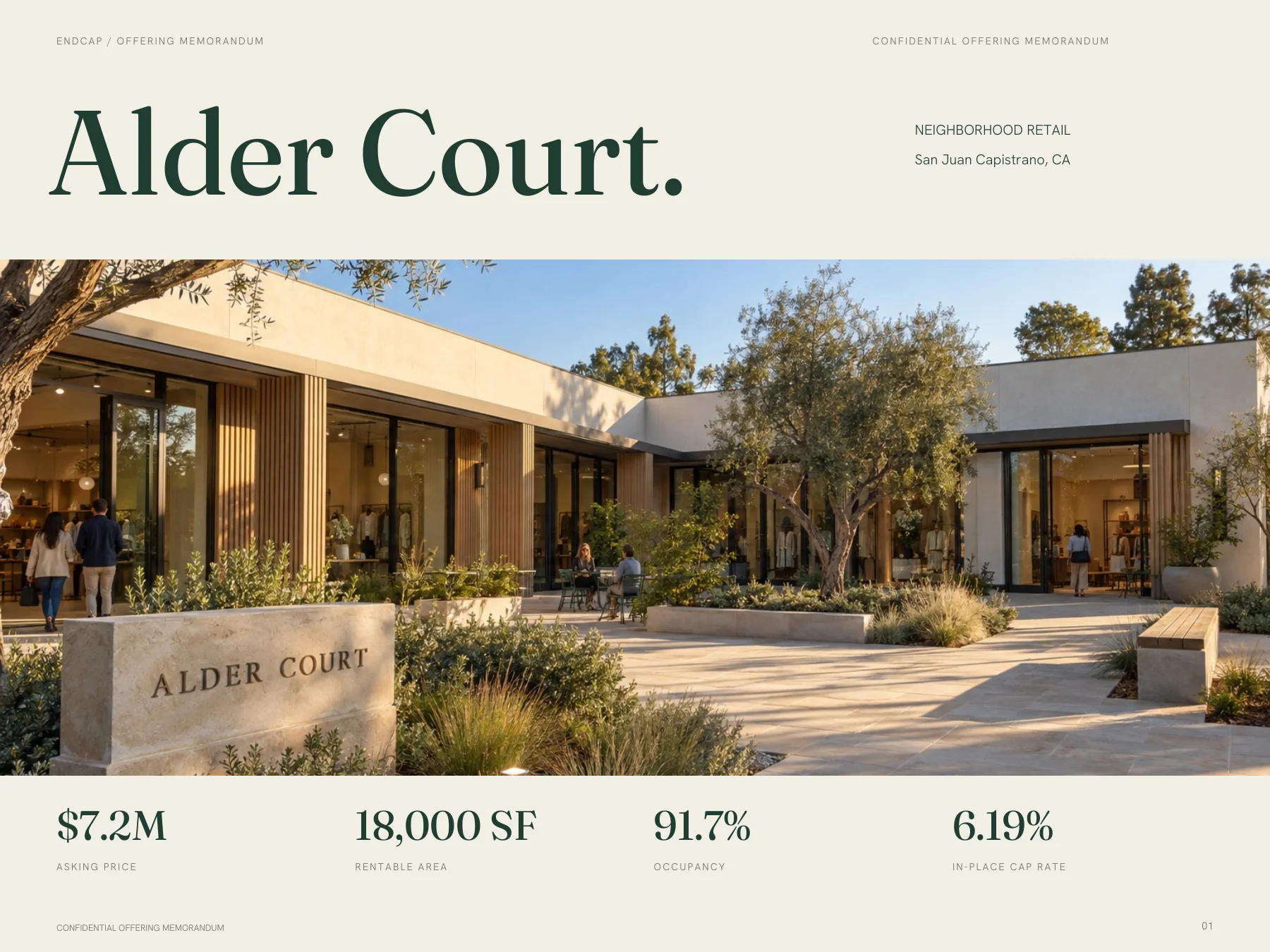
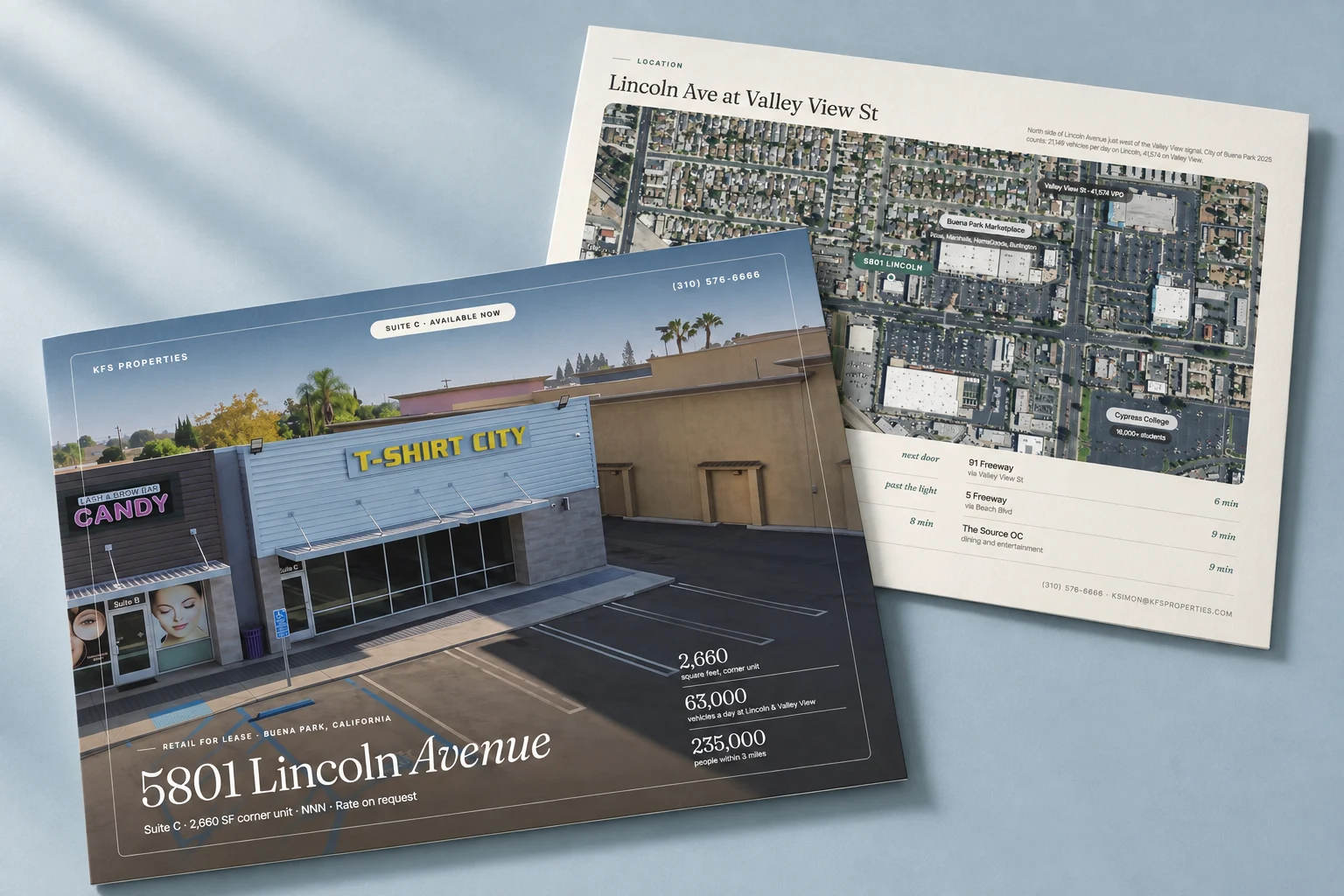
We design offering memorandums, property brochures, and lease flyers from your approved text, photos, plans, rent roll, and financials.
Included
- Up to 12 pages using your approved text, photos, tables, and financials
- Two revision rounds
- Digital and print-ready PDFs
“The Flyer is all that I need and it is outstanding.”
Quoted per document · Offering memorandums, brochures, and lease flyers
We reply within an hour during business hours, and we only use your details to answer you.
Get a quote for your OMOr call or text Noah at (425) 233-0769
See the full service ↗Contact Endcap
START A
project.
A website, a brand, or a complete set of materials.
We reply within an hour during business hours, and we only use your details to answer you.
Start a conversation or call or text Noah at (425) 233-0769