Insights
Shopping center marketing: filling space and keeping it full.
A shopping center has two audiences that never meet: the tenants you're trying to sign, and the customers you're trying to send them. Marketing a center well means running both tracks at once — and most centers run neither.
Track one: attracting tenants to the center
Vacant retail space doesn't lease on rate alone. A tenant is buying the center's story — the anchor, the co-tenancy, the trade area, the traffic. Leasing marketing that works makes that story impossible to miss:
- Lead with co-tenancy. The first question every retail tenant asks is "who else is there?" Put the anchor and the tenant roster at the front of every asset — the flyer, the listing, the site.
- Show the trade area like you're proud of it. Population, average household income, and drive-time reach in the 1/3/5-mile rings, on a real map. A strong trade area buried in an appendix is a discount you're giving away.
- Photograph the center at its best. Aerials that show access and parking, storefronts with signage legible, and a twilight shot that makes the property feel like a destination rather than a strip.
- Make the availability findable. Portal listings for each space, and one page that carries the whole center — every suite, its size, its status — so a tenant rep can answer their client's questions without calling you twice.
- Help tenants see themselves in the space. A vacant shell reads as a problem; a labeled site plan and a suite presented in context read as an opportunity.
This is the logic behind giving a center its own website rather than scattering it across portal slots — one link that carries the story, the plan, and the numbers together. Our Marbella Plaza case study walks through a real one: a grocery-anchored center in San Juan Capistrano with its availability, trade-area data, and inquiries all on a single dedicated site.
Track two: driving traffic for the tenants you have
The second track is the one landlords skip because it feels like the tenants' job. It isn't — occupancy depends on tenant sales, and tenant sales depend partly on whether the center itself shows up when locals search. The essentials:
- A consumer-facing center website. A directory with every tenant, hours, and directions. When someone searches a tenant's name plus your city, the center's page should be part of the answer.
- A Google Business Profile for the center, claimed and current, with real photos. Local search is the highest-intent traffic a neighborhood center will ever get, and it's free.
- Tenant pages that link out. Every tenant gets a page — which also means every new lease adds content that strengthens the site's local search presence.
- Seasonal touchpoints, kept honest. Holiday hours, a new-tenant announcement, an event if the center genuinely holds one. No manufactured community theater — just current, accurate presence.
A center website does double duty: the same directory that serves shoppers proves co-tenancy to prospective tenants.
Where the two tracks meet
The trick most center marketing misses is that the tracks reinforce each other. A consumer site with strong local traffic is evidence in a leasing conversation — you're not just telling a prospective tenant the center draws; you're showing them the search visibility they'd be buying into. And a fully-leased, well-presented center raises the comp set for the next negotiation. Presentation compounds.
What this looks like in practice
For a typical neighborhood or community center, the durable marketing stack is smaller than it sounds: one well-built center website serving both audiences (directory and availability), current photography, a claimed Google Business Profile, portal listings for each vacancy, and a leasing flyer that matches the quality of all of it. Built once, maintained continuously — a new tenant, a rate change, a re-shot suite. That maintenance discipline is most of the battle, which is why we build center sites as something we host and keep current, not something we hand off and forget.
Work with Endcap
Have a center that deserves better than a portal slot?
Work with Endcap Design
Property branding
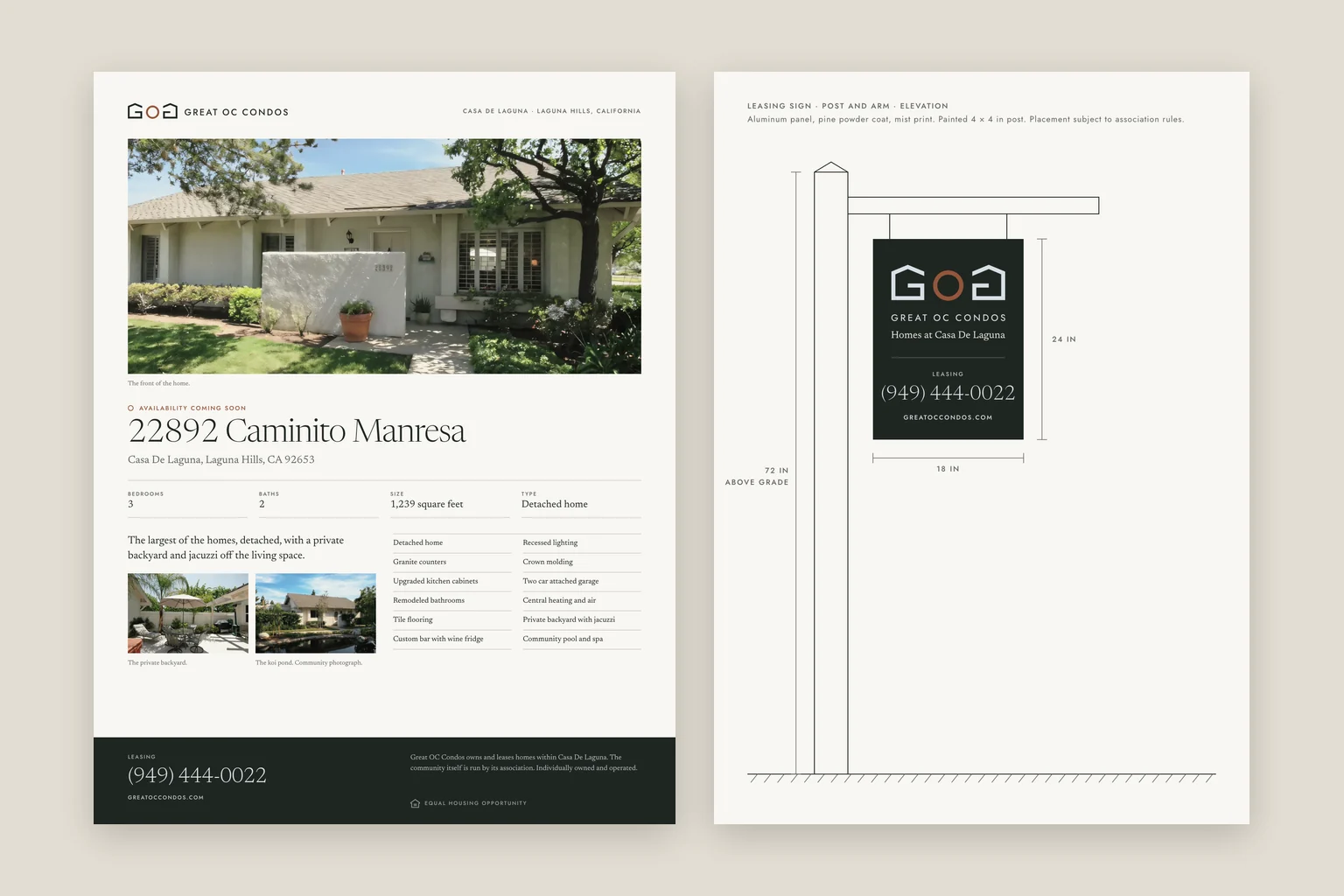
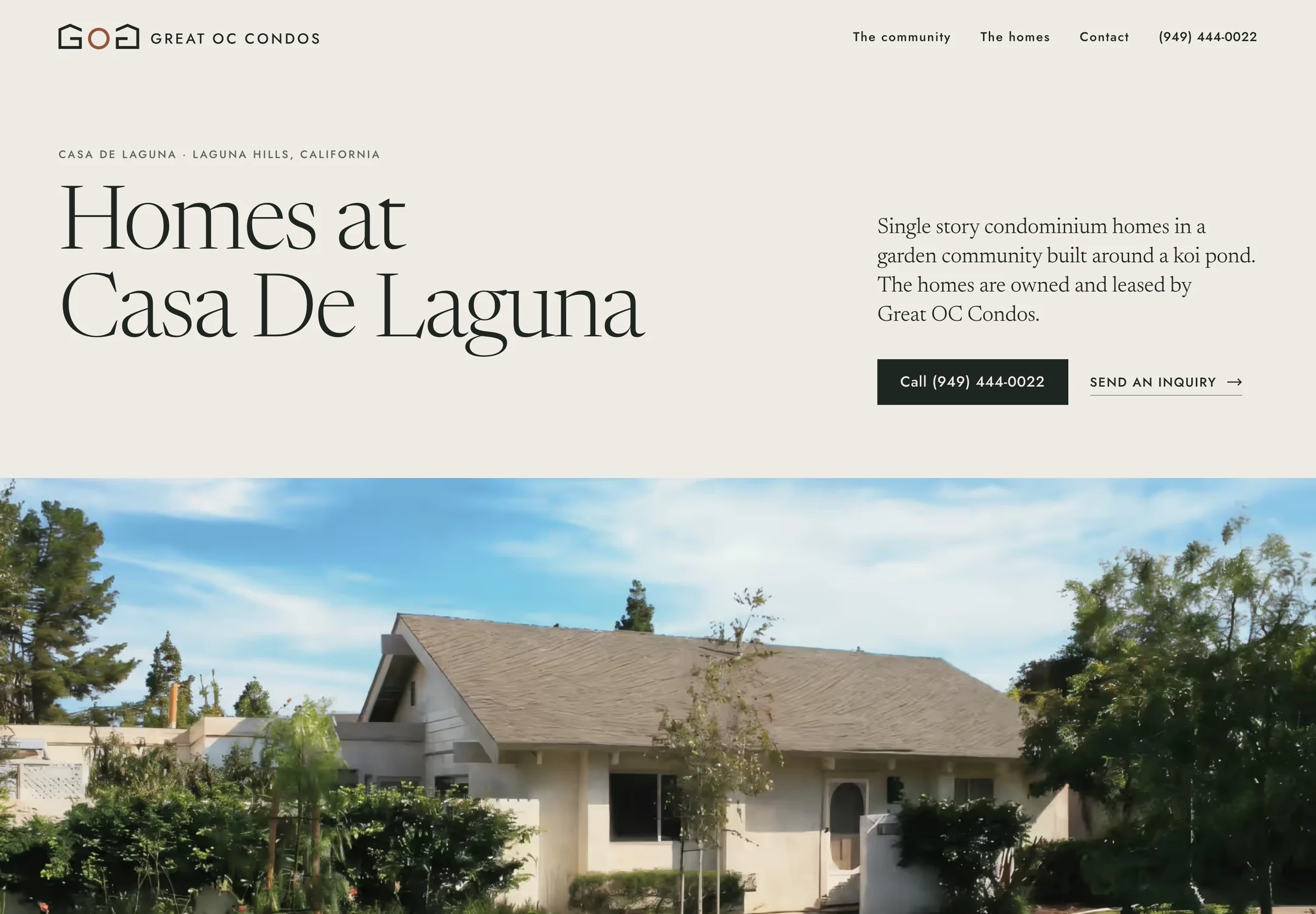
We create property names and identities and apply them to the website, brochure, presentation, or signage artwork.
Included
- A naming shortlist when needed, and the selected mark
- Logo variations, color and type specifications, and a concise guide
- Website, brochure, presentation, or signage artwork as agreed; fabrication stays with your sign contractor
“We own ten homes at Casa De Laguna and were still sending people to a site built in 2013. Noah pulled the photos and details out of the old site, designed a logo from the rooflines and the pond, and put the community, the homes and current availability in one place. It’s the first time the website has looked like the place we actually rent.”
Quoted for each property after we review the existing identity and where the design needs to appear
We reply within an hour during business hours, and we only use your details to answer you.
Discuss branding for your propertyOr email Noah at hello@endcap.design
See the full service ↗Contact Endcap
LET’S
talk.
A website, a brand, or a complete set of materials.
We reply within an hour during business hours, and we only use your details to answer you.
Let’s talk or email Noah at hello@endcap.design