Services · Documents
Offering memorandums and lease flyers.
The PDF attached to the email is still how most commercial deals get screened. It gets opened on a phone, skimmed in under a minute, and forwarded or deleted. We design the document that survives that.
What we produce
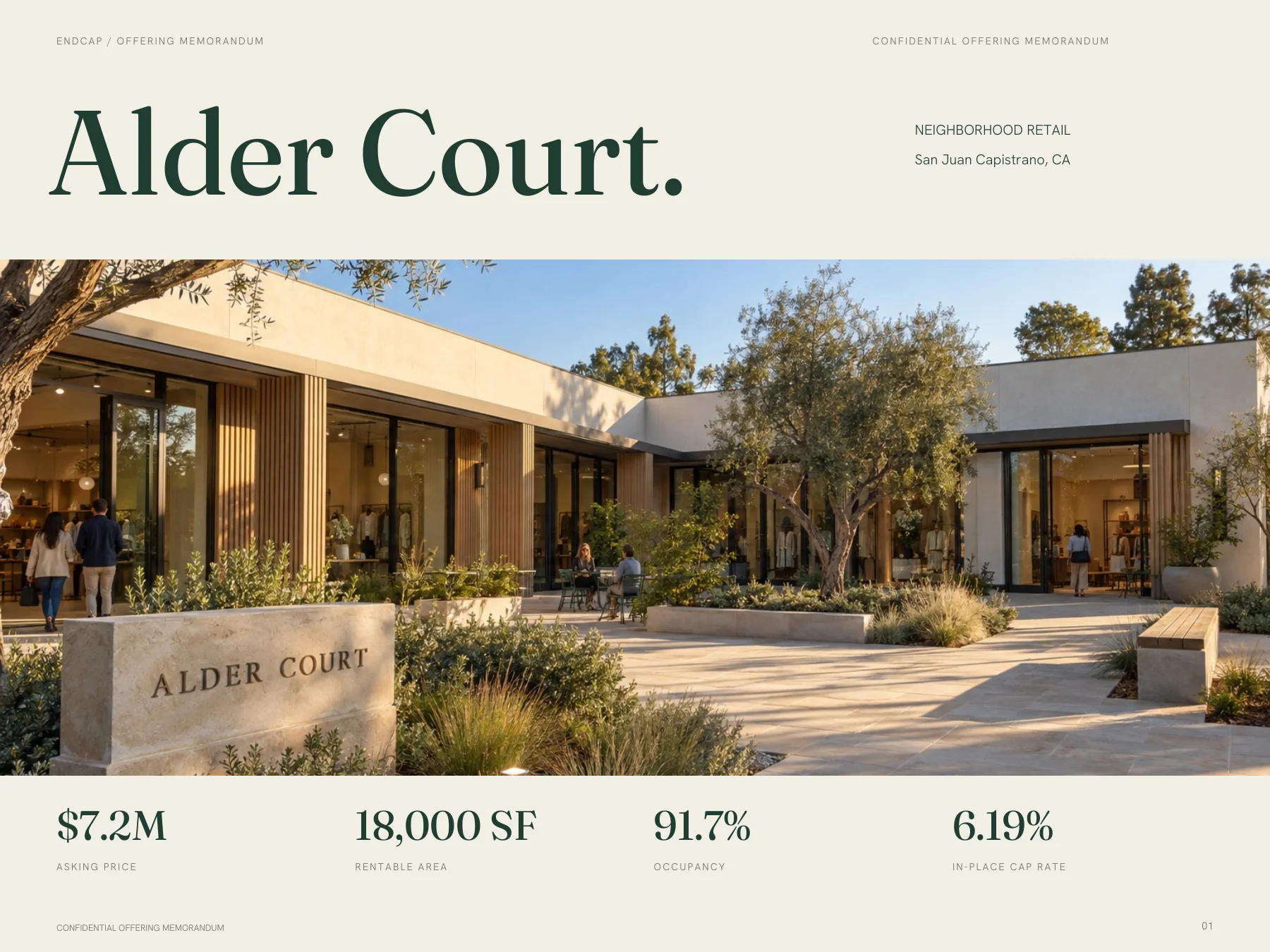
- Offering memorandums. The full investment package — asset summary, tenancy and rent roll, financials, trade area, and offering terms, laid out so a buyer can screen it quickly.
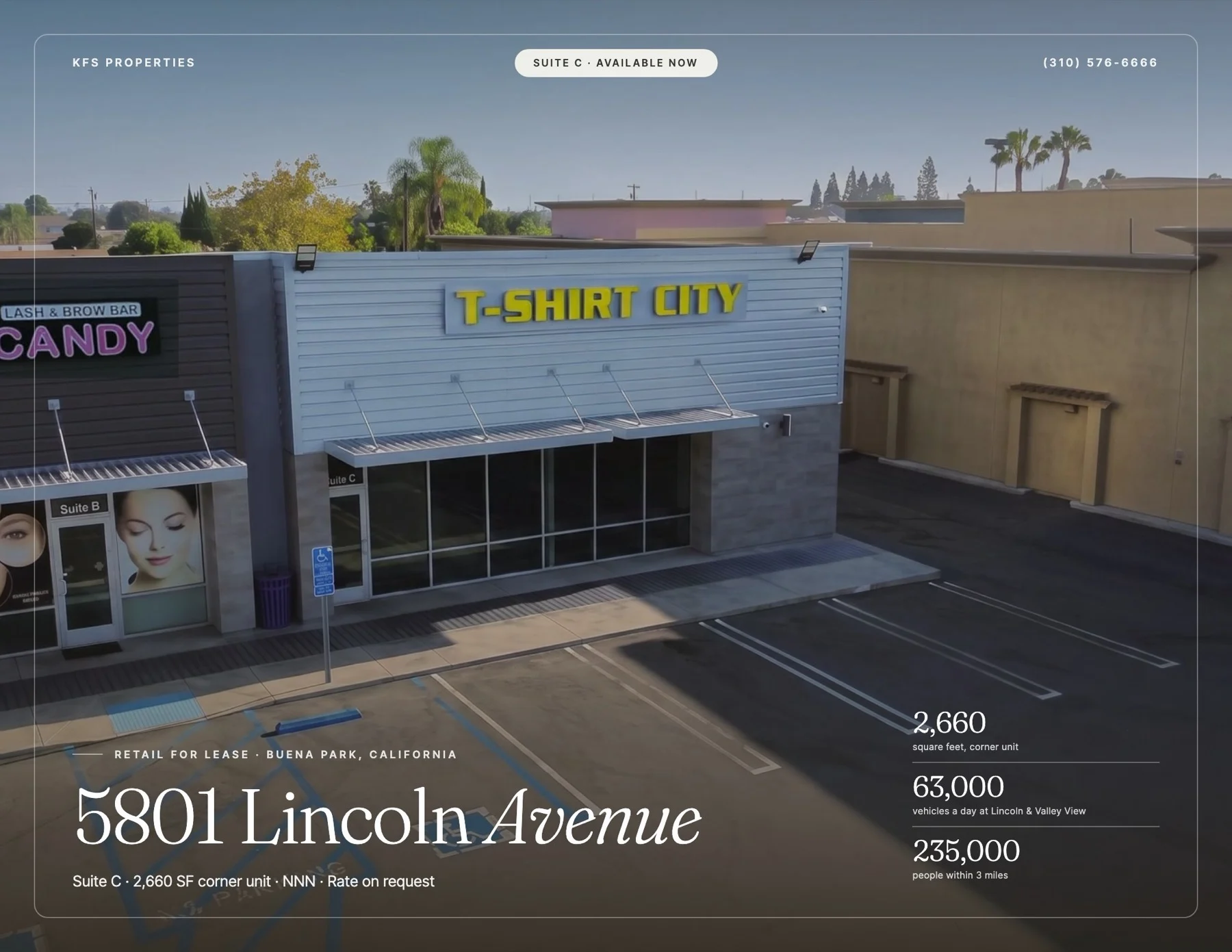
- Lease flyers. One or two pages per availability: the space, the plan, the numbers a tenant rep screens on, and how to reach you.
- Leasing brochures. Multi-page books for a center or a portfolio, with the site plan and suite-by-suite availability.
- Tour books. What the client walks out with after a tour, or what gets left on the counter.
- Listing presentation decks. The pitch you bring to win the assignment in the first place.
What makes one work
Most OMs fail in the same three ways. The first page buries the asset under a stock skyline. The rent roll is a screenshot of a spreadsheet, pasted at whatever size it landed. And the trade-area section is three census numbers in a gray box, which tells a buyer nothing they couldn't have looked up.
What we do instead: put the property and the headline terms on page one, typeset the rent roll properly so it's legible on a phone, and turn the demographics into a map you can actually read. None of that is exotic — it's just the difference between a document a buyer works through and one they close.
Built from the photography, not around it
Because we shoot the property ourselves, the document isn't assembled from whatever images happened to exist. The aerial that anchors page one, the suite photos in the availability section, and the twilight shot on the cover all come from the same shoot, which is why the whole package looks like one thing. If you already have photography, we'll use it.
The same files then carry into the LoopNet and Crexi listing and the property website, so the second and third deliverable cost a fraction of the first.
What it looks like
The 5801 Lincoln case study includes a co-branded seven-page flyer produced alongside the listing site and the annotated trade-area aerial — brief to delivered in three days. Marbella Plaza shows the fuller version for a grocery-anchored center.
How it works
- Send what you have. Rent roll, financials, any existing photography, and your brand files if the firm has them.
- We design and lay it out. First draft back in a few days for most documents; you review in PDF and mark it up.
- You get both formats. Print-ready and a compressed version sized to actually send by email, plus the working files.
What we need before we start
- The rent roll. Whatever format it lives in — a spreadsheet, a PDF from the property manager, an export. We will normalize it. What we cannot do is invent it, and it is the single most common reason a document sits waiting.
- Financials. Operating statement, expense summary, and whatever returns you want presented. You own the numbers; we lay them out.
- Photography. Yours or ours. If there is none, that is a shoot first, because a document built from three phone photos will look like one no matter how it is designed.
- Your brand files. Logo, fonts, and any house template. If the firm has none, we build a format for this deal you can reuse on the next one.
How the draft cycle runs
First draft back in a few days for most documents, as a PDF you can mark up. We expect one substantive round — usually numbers that moved, a suite that leased, a photo you would rather lead with — and one light round for typos and final terms. Two rounds are included.
The thing that actually slows an OM down is not design. It is waiting on a rent roll, or a deal term that changes twice while the document is being built. If you know the numbers are still moving, tell us and we will build the layout around the parts that are settled.
What you get
Two PDFs: a print-ready version at full resolution, and a compressed one small enough to actually attach to an email without bouncing. Both are yours. If you want the working files so an in-house designer can update a suite next quarter, you get those too.
Where we draw the line
We design and typeset the numbers you give us. We do not underwrite the deal, build the model, or advise on price — that stays with you or your analyst. If a number looks wrong to us we will flag it, but the figures in the document are yours.
Common questions
What is an offering memorandum?
The document a broker sends prospective buyers of an investment property — asset, tenancy, financials, trade area, and offering terms in one place, so a buyer can screen the deal before asking for the data room.
How long does one take?
A few days to a week once we have the numbers and photography. A single-page flyer can be back in a day or two. The wait is almost always the rent roll, not the design.
Can you work in our template?
Yes. If the firm has a house format we work inside it; if not, we build one you can reuse.
Do you handle the financials?
We design and typeset the numbers you provide. We don't underwrite the deal — that stays with you or your analyst.
Related reading: what makes a commercial flyer work and how to present trade-area data.