Websites
Single-property websites: what they include and when to build one.
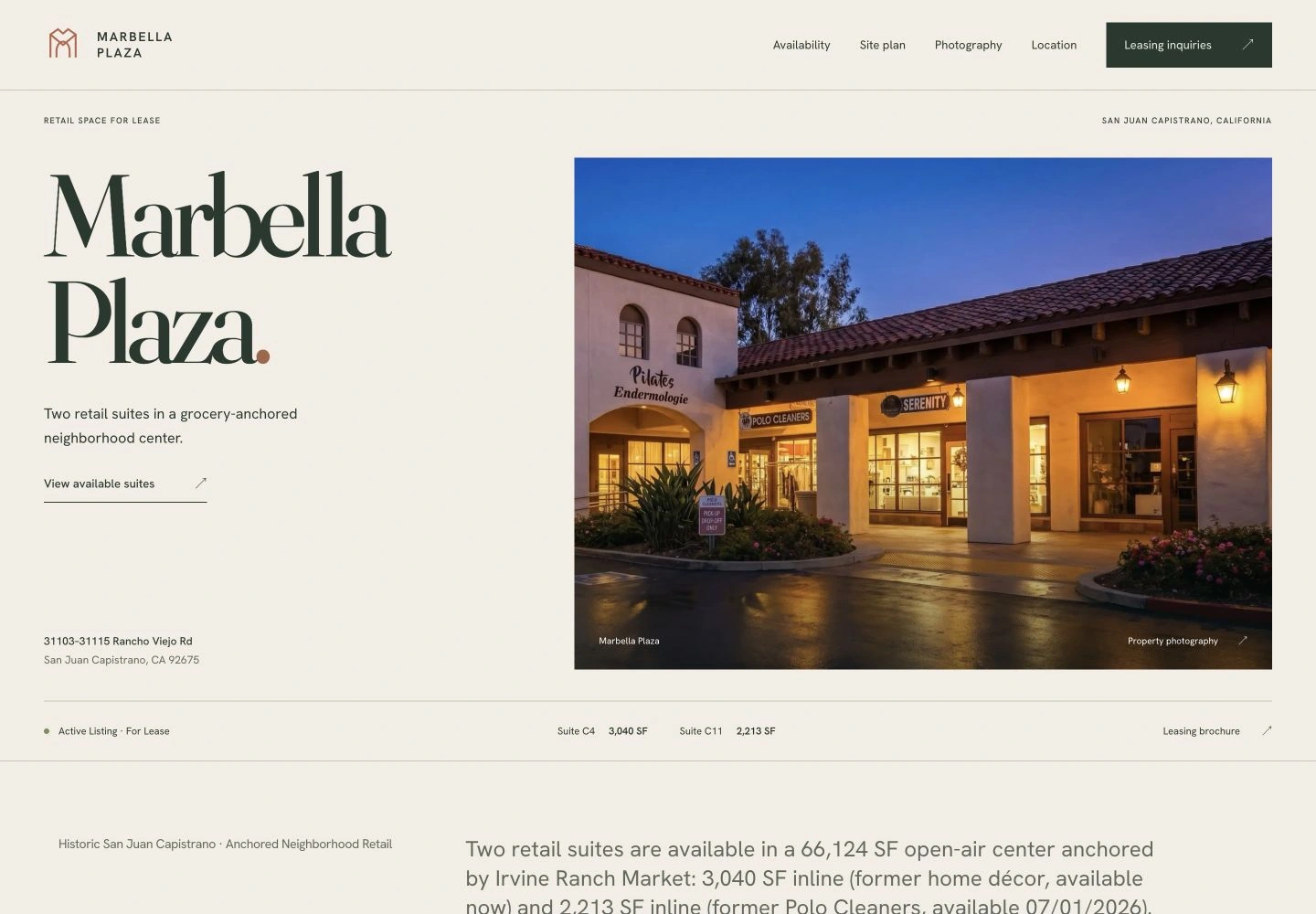
A single-property website gives one property a dedicated place for photographs, available spaces, plans, documents, and inquiries. Marbella Plaza shows how those pieces work together for a shopping center.
What is a single-property website?
It is a website or dedicated section for one building, shopping center, development, or other property. It can use its own domain or a stable address under an existing site. A brokerage website presents the firm and its inventory; a property website gives one assignment more room.
The first questions are practical: What is available? Where is it? What does it look like? Can I use the space? Who can answer the questions the page cannot?
What Marbella’s website puts in one place.
The property
A recognizable photograph, the name, and the location establish which center the visitor is looking at.
The available spaces
Suite information and plans help a prospective tenant move from the whole center to a particular space.
The next step
The brochure and inquiry path remain close to the listing information, with the property context carried into the inquiry.
Marbella Plaza combines the leasing presentation with the information visitors need about the center. The case study also shows the photography and brochure. Availability may change; the live property page is the place to check current details.
What to include.
- Approved property facts: address, property type, sizes, availability, and relevant terms.
- Photographs and plans: the building, available spaces, access, and layout, with readable captions.
- Location: a useful map and relevant surroundings. Source any market or traffic figures.
- Documents: the current brochure, with a clear download link and version date.
- Direct contact: the listing contact and a form that identifies the property or suite.
- An update process: who supplies changes, who publishes them, and what ongoing work costs.
Features such as an interactive plan, film, or a tenant directory depend on the assignment. They should earn their place by answering a visitor’s question.
A website alongside the portal listing.
Portals help people discover available properties. The dedicated website gives you control of the presentation and a stable destination for emails, signs, and brochures. Keep the key facts consistent across both. See our comparison of commercial real estate listing sites for the different roles.
Analytics can report recorded visits and inquiries, subject to privacy choices, blocking, and the tracking setup. Agree on what will be measured; page views alone do not establish leasing demand.
When the work is justified.
A dedicated site can be useful when a property has several spaces, substantial plans and documents, a long marketing period, or a story that needs more explanation than a portal page allows. A straightforward vacancy with sufficient portal information may need a smaller package.
A website supports a leasing campaign. It does not establish the asking terms, create demand on its own, or guarantee a faster lease.
Scope and pricing.
Endcap quotes each single-property website after a short conversation, using your approved photos, plans, and copy. Photography, film, branding, and interactive features are scoped separately. The proposal lists the build cost and any hosting or ongoing charges. See the current scope and pricing.
Before starting, send the property information, existing media, required documents, and intended launch date. We identify what can be reused and agree on the remaining work.
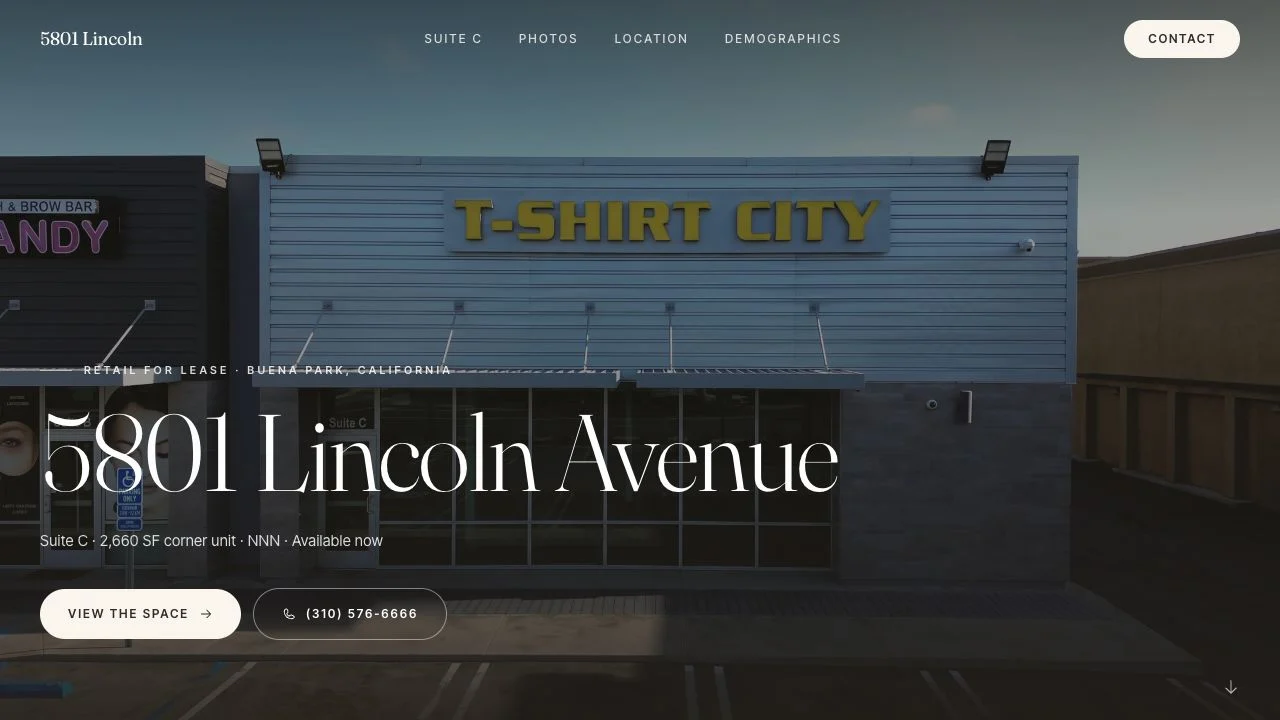
Discuss a property website or see a smaller project at 5801 Lincoln.
Work with Endcap Design
Property websites
We build a website for one property: your photo gallery, property facts, plans, brochure download, and a broker inquiry form.
Included
- Your photo gallery, property facts, plans, and brochure download
- A broker inquiry form and a layout for desktop and mobile
- Many sites launch in about a week once the material is ready
“We own ten homes at Casa De Laguna and were still sending people to a site built in 2013. Noah pulled the photos and details out of the old site, designed a logo from the rooflines and the pond, and put the community, the homes and current availability in one place. It’s the first time the website has looked like the place we actually rent.”
A one-page property website using your approved content · Two revision rounds
We reply within an hour during business hours, and we only use your details to answer you.
Get a quote for a property websiteOr email Noah at hello@endcap.design
See the full service ↗Contact Endcap
LET’S
talk.
A website, a brand, or a complete set of materials.
We reply within an hour during business hours, and we only use your details to answer you.
Let’s talk or email Noah at hello@endcap.design