Retail centers
Naming and branding a shopping center.
The name goes on the monument sign, in the lease, on the Google listing, and eventually on every tenant's business card. It is the single piece of a center's marketing that is genuinely expensive to change, which makes it worth deciding carefully before the sign fabricator quotes the job. Here is how we think about naming a center, how to check the name is actually free, and what the identity has to survive once it exists.
A center name is infrastructure
Most naming advice treats the name as a creative exercise. For a retail center it is closer to a utility connection. Once the name exists, it propagates into places that are slow and awkward to correct: the pylon and monument signs, lease documents and estoppels, the property's Google Business Profile, the address line every tenant prints on packaging and invoices, portal listings, the website URL, and the wayfinding people give each other over the phone.
The important consequence is that a good part of the switching cost lands on your tenants, not on you. A tenant who has printed the center name on menus, vehicle wraps, and their own Google listing is paying for your second thoughts. Treat the naming decision the way you would treat a parking field restripe: reversible in theory, disruptive in practice.
What actually makes a name work
We have watched enough sign calls and tenant tours to have a short list of tests that matter, and they are unglamorous.
- It survives the phone call. A broker will say the name out loud before anyone reads it. If the listener cannot spell it from hearing it, you have signed up for a lifetime of spelling it, and for prospects landing on the wrong search result.
- Place beats invention. Cross streets, neighborhoods, historic uses, and landforms are how people actually navigate. A name derived from the location does free work every time someone searches for the area.
- It does not promise a tenant mix you cannot hold. "The Shops at" sets an expectation of specialty retail. If the rent roll realistically runs toward a gym, a dental group, and a quick-service pad, the name will read as a stretch to every tenant rep in the corridor.
- It fits the sign at final size. Copy area on a monument sign is limited by your city's sign ordinance, which is public and worth reading before naming rather than after. A long name does not get a bigger sign. It gets smaller letters.
- It looks right with no spaces. The domain, the URL slug, and the social handle all collapse the spaces out. Read the result before you commit, because that string is what people will see in an address bar for years.
The availability pass, before anyone falls in love
Run this before the name gets into a board deck, because a name that has been presented is very hard to take away. None of this is legal advice, and a search is not a clearance opinion. For anything you intend to defend, use a trademark attorney.
- Federal trademark search. Search the USPTO's trademark database for the exact name and close variants in the real estate services classes. If you decide to file, the USPTO's current fee schedule puts the base application at $350 per class, with surcharges that raise it when the filing uses a custom, free-form description of services rather than a pre-approved one.
- State and county records. In California, the Secretary of State's business search covers entity and registered names, and fictitious business name filings sit at the county level. Both are free to check.
- Domain, honestly assessed. If the exact .com is parked at a five-figure ask, decide now whether you can live with the alternative, because you will be printing it on the sign.
- Google Maps, in your own market. Search the candidate name plus the metro. If a center forty minutes away already carries it, your tenants' customers will get routed there, and no amount of design fixes that.
- Your own parcel's existing profile. Older centers frequently already have a Google Business Profile under a prior name, created by Google or by a passerby. Find it before you launch a new name, or you will be competing with your own listing. We cover the claim-and-clean process in Google Business Profile for shopping centers, including why Google's guidelines for representing your business require the real-world name and prohibit stuffing keywords or taglines into it.
Renaming a center that already has one
Sometimes the rename is right: a repositioning, a major redevelopment, a name that has collected a bad local reputation. When it is right, sequence it so the people who bear the cost hear it first.
Notify tenants before anything public happens, with a date and a clear statement of what changes for them and what does not. Update the Google Business Profile next, then the portal listings, then the website, and put the physical sign last, because the sign is the slowest and most expensive piece to redo if the plan shifts. Keep the old name findable for at least a year: one honest line on the site, "formerly known as," captures the searches that will keep arriving long after the vinyl is gone.
The web side of a rename is the same discipline as a firm rename, and the failure modes are identical. Our walkthrough of that work is in rebranding without losing your search traffic: inventory the URLs first, map one-to-one redirects, and expect a long tail of profiles and directories that still carry the old name months later.
One caution from experience. A rename does not fix a leasing problem whose real cause is co-tenancy, rate, or visibility. If the center is not leasing, diagnose that first. A new name on an unchanged asset buys a quarter of attention and then the same conversation resumes.
The identity has three surfaces, in this order
Center identities go wrong when they are designed on a screen for a screen. The order of importance is the order in which a prospective customer meets the center.
- The monument or pylon sign, read at driving speed. This is the primary application. One color that can be cut in vinyl, painted, and backlit without shifting. No gradients, because channel letters and painted panels do not render them. No fine detail that disappears at fabrication scale.
- The tenant directory and site plan. The name sits alongside a dozen tenant logos it was not designed with. It needs to hold its own in a small panel next to a national brand's mark, and the suite numbering on the directory has to match the suite numbering in the lease and on the leasing site. Mismatched suite labels are the most common self-inflicted confusion we see on centers.
- The screen. Last, not first. The wordmark has to stay legible at roughly 320 pixels wide, which is the practical narrow end of a phone viewport, and it has to work as a favicon at sixteen pixels square.
The name will outlive the ownership, the leasing team, and three versions of the website. Design it for the sign first and the screen second.
A useful constraint: if the identity only looks good composited over photography, it is not an identity, it is a poster. The mark has to work in one flat color on a white directory panel, because sooner or later that is exactly where a fabricator will put it.
What this looked like on our own work
We did not name Marbella Plaza, and we would not claim otherwise. The 66,124 SF grocery-anchored center in San Juan Capistrano came to us already named, which is the normal case in retail: most centers arrive with a name attached to the sign, the leases, and the local vocabulary. The work was making that existing name behave consistently everywhere it appears online, which is a smaller job than naming and a more common one. The URL, the page titles, the tenant directory, and the labeling on the site plan all use the same name in the same form, and the suite designations on the site match the ones on the plan, so a tenant rep reading the site and a broker reading the rent roll are talking about the same space. The build is written up in the Marbella case study.
The opposite case is worth stating plainly, because plenty of owners ask for a name that the asset does not need. Suite C at 5801 Lincoln Ave in Buena Park is a 2,660 SF corner unit in a three-tenant strip. It has no name and should not have one. The address is the identifier every tenant rep, every mapping app, and every delivery driver already uses, and inventing "Lincoln Corner Plaza" for a three-tenant building would add a name that nothing else in the world recognizes. We took it brief-to-live in three days with a site and a seven-page flyer, all keyed to the address: the Lincoln case study and the day-by-day build cover how that went together. Small assets need a clear address and a link worth sending, not a brand.
A practical bar
Before you commit a name, we would want all six of these to be true.
- Someone unfamiliar with the property can spell it correctly after hearing it once.
- It reads cleanly at the copy area your sign ordinance actually allows, tested at final size on a printout, not on a monitor.
- The trademark, state entity, and Google Maps searches came back clean in your market.
- A domain you can live with is registered and in your name, not your agency's.
- The mark works in one flat color, at directory scale and at favicon scale.
- Suite numbering is consistent across the lease, the site plan, the directory, and the website on day one.
None of that requires a large budget. It requires deciding in the right order, which costs nothing and saves a sign reorder. If you want the naming, identity, and the leasing site handled as one piece of work rather than three vendors, that is what our services are built around, and the wider leasing context is in shopping center marketing.
Start a project
Naming a center, or fixing one that never settled?
Work with Endcap Design
Property branding
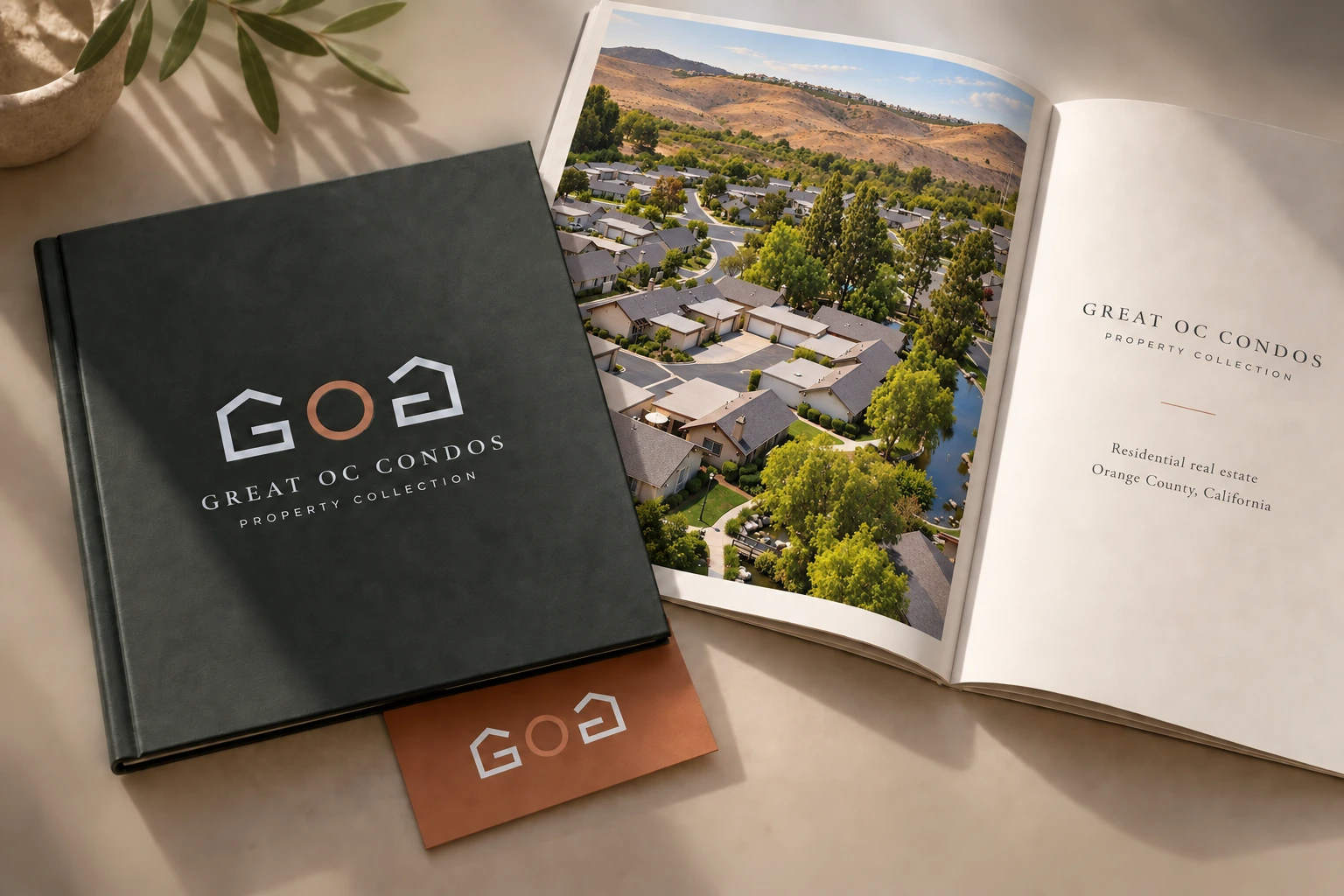
We create property names and identities and apply them to the website, brochure, presentation, or signage artwork.
Included
- A naming shortlist when needed, and the selected mark
- Logo variations, color and type specifications, and a concise guide
- Website, brochure, presentation, or signage artwork as agreed; fabrication stays with your sign contractor
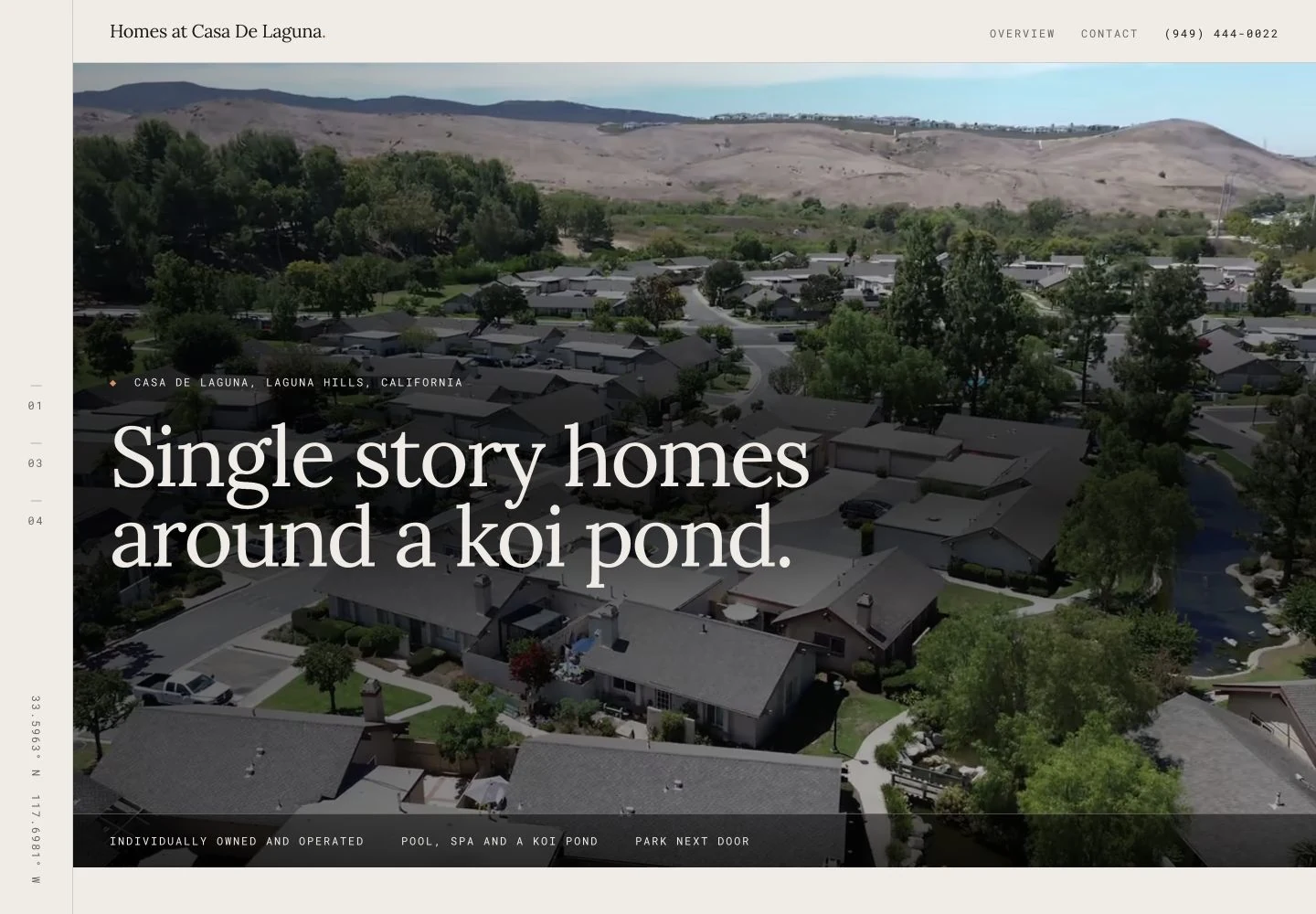
“We own ten homes at Casa De Laguna and were still sending people to a site built in 2013. Noah pulled the photos and details out of the old site, designed a logo from the rooflines and the pond, and put the community, the homes and current availability in one place. It’s the first time the website has looked like the place we actually rent.”
Quoted for each property after we review the existing identity and where the design needs to appear
We agree on the scope, timing, and price with you before work begins.
Discuss branding for your propertyOr call or text Noah at (425) 233-0769
See the full service ↗Contact Endcap
START A
project.
A website, a brochure, or a complete set of materials.
We’ll agree on the scope, timing, and price before starting.
Start a conversation or call or text Noah at (425) 233-0769