City guides / Hartford-West Hartford-East Hartford

HARTFORD web design.

Endcap Design is a web design agency that designs and builds websites for businesses, with the branding and marketing to match, and works remotely with clients outside Southern California. This guide collects the business numbers, building activity, and Connecticut rules we would look at before designing a site for a business in Hartford or elsewhere in the metro, including Middletown and New Britain.

Updated October 2026 with building permits through August 2026, from U.S. Census Bureau data. Sources are listed at the end of this page.

Map of the United States showing Orange County, California, and the cities covered by our city guidesHartfordOrange County

Endcap is based in Orange County, California, and works remotely with clients outside Southern California by video call, phone, and email.

The market

HARTFORD
in numbers.

The figures that shape who a Hartford website is for and what it needs to do. Each figure is the most recent Census release in this guide’s data, with its year shown.

1,171,426

residents in the metro

Census population estimate, July 2025

+3.0%

population change since 2020

April 2020 to July 2025; the US grew 3.1%

28,131

business locations with employees

County Business Patterns 2023

800

real estate businesses

NAICS 531, 2023

228

property management companies

Residential and nonresidential, 2023

1,177

new housing units permitted

January through August 2026

$94,419

median household income

American Community Survey 2024

33%

of households rent their home

154,864 renter households

Business mix

WHO DOES BUSINESS
in Hartford.

Dental offices are the most concentrated of these businesses in the Hartford metro: 48 for every 100,000 residents, and their share of local businesses is 1.24 times the national share. Restaurants and bars follow at 1.12 times the national share. Real estate brokerages are less common here than nationally, at 0.37 times the national share.

The chart compares each sector’s share of Hartford-area business locations with its share nationally (a location quotient). 1.00× matches the US; higher means the sector is more concentrated here. County Business Patterns 2023.

  1. Dental offices565 locations · 48 per 100,000 residents1.24×
  2. Restaurants and bars2,692 locations · 230 per 100,000 residents1.12×
  3. Law offices635 locations · 54 per 100,000 residents1.04×
  4. Specialty contractors1,720 locations · 147 per 100,000 residents0.98×
  5. Self-storage operators60 locations · 5 per 100,000 residents0.96×
  6. Architecture and engineering firms367 locations · 31 per 100,000 residents0.93×
  7. Property management companies228 locations · 19 per 100,000 residents0.86×
  8. Commercial building owners90 locations · 8 per 100,000 residents0.77×
  9. Builders and developers604 locations · 52 per 100,000 residents0.71×
  10. Real estate brokerages204 locations · 17 per 100,000 residents0.37×

Building activity

WHAT’S BEING
built.

New buildings mean new properties to lease and new businesses to open. Census Building Permits Survey, August 2026.

Builders in the Hartford metro were authorized to build 1,177 new housing units from January through August 2026, 52% more than the 775 in the same months of 2025.

63% of those units are in buildings with five or more homes, against 32% nationally.

That is an apartment-heavy pipeline. Each new community needs a leasing website, usually before construction finishes, and the developer often needs a project site for investors and the city as well.

Jan–Aug 2025775
Jan–Aug 20261,177
  • Single-family 359
  • Two to four units 76
  • Five or more 742

What this means for your site

BUILT FOR
Hartford.

What we would plan into a Hartford website, based on the numbers above.

Talk through your site
  1. 01

    Launch before the building opens

    63% of new homes permitted this year are in buildings of five or more units. Pre-leasing websites need to be live months before the first move-in.

  2. 02

    Room for new projects

    Housing permits are up 52% over the same months last year. Each new project needs a name, a site plan, and a pre-leasing page, and the retail around it usually follows.

  3. 03

    Clear service pages

    Dental offices are 1.24 times as concentrated here as nationally. Their sites need clear service pages, the people behind the work, and a contact form that asks the right first questions.

  4. 04

    Privacy notice and opt-outs

    The Connecticut Data Privacy Act (CTDPA) applies to many businesses that collect visitors’ details in Connecticut. A covered site needs a current privacy notice and working opt-out links, and it must honor browser opt-out signals such as Global Privacy Control.

  5. 05

    Accessible by default

    Every site we build follows WCAG 2.2 AA practice: readable contrast, keyboard navigation, labeled forms, and text alternatives for images. Federal ADA website lawsuits run into the thousands each year, most of them filed in New York, Florida, and Illinois.

Connecticut rules

WHAT THE LAW
asks of your site.

State rules that change what goes on a business or real estate website in Connecticut, checked against official sources as of October 9, 2026. This is general information, not legal advice; your counsel owns the final wording.

Worth knowing Since the December 27, 2024 amendment to Regs. Conn. State Agencies § 20-328-5a, every page of a Connecticut licensee's website must show the licensee's licensed name, a phone number or email address, and the date property information was last revised unless it updates automatically from the MLS.

Privacy

Connecticut Data Privacy Act (CTDPA)

Conn. Gen. Stat. § 42-515 et seq. · in effect since July 1, 2023 Source

As of October 9, 2026, the CTDPA applies to persons that conduct business in Connecticut or target products or services to Connecticut residents and that, during the preceding calendar year, controlled or processed the personal data of at least 35,000 consumers, excluding data processed only to complete a payment transaction. It also applies, with no volume threshold, to persons that control or process consumers' sensitive data, other than data processed only to complete a payment transaction, and to persons that offer consumers' personal data for sale. Before July 1, 2026 the thresholds were 100,000 consumers, or 25,000 consumers plus more than 25 percent of gross revenue from selling personal data.

What the website needs
  • From July 1, 2026, the privacy notice must list the categories of personal data processed, the purposes, how to submit rights requests and appeal decisions, the categories of personal data sold to third parties and the categories of those third parties, any targeted advertising or sale for targeted advertising, an active email address or online contact method, whether the controller collects, uses or sells personal data to train large language models, and the most recent month and year the notice was updated (Conn. Gen. Stat. § 42-520(b)(1), as amended by PA 25-113).
  • The privacy notice must be available through a conspicuous hyperlink that includes the word 'privacy' on the website homepage, in each language in which the controller offers the covered products or services, and in a form that is accessible to people with disabilities (§ 42-520(b)(2), as amended by PA 25-113).
  • The controller must provide a clear and conspicuous hyperlink on its website to a page where a consumer or agent can opt out of targeted advertising and the sale of personal data (§ 42-520, as amended by PA 25-113).
  • A controller may not process sensitive data without consent, may not sell sensitive data without consent, and from October 1, 2026 may not sell a consumer's precise geolocation data (§ 42-520 as amended by PA 25-113; PA 26-64).
Real estate advertising

What a Connecticut brokerage site must show

Regs. Conn. State Agencies §20-328-5a; Conn. Gen. Stat. §§20-311(1), 20-312(e)-(g) Source

Connecticut requires a broker to disclose its name in advertising, and since the December 27, 2024 amendment, every page of a licensee's website must prominently display the licensee's licensed name, a phone number or email address, and the date property information was last revised unless it updates automatically from the MLS. Salesperson and associate broker websites must also show the supervising licensee's name and contact information on each page in at least the same font size as the salesperson's.

What the website needs
  • Under Regs. Conn. State Agencies §20-328-5a(c), a broker may not advertise without disclosing the broker's name or let associated persons use individual names, phone numbers or mailing addresses to the exclusion of the broker's name.
  • Under §20-328-5a(g), a salesperson or associate broker advertising on a website must prominently display on each page their licensed name, a phone number or email address, and the last date property information on the site was revised unless it is updated automatically from the MLS; each page must also show the supervising licensee's licensed name in at least the same font size as the salesperson's name, and the supervising licensee's phone number or email address in at least the same font size as the salesperson's contact information.
  • Under §20-328-5a(j), a supervising licensee advertising on a website must prominently display on each page its licensed name, a phone number or email address, and the last revision date of property information unless it updates automatically from the MLS; when advertising jointly with another licensee, the site must show the name, phone number and email address of both.
  • Under §20-328-5a(f) and (i), advertising on social media, an app, text message or email must include the licensee's licensed name, prominently displayed, and a link to a website that meets the website requirements.
  • Under §20-328-5a(e), print advertising by a salesperson or associate broker must include the supervising licensee's name and phone number or email address in the same or a larger font size than the salesperson's contact information.

Accessibility

The federal ADA

ADA Title III Source

Title III of the ADA covers businesses open to the public, but the Department of Justice has no regulation that sets a technical standard for private business websites. DOJ's web guidance says businesses have flexibility in how they make their websites accessible and points to WCAG as a helpful existing technical standard. Federal appeals courts have not agreed on when a website is covered, so a website's legal status can depend on where a lawsuit is filed and whether the site is connected to a physical location. Connecticut has no separate website accessibility statute for private businesses in our research, so WCAG 2.2 AA is the practical target.

What we design

FOR HARTFORD
businesses.

Ordered by how concentrated each kind of business is in the Hartford metro. We design for every kind of business.

Portfolio

RECENT
work.

Websites and identities we have designed and built for our clients. See all of our work.

Client words

IN THEIR
words.

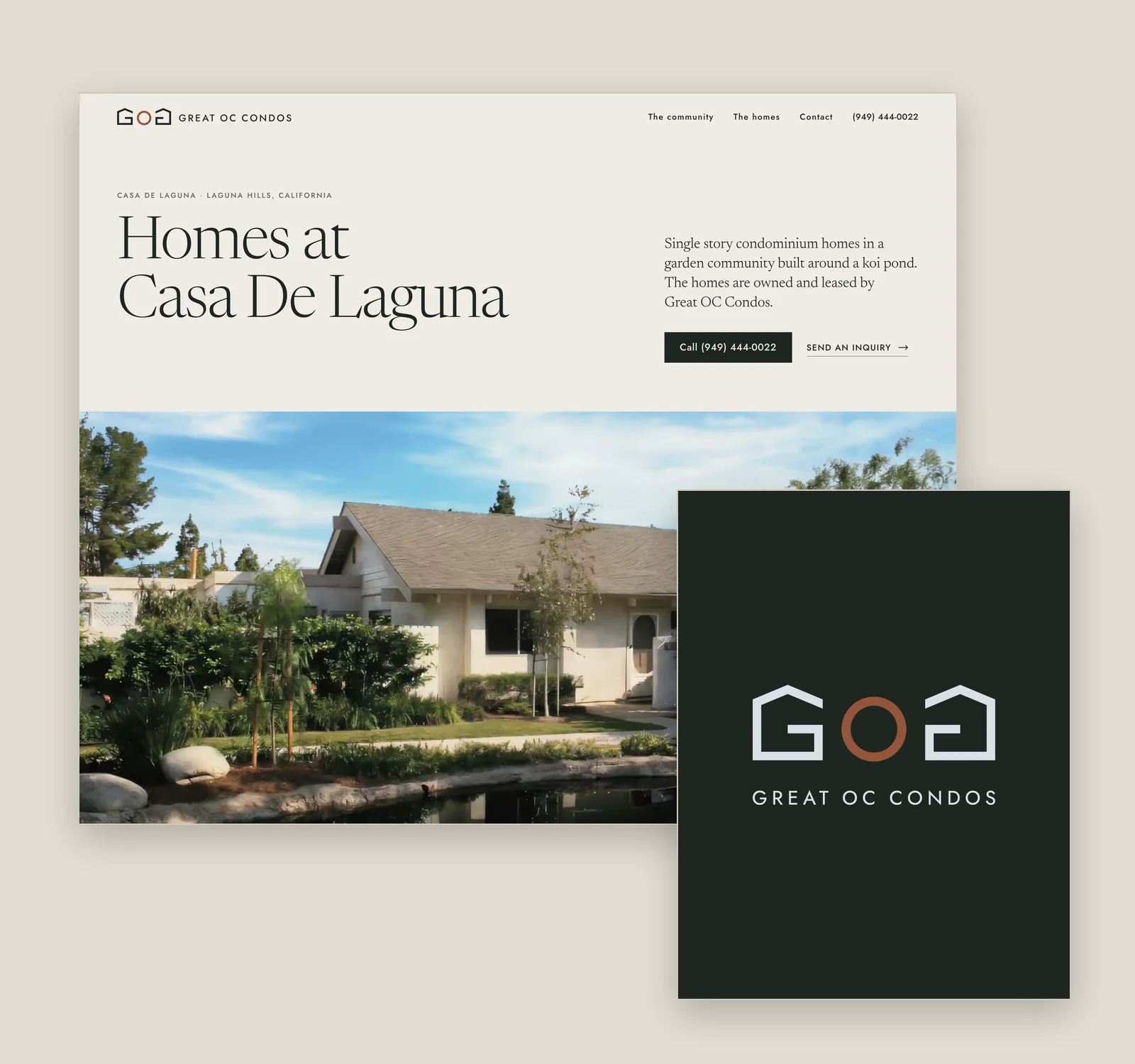
We own ten homes at Casa De Laguna and were still sending people to a site built in 2013. Noah pulled the photos and details out of the old site, designed a logo from the rooflines and the pond, and put the community, the homes and current availability in one place. It’s the first time the website has looked like the place we actually rent.

OwnerGreat OC CondosSee the project

“Highly recommend. Great work.”

Dan ParkerGreat OC Condos · Google review

FAQ

HARTFORD
questions.

Anything else? Ask us directly or text Noah at (425) 233-0769.

How many real estate businesses are in the Hartford area?

The Census Bureau counted 800 real estate business locations with employees in the Hartford metro in 2023, including 204 offices of agents and brokers and 228 property management companies.

How much new construction is happening in Hartford?

From January through August 2026, the Hartford metro permitted 1,177 new housing units, 52% more than a year earlier, according to the Census Building Permits Survey.

Does Connecticut have a privacy law that affects business websites?

Yes. The Connecticut Data Privacy Act (CTDPA) (Conn. Gen. Stat. § 42-515 et seq.) took effect July 1, 2023. As of October 9, 2026, the CTDPA applies to persons that conduct business in Connecticut or target products or services to Connecticut residents and that, during the preceding calendar year, controlled or processed the personal data of at least 35,000 consumers, excluding data processed only to complete a payment transaction. It also applies, with no volume threshold, to persons that control or process consumers' sensitive data, other than data processed only to complete a payment transaction, and to persons that offer consumers' personal data for sale.

What does Connecticut require on a real estate website?

Connecticut requires a broker to disclose its name in advertising, and since the December 27, 2024 amendment, every page of a licensee's website must prominently display the licensee's licensed name, a phone number or email address, and the date property information was last revised unless it updates automatically from the MLS. Salesperson and associate broker websites must also show the supervising licensee's name and contact information on each page in at least the same font size as the salesperson's. (Regs. Conn. State Agencies §20-328-5a; Conn. Gen. Stat. §§20-311(1), 20-312(e)-(g))

Do you work with Hartford businesses remotely?

Yes. Endcap is based in Orange County, California, and works remotely with clients outside Southern California by video call, phone, and email. You review the design and the working site online before launch.

How much does a website cost?

We quote each project after a short conversation, once we know the pages, content, and features it needs. The proposal lists the deliverables, schedule, and price, and we agree on it before work begins.

How long does a website take?

Most websites take two to four weeks once the content is ready. The proposal confirms the schedule.

Nearby city guides

Other markets near Hartford

Sources

Figures are for the metropolitan statistical area unless noted. Business counts cover locations with paid employees. Data refreshed 2026-10-10.

Contact Endcap

START A
project.

A website, a brand, or a complete set of materials.
We reply within an hour during business hours, and we only use your details to answer you.

Start a project or call or text Noah at (425) 233-0769

Start a project Text