Insights
SEO for commercial real estate: a practical guide.
Most SEO advice is written for e-commerce and doesn't survive contact with a brokerage. Here's what search can realistically do for a CRE firm or property owner, which pages actually rank, and the technical floor your website has to clear before any of it matters.
Set the expectation first
Nobody types "hire a commercial broker" into Google at scale — CRE demand mostly moves through relationships, portals, and direct outreach. So the goal of SEO in this industry isn't replacing your pipeline; it's winning the searches that do happen: your firm's name, your properties' addresses, your submarket plus an asset type, and the question-searches your future clients ask. Those searches are lower-volume and dramatically less competitive than residential — which means a firm that does this properly can own its lane with modest effort.
The searches you can actually win
- Your name and your firm's name. Table stakes, but check it: the site, not a portal profile, should be the first result — with correct contact information in the panel beside it.
- Property addresses and names. When a tenant rep searches "31103 Rancho Viejo Rd" or a center's name, a page you control should be at the top. This is the most winnable and most neglected category in CRE search.
- Submarket + asset type. "Retail space Lake Forest," "industrial for lease Anaheim." Competitive with the portals, but a well-built availability page with real content can share page one.
- Question searches. "How much does a commercial real estate website cost," "how to market a shopping center." These build authority and reach owners and tenants early — it's why this page you're reading exists.
Property pages are your best SEO asset
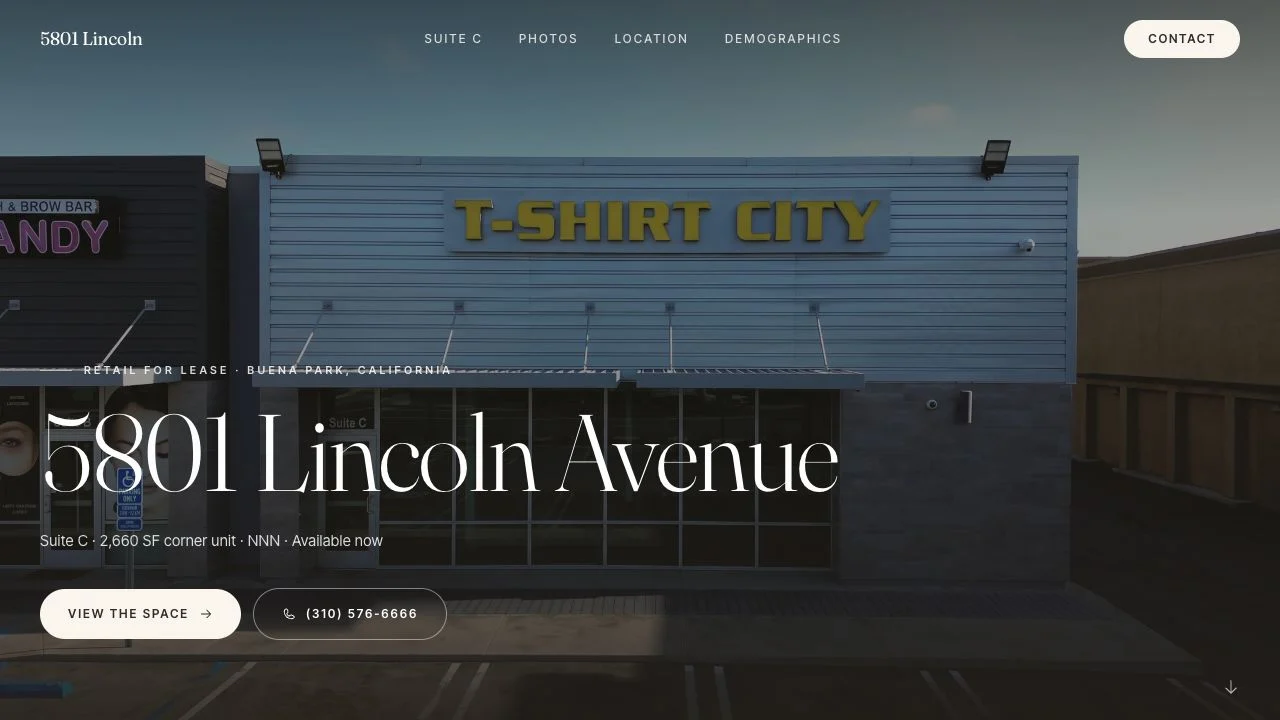
Every property you list or manage is a page that can rank for its own address, name, and submarket — with almost no competition, because portals bury addresses in search-result templates and most firm sites don't give properties real pages at all. A brokerage with thirty listings or a manager with a twenty-property portfolio is sitting on a compounding SEO asset: every assignment adds a page, every page earns address-level searches, and every visitor lands on a site you control instead of a portal showing your competitors. This is the search logic behind dedicated property websites and portfolio sites with a page per asset.
Local search: the half most firms skip
For anything with a physical location — the firm's office, a shopping center, a managed property — Google's local results (the map pack) are a separate contest with separate rules. The essentials: a claimed, complete Google Business Profile with real photos and correct hours; consistent name-address-phone across the web; and a website that names its geography in its content and markup. For shopping centers this is doubly true — the center's local presence feeds tenant sales, which feeds leasing. More in our shopping center marketing guide.
The technical floor
None of the above works on a site that fails the basics. The floor, plainly:
- Speed. Google's Core Web Vitals are a ranking input, and users bounce from slow pages regardless. Under ~2 seconds on a phone is the bar. This is where template sites quietly lose — the theme-and-plugin stack drags them under it.
- Crawlable content. Text search engines can read, real headings in a logical order, one topic per page, descriptive titles. If your listings live inside a third-party iframe widget, Google can't see them — they're renting your SEO to the widget vendor.
- Structured data. Schema markup that tells Google what your business is, where it operates, and what each page contains. Invisible to visitors, load-bearing for how you appear in results.
- Mobile. Google indexes the phone version of your site. If the availability table is unusable on a phone, it's unusable, period.
SEO in CRE isn't a growth hack. It's making sure that when someone searches for you, your properties, or your market, they find you — not a portal, and not your competitor.
What to do, in order
- Fix the technical floor — speed, mobile, crawlable content. Nothing else counts until this does.
- Claim and complete the Google Business Profile(s).
- Give every property a real page (or its own site) with the address in the title.
- Build one page per submarket you genuinely work, with actual market knowledge on it.
- Answer real questions in writing, occasionally and well — not weekly and thin.
Every site we build ships with this baked in — it's the "SEO" line in what every build includes: clean structure, fast loads, and the markup search engines look for, written into the code rather than bolted on by a plugin.
Work with Endcap Design
Brokerage website design
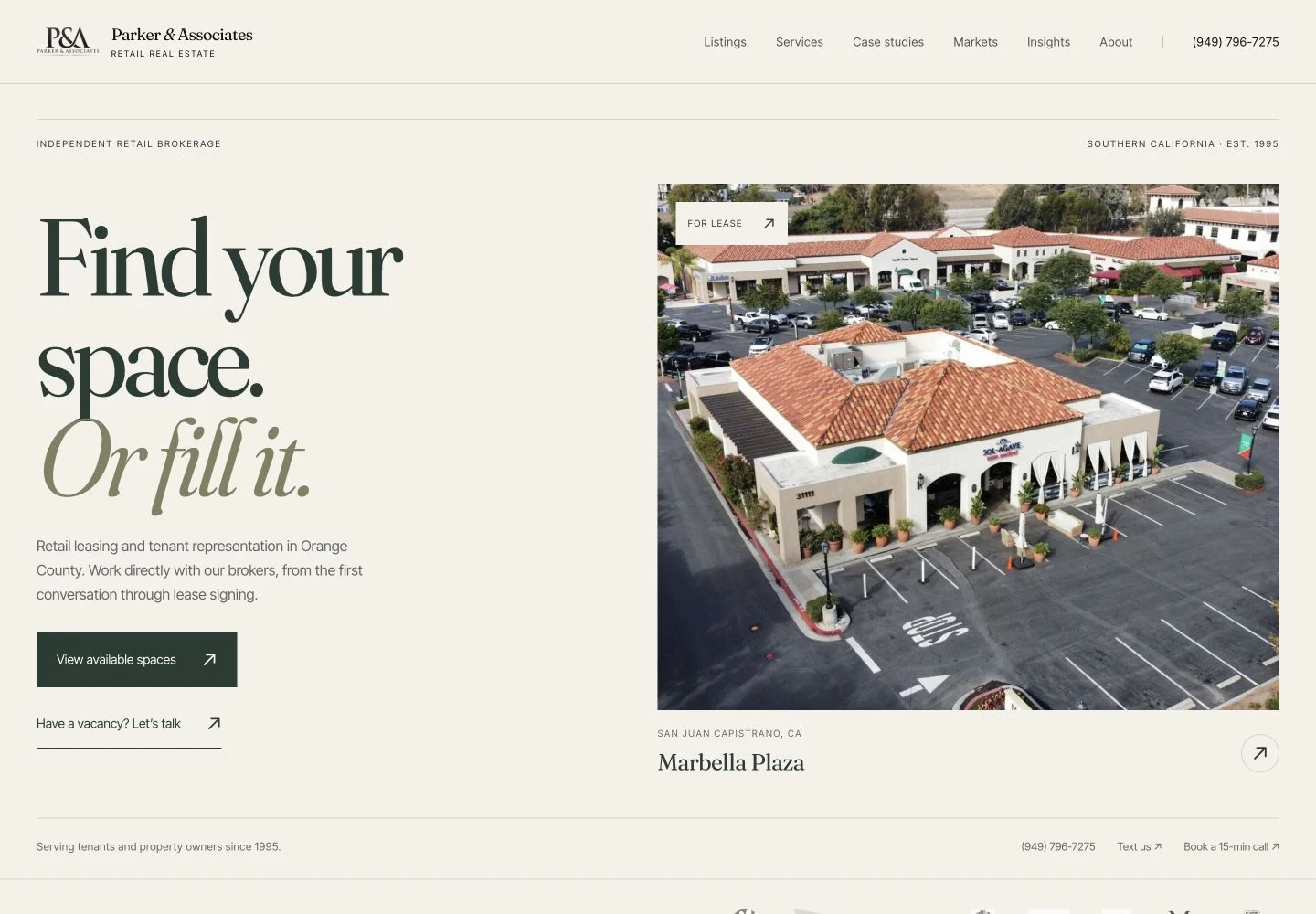
We design and build brokerage websites with property listings, team pages, company information, and inquiry forms.
Included
- A page for each listing with its size, rate, photos, plan, brochure, and broker contact
- Team pages and company information
- Inquiry forms, content migration, redirects, and launch checks
Typically a few weeks, depending on content, migration, and approvals
We reply within an hour during business hours, and we only use your details to answer you.
Get a quote for your brokerage websiteOr email Noah at hello@endcap.design
See the full service ↗Contact Endcap
LET’S
talk.
A website, a brand, or a complete set of materials.
We reply within an hour during business hours, and we only use your details to answer you.
Let’s talk or email Noah at hello@endcap.design