Insights
CRE website templates: what they actually cost you.
A commercial real estate website template promises a professional site for a few hundred dollars and a weekend of setup. Sometimes that's the right call. But the sticker price isn't the cost — and it's worth counting the rest before you commit your firm's name to one.
What a template really is
A template supplies a starting layout and components. It may run on WordPress, a hosted website builder, or another platform. Compare the live output, editing workflow, listing support, and ownership terms of the actual product you are considering.
The four costs that don't show on the invoice
1. You look like everyone who bought it
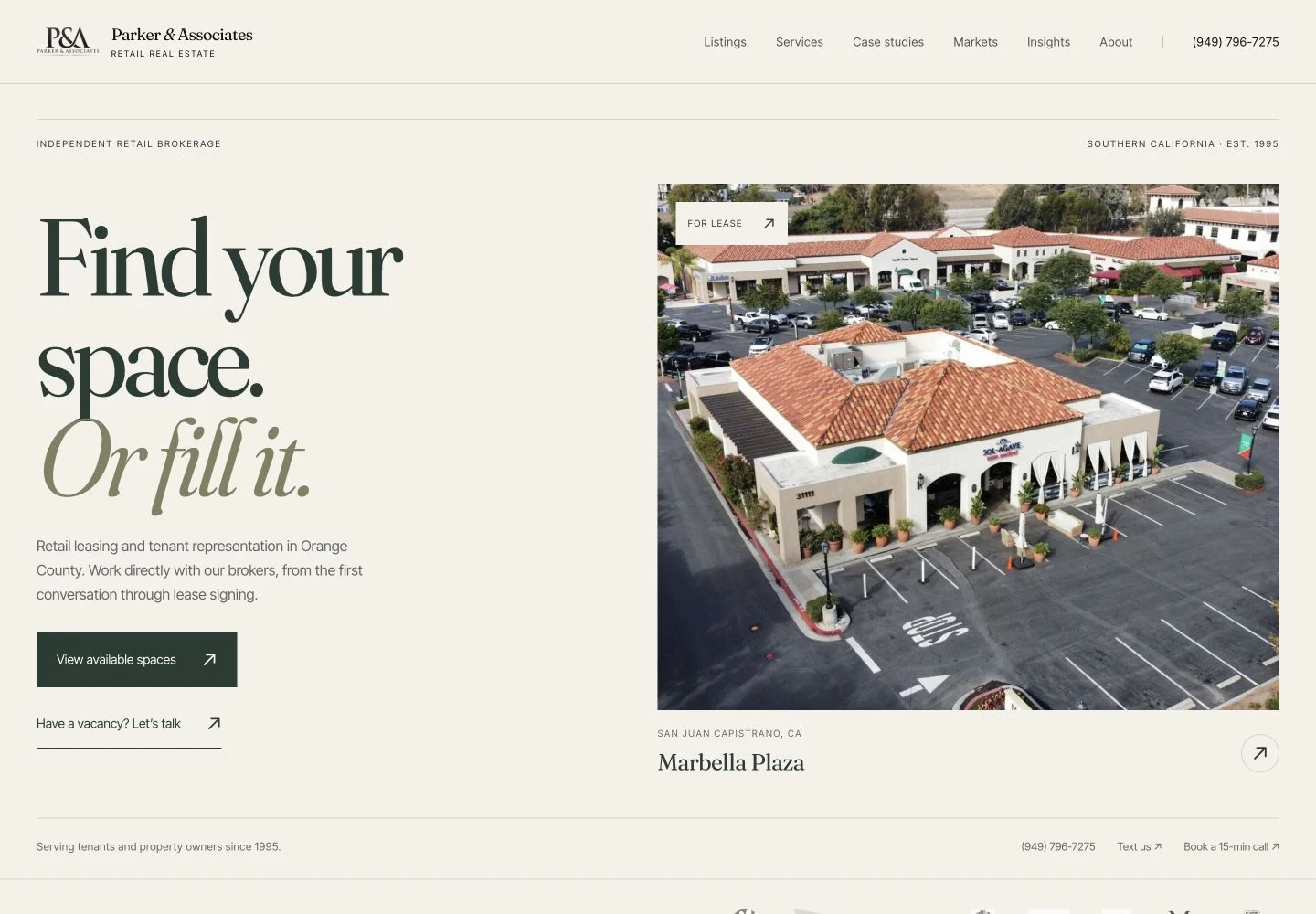
The point of a firm website is differentiation — and a template is, by definition, the opposite. Your prospects see other brokerage sites constantly. When yours has the same hero layout, the same icon row, and the same team-grid as three competitors, the message received is "interchangeable." For a firm whose entire pitch is judgment and market knowledge, that's an expensive first impression to save money on.
2. Speed — and everything downstream of it
Performance depends on the theme, images, scripts, hosting, and implementation. Test a representative page on a mobile connection and inspect its largest content load and layout stability. A template can be fast; a custom website can be slow. Compare measured pages rather than the build label.
3. The maintenance treadmill
A WordPress installation needs maintained software, backups, and tested updates. A hosted builder shifts some of that responsibility to its provider. A custom site also has dependencies, infrastructure, forms, and integrations to maintain. The proposal should name who handles each part and what that support costs.
4. The customization trap
The template is cheap until you want it to do something it doesn't. "Can we make the listings work like this?" becomes a developer engagement fighting the theme's assumptions — and a heavily customized template costs custom-build money while keeping template limitations. Many firms end up paying twice: once for the template, once for the site they actually wanted.
When a template is genuinely fine
Honesty over sales pitch: if you're a brand-new firm with two listings, no content, and no budget, a clean template beats no website — and it beats an overreaching custom site you can't fill. The template is a bridge. The mistake isn't starting on one; it's an established firm with a real track record still marketing itself on one five years later.
The alternative, priced honestly
Endcap scopes a brokerage website around the firm’s approved content, listings, and required features. The quote identifies the build, migration, review rounds, hosting, and ongoing updates. We test performance and usability before launch; a custom build does not remove the need for upkeep or guarantee a particular load time on every device.
Templates optimize for the week you buy them. Websites are judged for the years after.
Work with Endcap Design
Brokerage website design
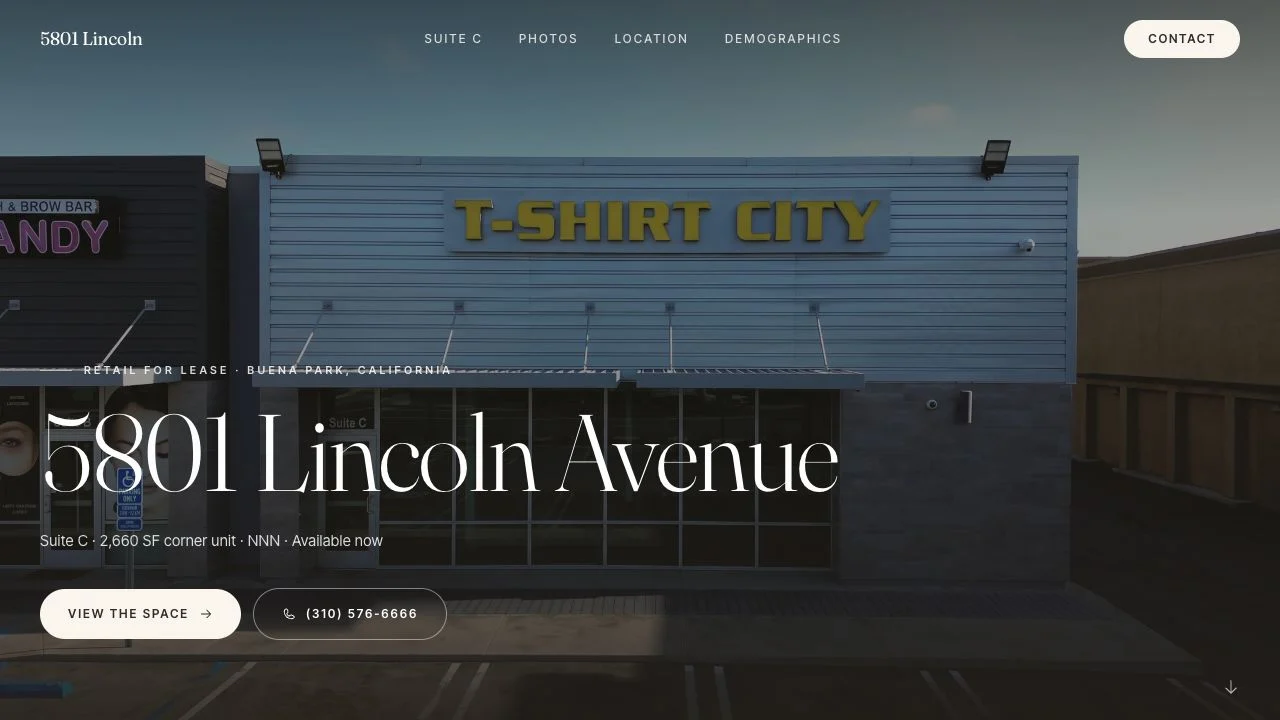
We design and build brokerage websites with property listings, team pages, company information, and inquiry forms.
Included
- A page for each listing with its size, rate, photos, plan, brochure, and broker contact
- Team pages and company information
- Inquiry forms, content migration, redirects, and launch checks
Typically a few weeks, depending on content, migration, and approvals
We reply within an hour during business hours, and we only use your details to answer you.
Get a quote for your brokerage websiteOr email Noah at hello@endcap.design
See the full service ↗Contact Endcap
LET’S
talk.
A website, a brand, or a complete set of materials.
We reply within an hour during business hours, and we only use your details to answer you.
Let’s talk or email Noah at hello@endcap.design