Insights
How to write a commercial listing that gets inquiries.
The reader of a commercial listing is almost always a professional scanning at speed — a tenant rep qualifying twenty spaces before lunch. Listing copy that respects that reader gets calls. Copy that shouts at them gets scrolled. The difference is structure and restraint.
Know who you're writing for
Two readers, one listing. The rep or broker wants disqualifying facts fast: size, rate structure, zoning, power, parking, timing. The principal — the owner or tenant reading after their rep forwards it — wants to feel the opportunity: the co-tenancy, the corner, the trade area. Write the facts for the first reader and one honest paragraph of story for the second. In that order.
The facts block comes first
Before any prose, the scannable vitals. For a retail space, that means:
- Square footage (and whether it's divisible)
- Rate and structure — and if you quote NNN, quote the nets too; making reps call to learn real occupancy cost just loses the ones who don't call
- Anchor and notable co-tenants
- Zoning and permitted uses, if a use is commonly asked about
- Parking ratio, access, signage rights
- Availability date and condition (shell, second-gen, turnkey)
Every field the portal offers, filled. Incomplete listings rank lower in portal search and read as inattention — the listing is being judged as a preview of what you'd be like to transact with.
One paragraph of story — specific or nothing
After the facts, one tight paragraph on why this space, this corner, this center. The test for every sentence: could a competitor paste it into their listing unchanged? "Prime location with excellent visibility" fails — every listing in the county claims it. "Hard corner at a signalized intersection, 38,000 cars a day, between a grocery anchor and a 24-hour gym" passes, because it could only describe this property. Numbers beat adjectives; specifics beat superlatives; verifiable beats impressive.
What to cut
- ALL CAPS. It reads as shouting and, worse, as amateur. The facts don't get more true in capitals.
- Adjective stacks. "Stunning, rare, incredible opportunity" — each empty modifier dilutes the real ones.
- False urgency. "Won't last!" on a listing with 200+ days on market is an own goal — reps can see the listing date.
- Unexplained jargon soup. Abbreviating everything ("2nd gen QSR w/ TI, NNN, DT potential") saves space and loses the principal reading over their rep's shoulder. Abbreviate what's standard, spell out what sells.
A listing is a professional document read by professionals. Write it like the rent roll depends on it — it does.
The photos carry more than the words
No copy survives three dark phone photos. The write-up and the photography are one product: the images make the claims credible, the words make the images specific. Lead with the photo that answers the biggest question — for retail that's usually the storefront or the aerial showing access and co-tenancy, not the empty interior.
Give the listing somewhere better to go
Portals cap what a listing can be: same template, character limits, your competitors one scroll away. The listing's last job is to hand serious readers a better destination — a dedicated property site with the full plan, the trade-area numbers, the film, and an inquiry path that goes straight to you. On the portal you're a row in a results table; on your own page you're the whole argument. (That's the strategy in one sentence; the field guide has the rest.)
Work with Endcap
Need help writing the property information for your website?
Work with Endcap Design
Listing marketing for a vacant space
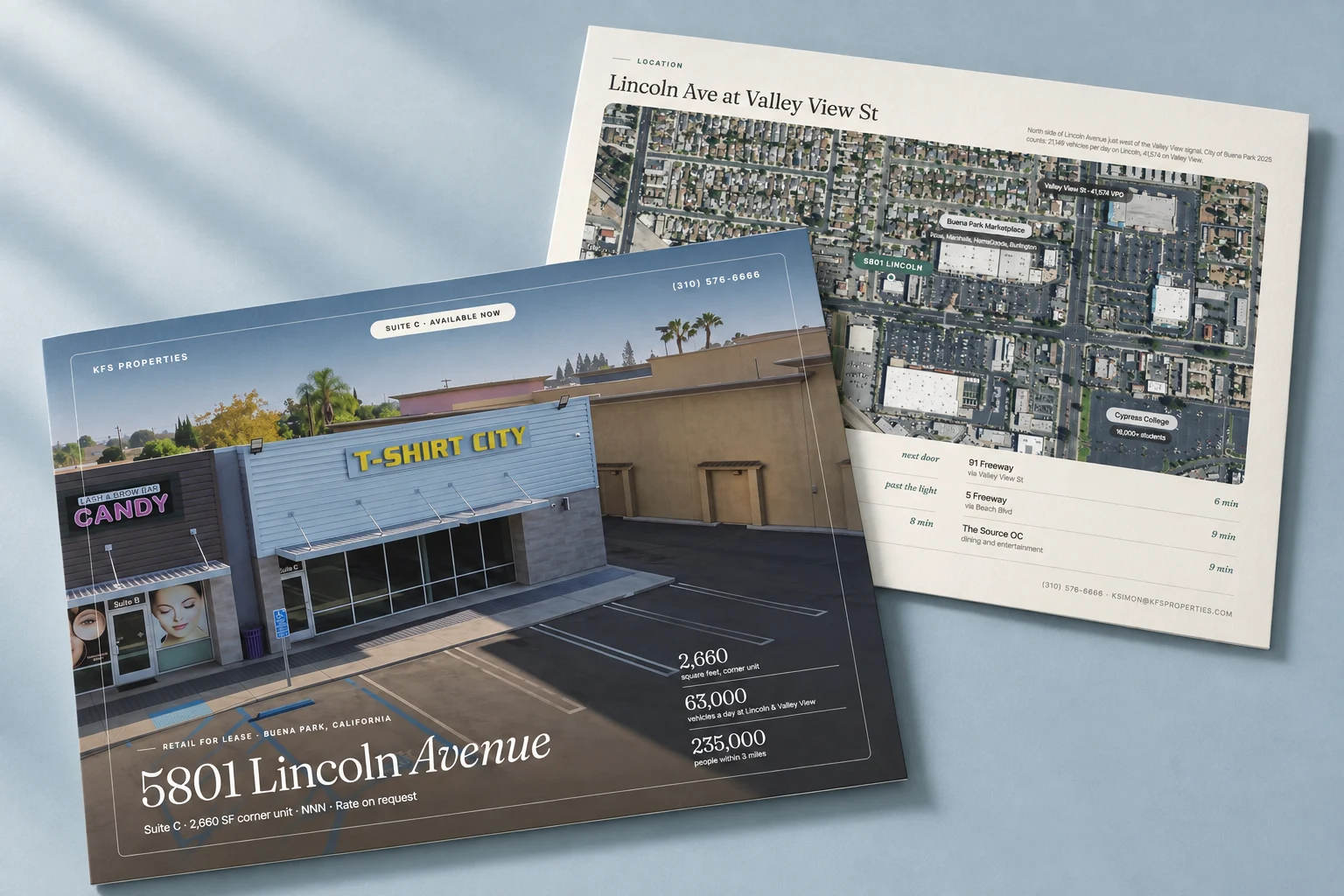
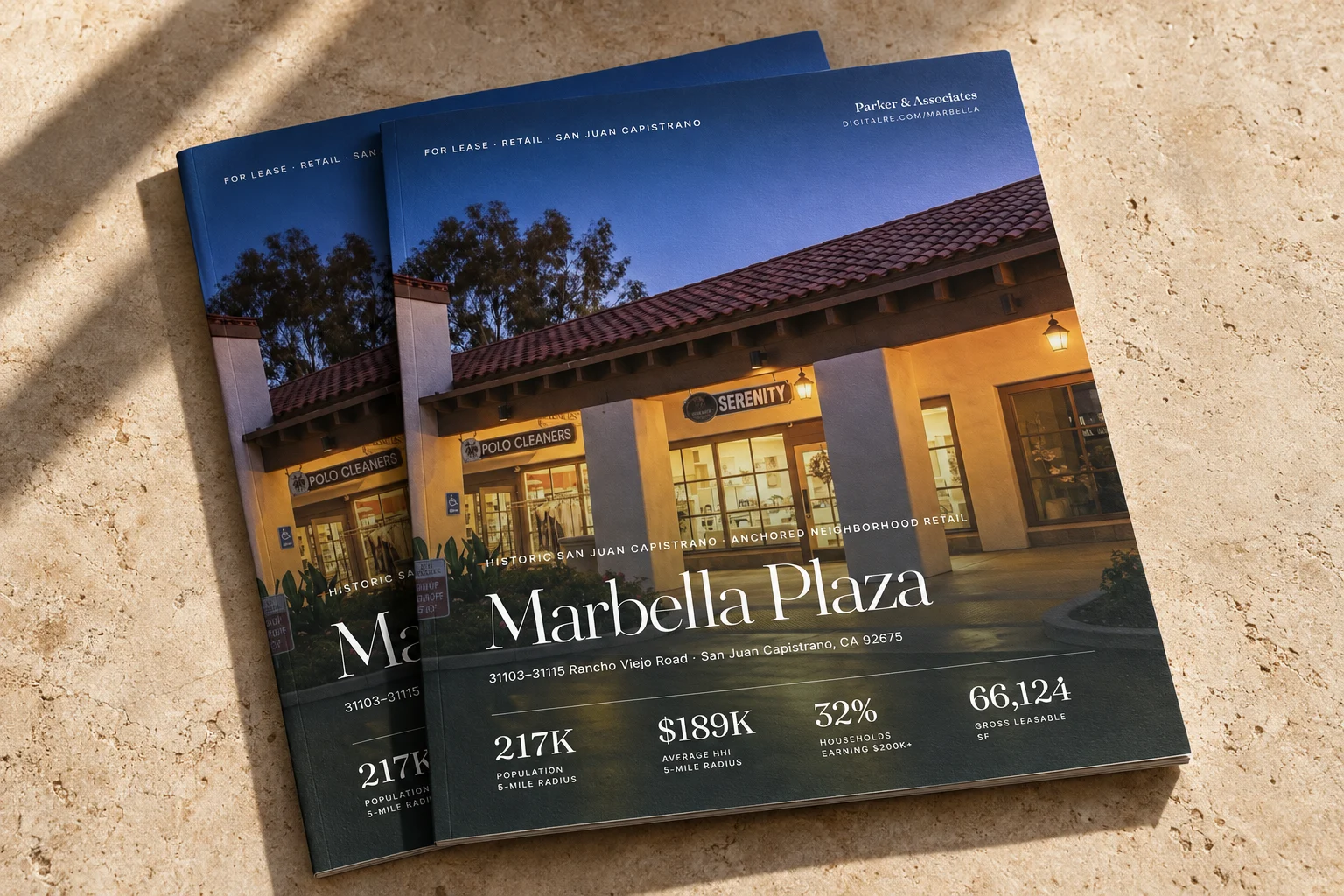
We produce the photography, flyer, and website for a space, built around the material you already have.
Included
- Photography of the space and the storefront
- A lease flyer or brochure with the suite size, plan, and leasing contact
- A property website when the listing needs one
“The Flyer is all that I need and it is outstanding.”
Photography, lease flyers, and property websites, quoted together or separately
We reply within an hour during business hours, and we only use your details to answer you.
Get a quote for your listingOr email Noah at hello@endcap.design
See the full service ↗Contact Endcap
LET’S
talk.
A website, a brand, or a complete set of materials.
We reply within an hour during business hours, and we only use your details to answer you.
Let’s talk or email Noah at hello@endcap.design