Photography & film
Commercial real estate photography: what to shoot and what it costs.
Plan the photographs around the questions people have about the property: the building, the available space, access, parking, and surroundings. These Marbella Plaza images show how different views contribute to the same presentation.
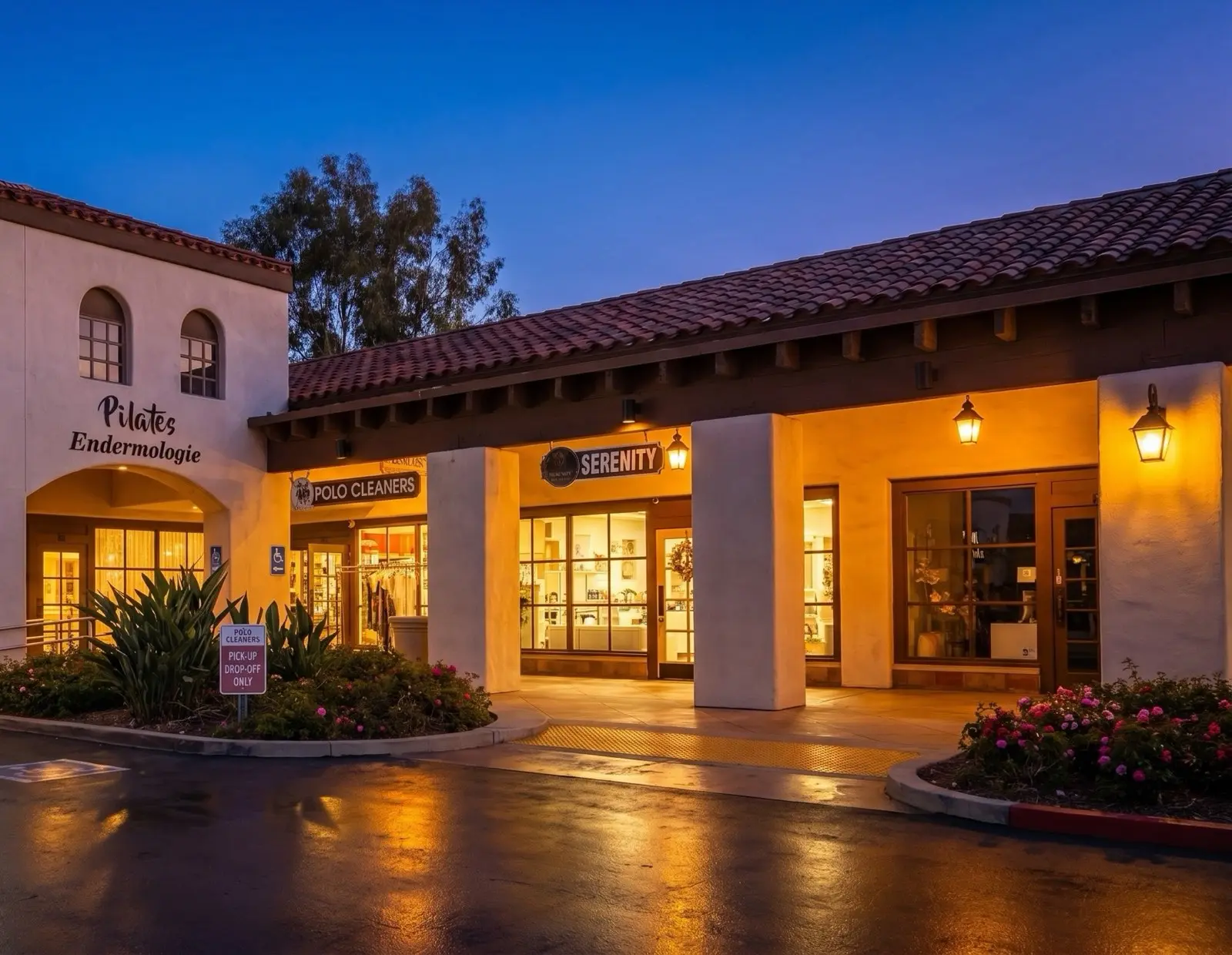
Start with a useful shot list.
Walk through the assignment with the owner or listing team before the shoot. Confirm which spaces may be photographed, access arrangements, the intended uses of the images, and anything that must stay private.
- Building and storefronts: recognizable elevations, entrances, and signage.
- Available spaces: the room layout, light, condition, and the features relevant to the intended use.
- Access and parking: entrances, circulation, loading, and the relationship to the road.
- Surroundings: neighboring uses and destinations that help explain the location.
- Details: amenities or infrastructure the team wants a prospect to understand.
Use the aerial to explain the site.
A ground-level photograph describes the building. An aerial can show how buildings, parking, and roads fit together. Decide what you need to show before selecting a flight or a frame from existing footage.
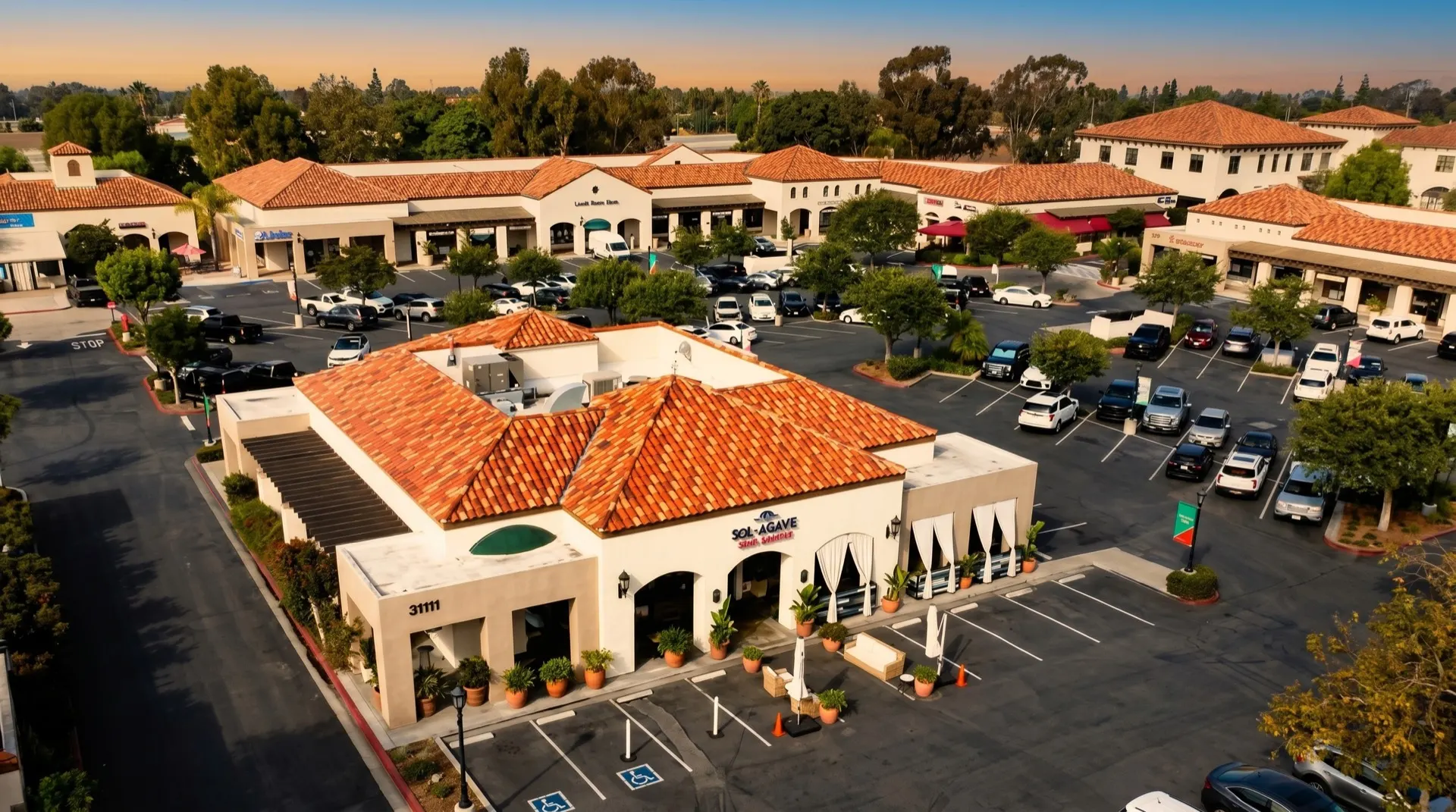
Ground level
Shows the entrance, frontage, and what someone encounters on arrival.
Aerial
Explains the layout and relationships between parts of the property.
Twilight
Adds a view of lighting and the property after daylight. It complements daytime information.
What determines the photography quote?
The number of buildings and interiors, access windows, travel, shoot duration, twilight timing, aerial work, editing, and licensing all affect the price. Request an itemized scope with the expected image count, formats, usage rights, delivery date, and arrangements for weather or access delays.
You can commission photography on its own or alongside a website and brochure. We review the photographs you already have before proposing new production. Photography and film are separately scoped work; they are not automatically included in a website’s starting price.
Plan aerial work before the shoot.
For drone work, ask the operator to confirm the applicable pilot requirements, airspace authorizations, site restrictions, and insurance. The FAA’s commercial-operator guidance is the starting reference in the United States. Those checks belong in planning, before a flight is promised.
Select the images that explain the property.
A smaller, deliberate selection is often more useful than every frame from a shoot. Give the main photograph enough room. Add another image when it shows a different space, feature, or angle that matters. Avoid repeating several near-identical views.
Keep the property recognizable and material conditions accurate. Concept renderings and virtual staging need clear context so a viewer can distinguish a proposed use from an existing space.
Prepare the files for their destination.
Keep high-resolution masters. Supply separate exports for the website, portals, and printed documents. The website should load appropriately sized images for the screen while reserving their dimensions so the page stays steady as they arrive.
Existing photos and video can also be a useful starting point. The Lincoln case study shows work developed from supplied property media. Review the actual files before deciding whether a new shoot is needed.
See property photography services or discuss the media for your property.
Work with Endcap Design
Listing marketing for a vacant space
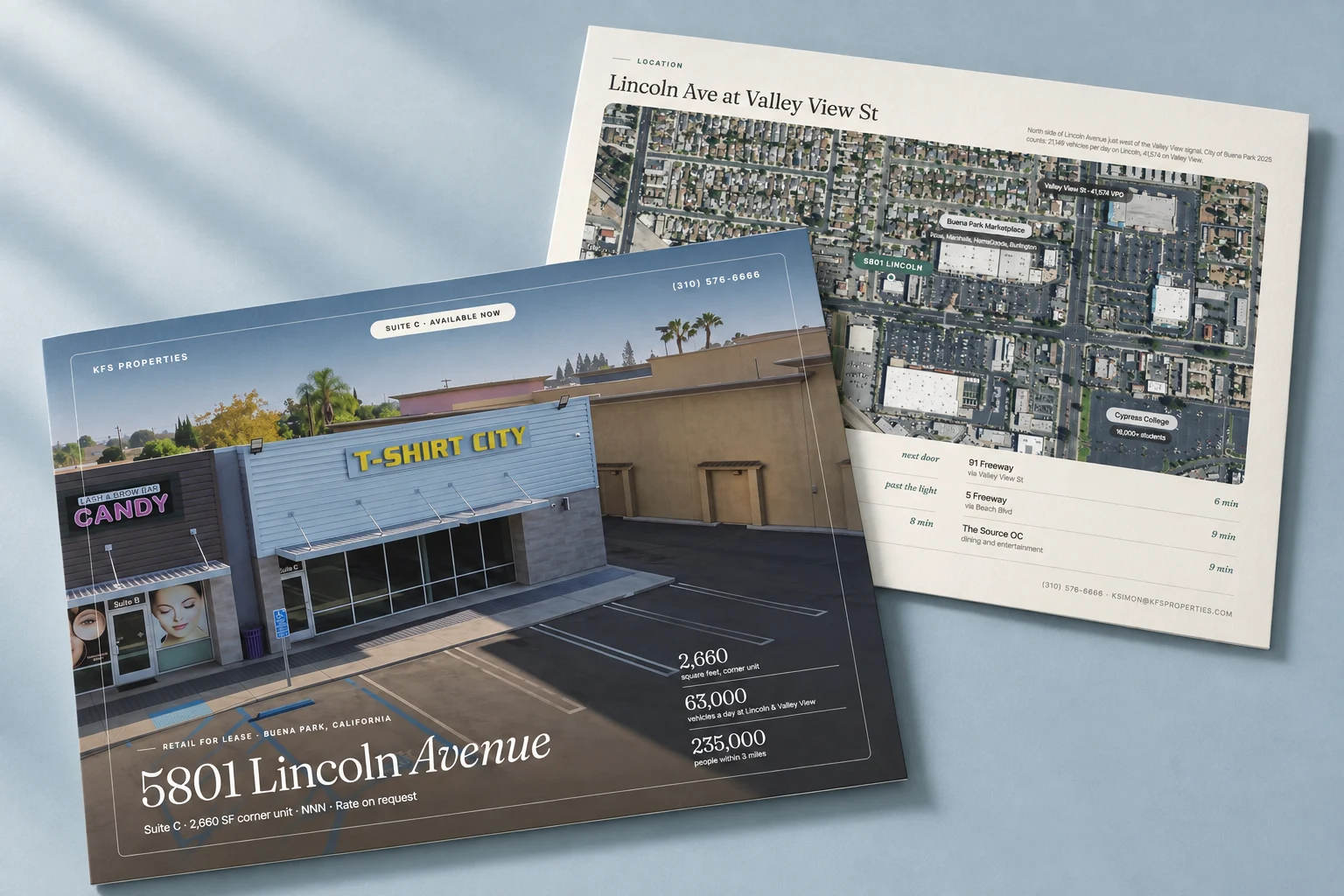
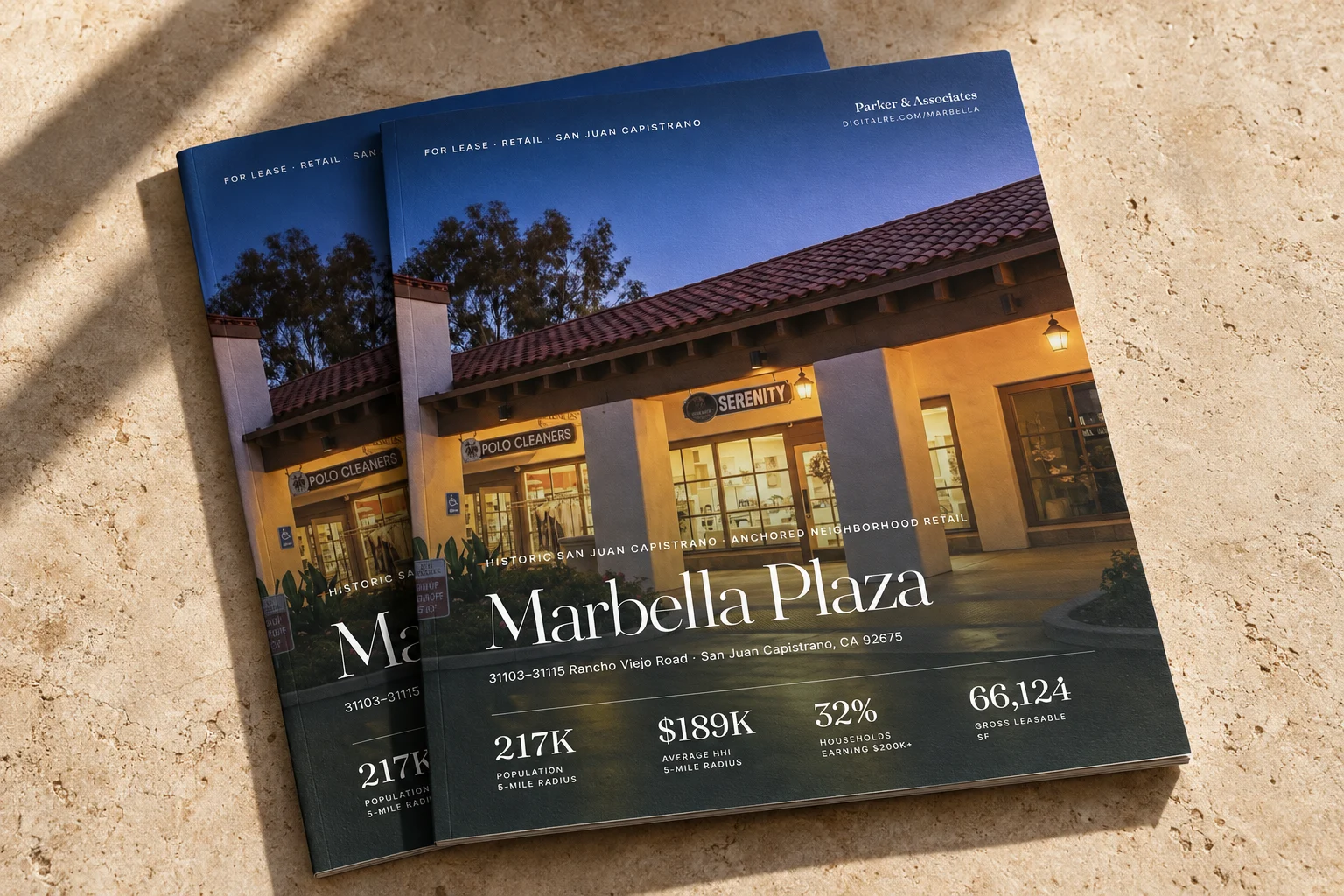
We produce the photography, flyer, and website for a space, built around the material you already have.
Included
- Photography of the space and the storefront
- A lease flyer or brochure with the suite size, plan, and leasing contact
- A property website when the listing needs one
“The Flyer is all that I need and it is outstanding.”
Photography, lease flyers, and property websites, quoted together or separately
We reply within an hour during business hours, and we only use your details to answer you.
Get a quote for your listingOr email Noah at hello@endcap.design
See the full service ↗Contact Endcap
LET’S
talk.
A website, a brand, or a complete set of materials.
We reply within an hour during business hours, and we only use your details to answer you.
Let’s talk or email Noah at hello@endcap.design