Insights
How to market commercial real estate: a broker's field guide.
Much commercial real estate marketing stops at a portal listing and a sign, which can be enough when demand is strong but rarely when it is not. This guide covers the fuller process, from positioning the property to reporting on the results, in the order the work usually happens.
1. Position the asset before you promote it
Marketing that starts with "get it on LoopNet" skips the step that sets a property apart: deciding what its story is. Every property has one, whether it is the co-tenancy, the corner, the drive-time demographics, zoning others have overlooked, or below-market rents with room to grow. Write the one-paragraph version of why this deal makes sense for a specific kind of tenant or buyer, and every asset you produce afterward gets easier and sharper.
A useful test: if your marketing copy could be pasted onto the listing across the street without edits, it isn't positioning. It's formatting.
2. Get the portal listing right — it's table stakes
The portals are where demand already searches, so treat the listing like a storefront, not a filing requirement:
- Every field filled. Incomplete listings rank worse in portal search and read as neglect.
- Real photography, current photos, more than three of them.
- Specifics in the description — sizes, rates if you publish them, anchors, traffic counts — instead of ALL-CAPS adjectives.
- A response-time discipline. Portal leads decay by the hour.
Then recognize the ceiling: on a portal, your listing renders in the same template as every competitor, one scroll away from all of them. Which brings us to the asset the portals can't give you.
3. Give the property a home you control
Every email, sign call, flyer, and broker blast eventually points somewhere. A dedicated single-property website makes that destination yours: availability, an interactive site plan, the trade-area numbers a tenant underwrites, and an inquiry path straight to your inbox — with analytics showing you who came, from where, and which suite they looked at.
The portal is where prospects find the property. Your site is where they decide about it.
For firms, the same logic applies one level up: a brokerage website that actually differentiates the firm — not a template with a stock skyline — wins listings before the pitch meeting starts. We've written about what separates the best commercial real estate websites from the rest.
4. Shoot the property like it's worth the rent you're asking
Photography is the highest-leverage dollar in commercial property marketing because every channel consumes it — the portal, the site, the flyer, the OM, the email. Ground-level architectural shots, drone aerials that show access and co-tenancy, twilight photos that make a center look like a destination. If the marketing photos wouldn't survive in the offering memorandum of a deal twice the size, reshoot.
5. Put the data where people can read it
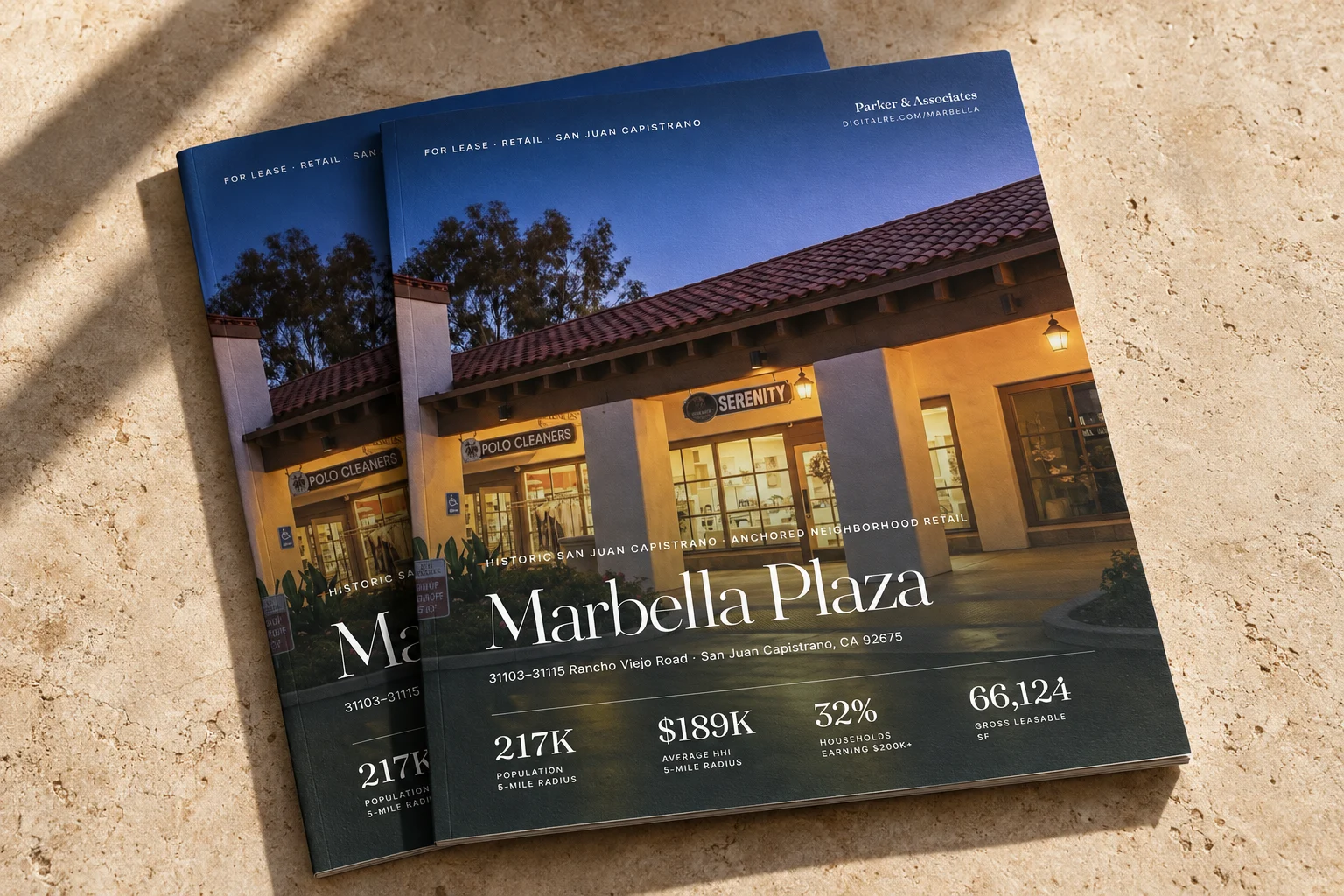
Commercial deals are underwritten, not impulse-bought. Demographics, drive times, traffic counts, co-tenancy, comparable rents — the prospect needs them, so the only question is whether they get them from you, well-presented, or assemble them from third parties without you in the room. Design the data like you designed the photos: 1/3/5-mile rings on a real map, income and population stated plainly, a site plan with suites labeled.
6. Work the direct channels
Passive marketing fills the pipeline; direct marketing closes gaps in it. The channels that consistently earn their time in CRE:
- Broker-to-broker email. Tenant reps and buyer brokers control most of the demand. A clean announcement with a link worth clicking beats a PDF attachment every time.
- Targeted outreach to likely tenants. If the story in step 1 names a tenant type, someone should be calling that tenant type.
- The sign, still. Local deals start with a drive-by more often than anyone admits. Make the sign legible at 40 mph and make the URL on it worth visiting.
- LinkedIn, used sparingly. One good post with real photography when the listing launches — not weekly engagement-bait.
7. Report, and let the marketing win the next listing
The quiet payoff of doing all this properly: owners see it. A monthly report showing site traffic, inquiry counts, and what the marketing looks like does two jobs — it keeps the current owner confident during a slow lease-up, and it becomes the pitch deck for the next one. Marketing quality is a listing-acquisition strategy disguised as a disposition tool.
The order matters
Position first, so everything has a story. Portals immediately, because that's where demand is. The property's own site next, so every other channel has somewhere worth pointing. Photography and data feeding all of it. Direct outreach on top. Most campaigns do step 2 and stop — which is why doing the rest is a competitive advantage rather than a checklist.
Work with Endcap
Need the home base built — the firm site or the property site?
Work with Endcap Design
Listing marketing for a vacant space
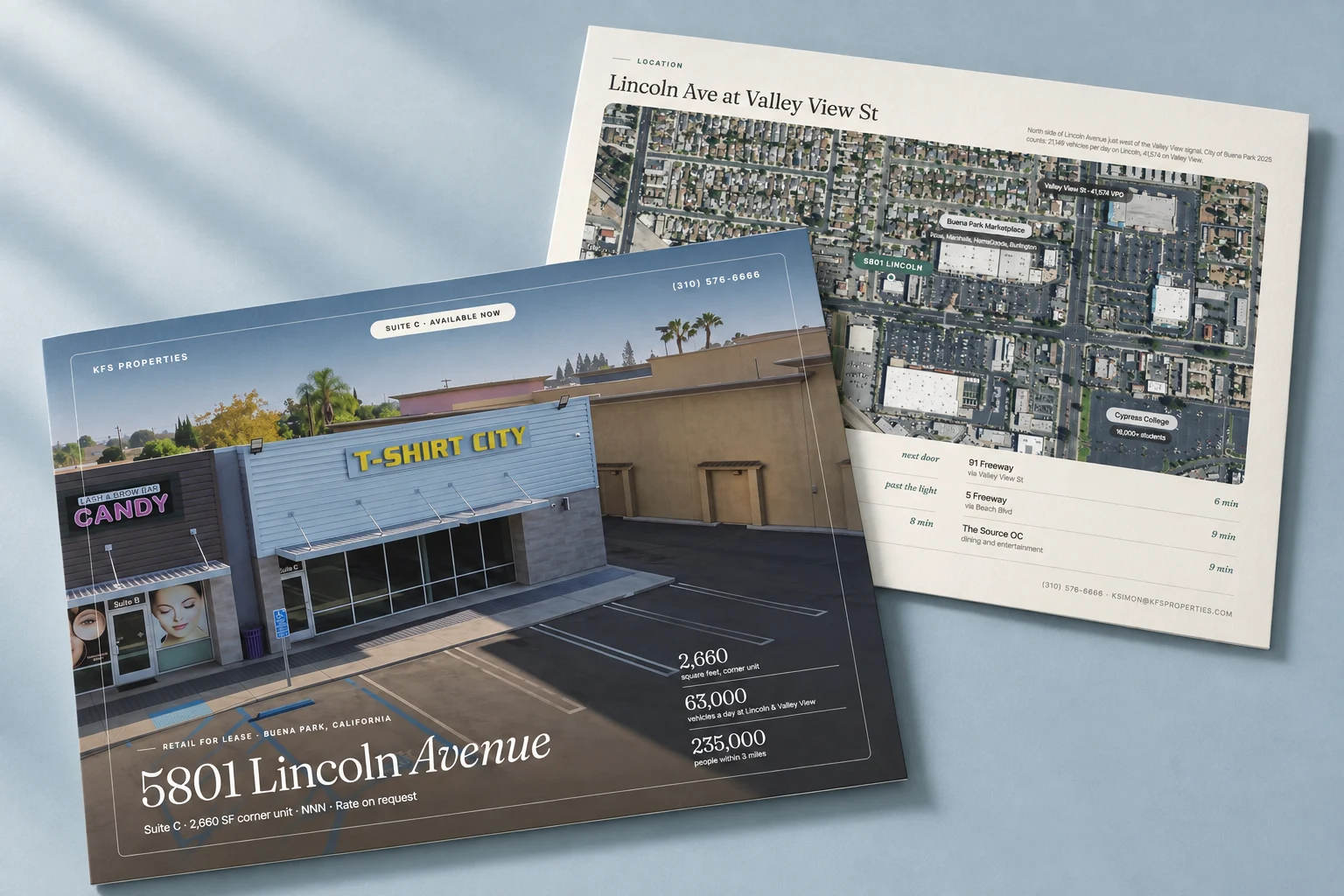
We produce the photography, flyer, and website for a space, built around the material you already have.
Included
- Photography of the space and the storefront
- A lease flyer or brochure with the suite size, plan, and leasing contact
- A property website when the listing needs one
“The Flyer is all that I need and it is outstanding.”
Photography, lease flyers, and property websites, quoted together or separately
We reply within an hour during business hours, and we only use your details to answer you.
Get a quote for your listingOr email Noah at hello@endcap.design
See the full service ↗Contact Endcap
LET’S
talk.
A website, a brand, or a complete set of materials.
We reply within an hour during business hours, and we only use your details to answer you.
Let’s talk or email Noah at hello@endcap.design