Insights
Commercial real estate email marketing that gets opened.
Email is the one proactive channel in CRE with reliably positive returns — tenant reps, owners, and investors all live in their inboxes. It's also where most firms send template blasts that get deleted on sight. The difference is a short list of unglamorous decisions.
The list is the asset
Everything downstream depends on who you're sending to. A useful CRE list is built, not bought: tenant reps active in your submarket, owners you've met or mapped, past inquiries that didn't convert, and the principals behind closed deals. Segment it simply — by role (rep, owner, tenant, investor) and by geography or asset type — so a retail availability in one city doesn't land on an industrial investor in another. Purchased lists underperform in CRE for a structural reason: the audience is small and specific, and everyone can tell when they're on a spray list.
The listing announcement, done right
The workhorse email is the availability announcement. What separates the ones that get clicked:
- A subject line with the facts. "12,400 SF anchor space — [Center], [City]" beats any clever alternative. Reps scan inboxes for size and location; give it to them in the subject.
- One strong photo, not eleven attachments. The email is a preview, not the package. A single hero image and three or four bullet facts — size, rate structure, co-tenancy, timing.
- A link, not a PDF. A flyer attachment dies on a phone and tells you nothing. A link to the property's page works everywhere, stays current after the rate changes, and shows you who clicked — which is your warm-call list for the week.
- A human sender. From a person's name, replyable, signed with a cell number. Marketing@ addresses train recipients to ignore you.
Deliverability: the boring part that decides everything
None of the craft matters if the email lands in spam. The floor, in plain terms: send from a properly authenticated domain (your email provider will walk you through SPF, DKIM, and DMARC — one-time setup), warm up a new sending domain gradually rather than blasting 2,000 contacts on day one, keep the list clean of dead addresses, and make unsubscribing easy. High bounce rates and spam complaints follow your domain around; protecting sender reputation is protecting the channel itself.
Cadence: less, better
The failure mode is the weekly newsletter nobody asked for. A sustainable CRE rhythm: availability announcements when you actually have news, a market note when you have something real to say — quarterly is plenty — and personal follow-ups triggered by behavior (they clicked, they replied, they toured). Every email should survive the test: would a busy recipient be mildly glad this arrived? If not, it's training people to delete you.
The blast is rented attention. The link it carries — your site, your listing, your track record — is where the attention either converts or evaporates.
Measure the only three numbers that matter
Opens are a vanity metric distorted by mail clients. Watch instead: clicks (who wanted the details), replies (the channel's real output), and bounces/unsubscribes (the health of the list). Click data feeding a follow-up call list is the whole system working as intended.
Work with Endcap
The email is the invitation. We build what it links to.
Work with Endcap Design
Listing marketing for a vacant space
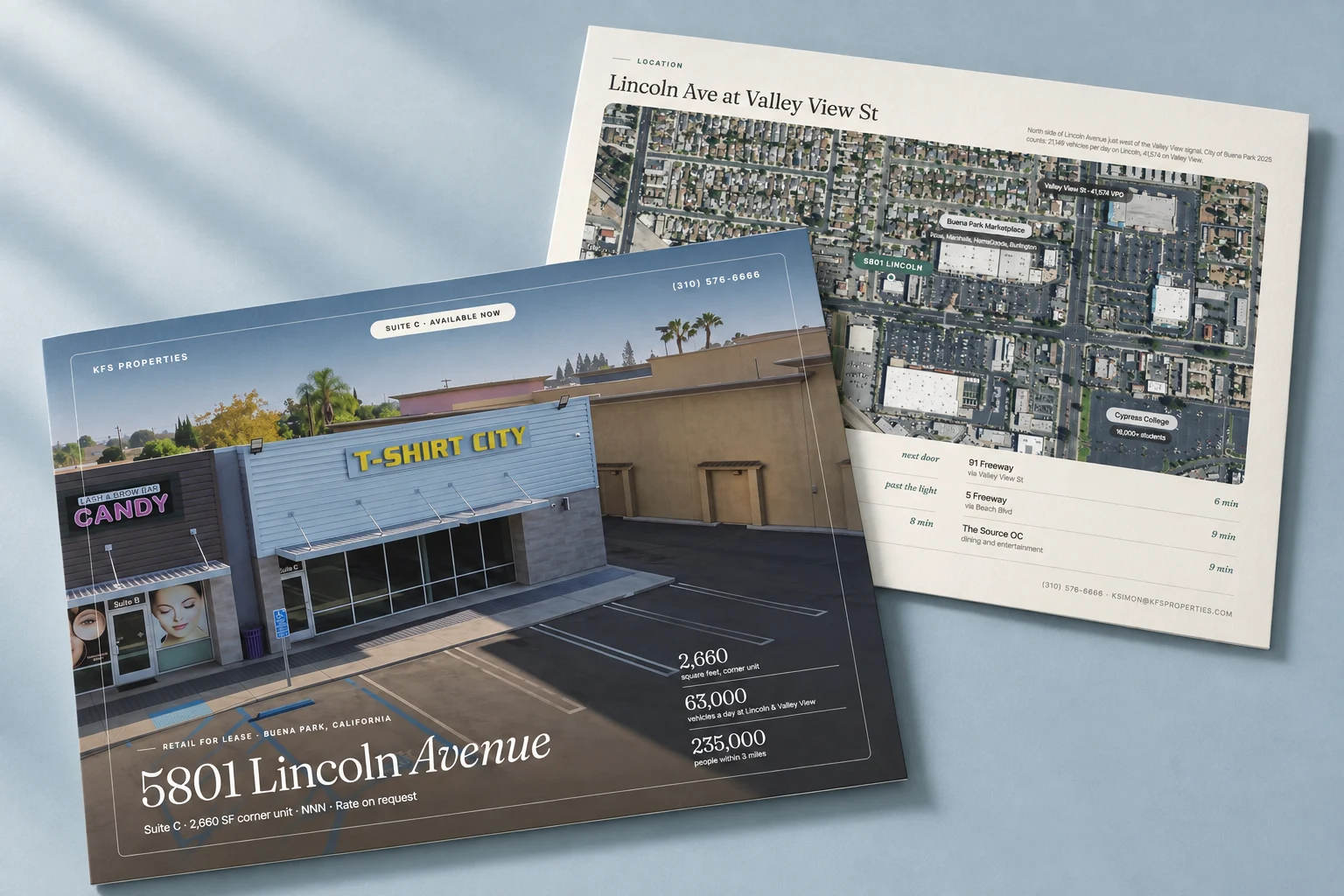
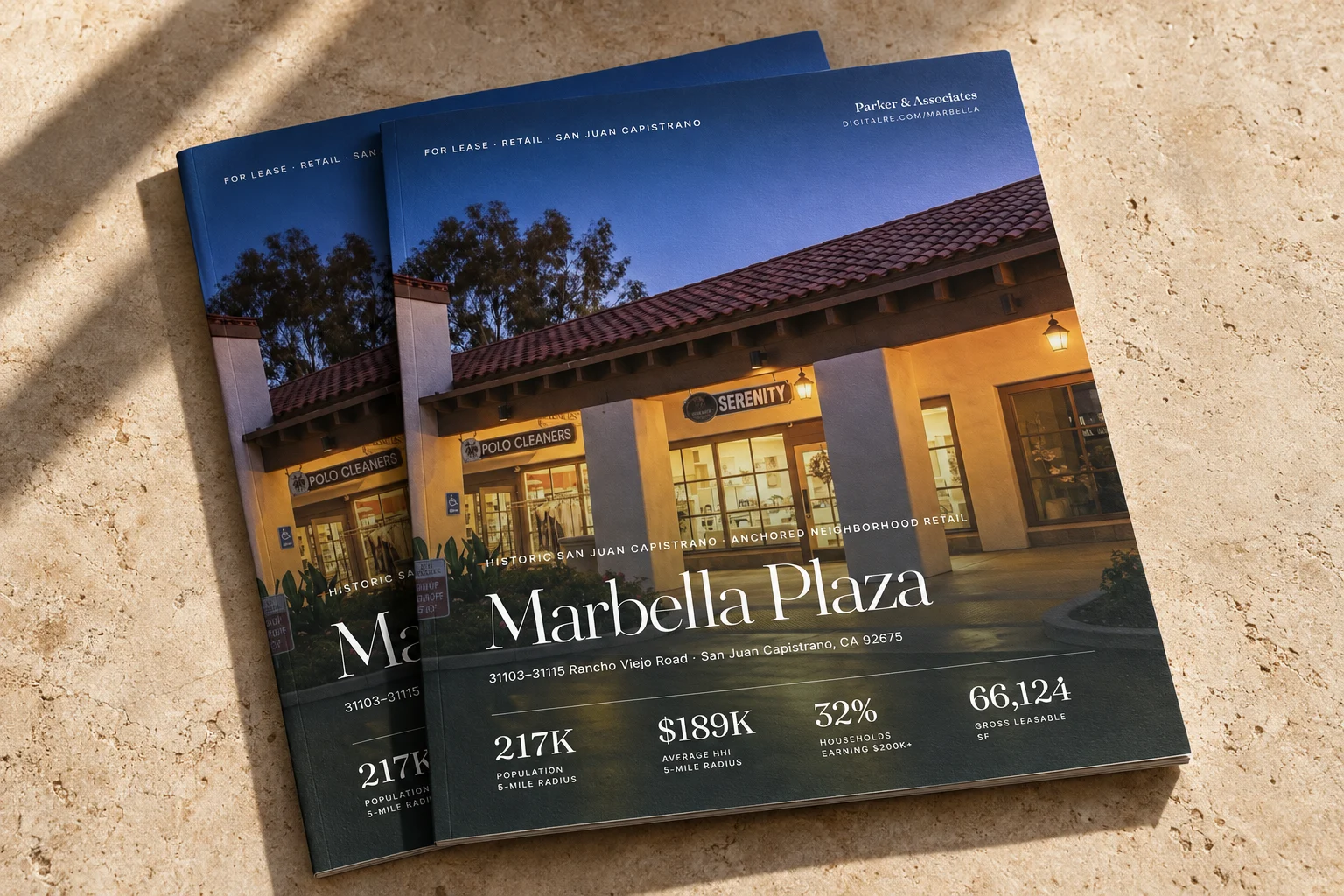
We produce the photography, flyer, and website for a space, built around the material you already have.
Included
- Photography of the space and the storefront
- A lease flyer or brochure with the suite size, plan, and leasing contact
- A property website when the listing needs one
“The Flyer is all that I need and it is outstanding.”
Photography, lease flyers, and property websites, quoted together or separately
We reply within an hour during business hours, and we only use your details to answer you.
Get a quote for your listingOr email Noah at hello@endcap.design
See the full service ↗Contact Endcap
LET’S
talk.
A website, a brand, or a complete set of materials.
We reply within an hour during business hours, and we only use your details to answer you.
Let’s talk or email Noah at hello@endcap.design