Field notes
The cell on the listing sign is the wrong number.
Someone is already in the parking lot. They called the panel because they are standing in front of the suite, not because they searched LoopNet. You were on a showing. Or it was Sunday. Or you were walking another tenant through a different building. They got your voicemail. They did not leave a name, a size, a use, or a number you can work from. They drove off.
You will tell the owner the sign is quiet. You will be guessing. The QR on that same panel is a separate job. This note is about the number.
Why the personal cell is on the sign
It is there because it is the number you actually pick up. That argument holds on a Tuesday at eleven, at your desk. It fails at 6:40 on a Saturday, and it fails while you are standing in a suite with someone else. The panel does not wait for you to be free. The person calling it is already at the property. That is the highest-intent inquiry a listing produces, and it is the one a personal cell is built to miss.
A listing broker puts a cell on the sign because the historical alternatives were worse. A brokerage main line that dumped into a receptionist who did not know the listing. A desk voicemail nobody checked over the weekend. The cell was the honest number. It still is, for the calls you can take. It is not a capture system for the ones you cannot.
The same cell is also the number on your last flyer, your email signature, your LoopNet contact field, and the card you handed a vendor last month. It is how your kids reach you. It is how a co-broke reaches you. It is how the drone shooter who scraped the panel reaches you. One device, every kind of call, and no way to separate the person in the lot from the rest.
What happens to a missed call from the panel
A driver in a parking lot does not leave a useful voicemail. They are in the car, or they are standing on asphalt in the afternoon, and they are not going to dictate square footage into a mailbox. Most hang up. Some leave "yeah, I'm at the center, call me back" with a callback that is already in your missed-call list and no suite, no size, and no use. A few text. Many do not.
What you have, an hour later, is a number you do not recognize, or nothing, because the phone rang while you were talking. There is no transcript. There is no recording. There is no log that this call came from the panel rather than from a portal lead, a vendor, or a wrong number. If you call back and they answer, you start from zero: which property, which suite, what use. If they do not answer, you have a missed call and a story you cannot tell the owner.
When a listing goes quiet, sign calls are one of the first metrics in the diagnostic. You cannot run that diagnostic on a personal cell. The cell does not keep a record of who called the panel. It keeps a record of everyone who called you. "No sign activity" on a listing whose panel rings your pocket is not a finding. It is a missing log.
The other failure is delay. The person who called from the lot is still there, or they are pulling out. A callback on Thursday for a Saturday call is a callback into a decision that already moved on. Retail operators looping a corridor on the weekend do not wait in your voicemail. They call the next panel.
The same line also gets the vendors
A number printed on a building is a public invitation. Tenants use it. So do the people who sell to brokers.
SEO shops that scrape LoopNet. Drone operators offering to shoot the center. Merchant-services reps. Syndicators who want a fee to post a listing you already posted. Callers looking for the dry cleaner. They all dial the digits on the panel, and on a personal cell they land in the same missed-call list as the operator who called about a second location.
You learn which is which by calling back. That is an afternoon. It is also how a real tenant inquiry, sitting three rows under a vendor, gets returned late or not at all. The vendor will leave the voicemail. The tenant often will not. The mailbox fills with the wrong people, and the owner hears that the sign is attracting tire-kickers, which is sometimes true and sometimes a description of the people who bother to speak after the beep.
Sorting is the job the cell refuses to do. It rings. You answer, or you do not. Classification happens later, in your head, if it happens.
What a listing-owned number actually has to do
The number on the panel should belong to the listing, not to the broker. That is not the same thing as a second cell, and it is not a brokerage main line. It has a short job list.
It has to answer. Every call, including the hour you are on a tour and the weekend you are not working. A driver in the lot will talk to a voice that picks up. They will not, reliably, talk to a mailbox.
It has to sort. Tenant, tenant-rep, or someone selling you SEO. The vendor calls can be filed. They should not be forwarded to your phone as if they were a prospect.
It has to log. Who called, name, size, use, timing, callback. That log is what you put in the owner report when they ask how the sign is doing. Without it you are reporting a feeling.
It has to reach you only with the ones worth returning, and it has to do it while they are still nearby: a text and an email with the name, the size, the use, the timing, the callback number, and a transcript or recording so you are not reconstructing the conversation from memory.
That last piece is a California problem as much as a capture problem. California is a two-party consent state. If the line records, it has to say so in the first sentence, before anything else is asked. The disclosure is not a footer and it is not optional.
The line lives with the listing. Month to month. When the space leases, you drop it. You do not carry a vacant-suite number on your cell into the next assignment, mixed with school pickup and the last vendor who saved your digits.
Where that number should appear
Print the same digits everywhere a listing already asks for a phone number. A prospect who called the sign and later opens the flyer should not hit a different voicemail.
The panel is the one a driver reads at speed. Letter height, placement, and the QR that sits next to the number are covered in the signage note. Plenty of people will never scan. The phone number is what they came for.
The flyer and the OM get forwarded. A PDF that has been forwarded five times still has to route somewhere that answers. If the contact block is your cell, you have reproduced the missed-call problem in every inbox the file reaches.
LoopNet and Crexi put a phone number in the contact field. That field is where a lot of the vendor traffic originates, which is an argument for not using your personal cell there even if you keep the cell on the panel. The listing copy is a separate job. The number in the contact field is this one.
The property site should be a tap, not a transcription from a photograph of the panel. A single-property page is where that call sits next to the suite facts, the plan, and the flyer, instead of next to a brokerage switchboard.
On a grocery-anchored center the listing package already includes a line on the building. The failure is not the panel. It is printing a personal cell on it and then being unable to say, thirty days later, who called.
One number, four surfaces. That is not a campaign menu. It is how you stop asking a prospect to guess which of your phones is the listing.
Common questions
If they leave a voicemail, is the missed call still a problem?
Yes. A voicemail from a parking lot is usually not enough to work from, and most callers from the panel do not leave one. Even a complete message is not a log. You still cannot tell the owner how many people called the sign, how many were tenants, and how many were vendors, because those calls are mixed with everything else that rings your cell. A mailbox captures speech. It does not sort, and it does not keep a listing record.
Can I keep my cell on the sign and put a listing number on the flyer and the portals?
You can. Some brokers do, because they want the drive-by to reach them directly and they want the portal and the PDF, which attract more vendor traffic, to hit a line that answers and sorts. The trade is that the highest-intent call, the one from the lot, is still the one that goes to voicemail when you are busy. If you are going to miss a call, miss a portal vendor, not the driver in front of the suite. The listing number can live on the sign too. Your cell stays yours either way.
Is it legal to record the call in California?
California is a two-party consent state. If the line records, it has to disclose that the call is recorded in the first sentence, before anything else is said. That is the requirement this kind of number is built around. Do not record a listing call on a personal cell and hope a later notice covers you. The disclosure belongs at the start of the conversation that is being recorded.
A separate number for the listing
The practical fix is a phone number that belongs to the listing rather than to your cell. A call-answering service for leasing signs, such as the My Friendly Staff leasing line, answers every call, asks whether the caller is a prospective tenant, and sends the listing broker the details worth returning. When the space leases, the number can be retired with the sign.
The scan on that same panel is the other half of the same moment. That note, and the rest of the field notes, live in Insights.
Work with Endcap Design
Property websites
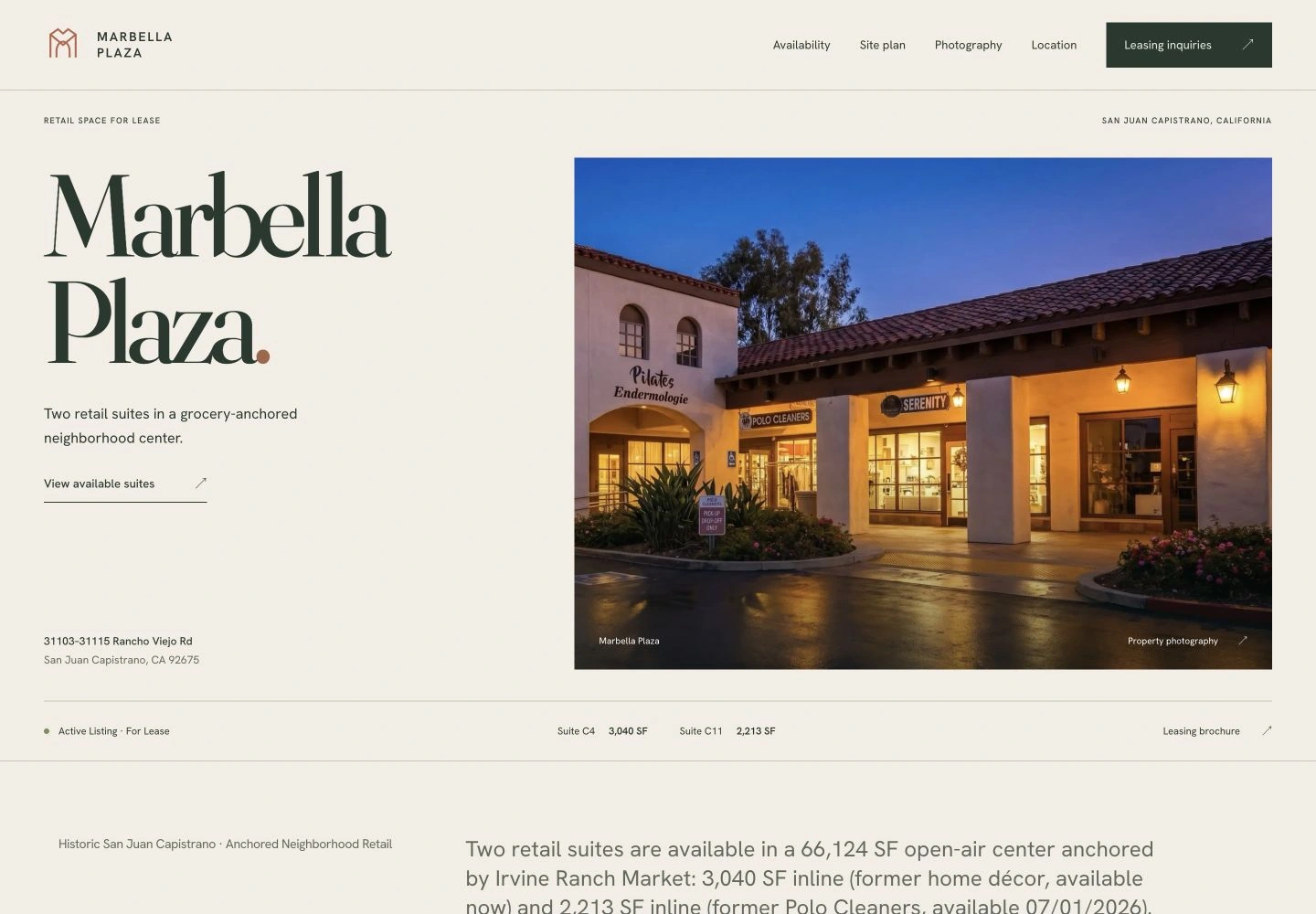
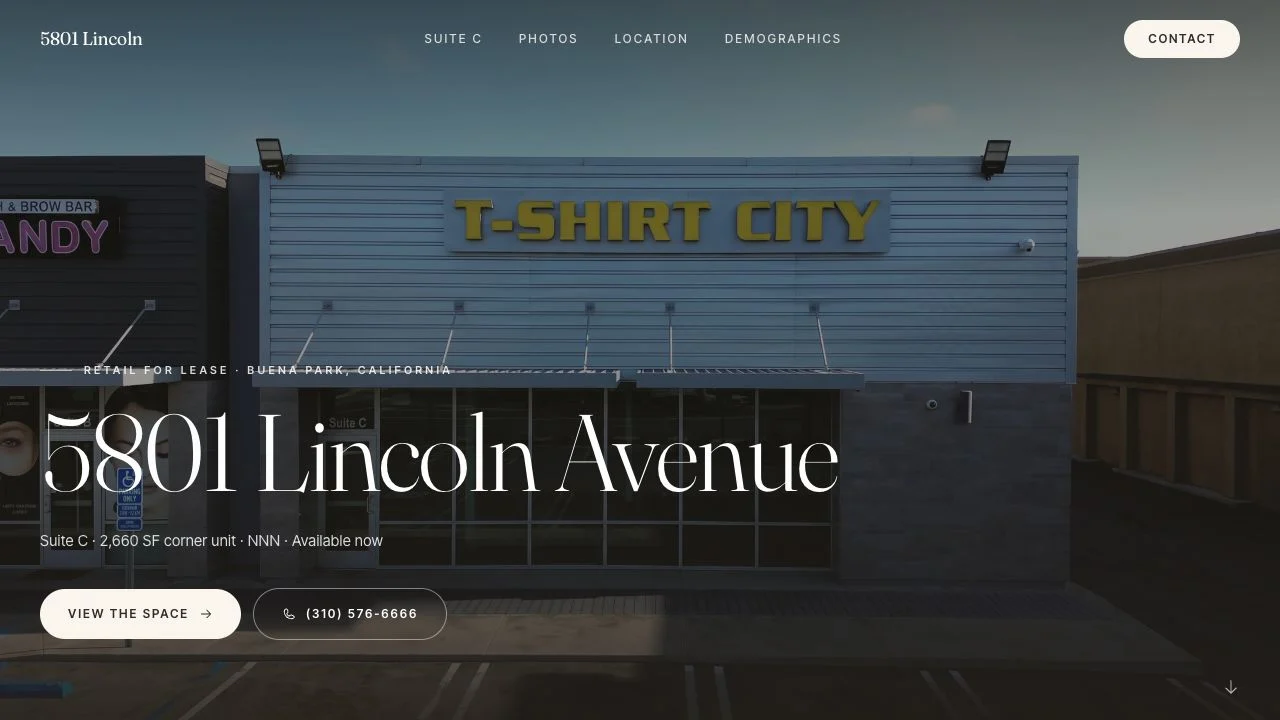
We build a website for one property: your photo gallery, property facts, plans, brochure download, and a broker inquiry form.
Included
- Your photo gallery, property facts, plans, and brochure download
- A broker inquiry form and a layout for desktop and mobile
- Many sites launch in about a week once the material is ready
“We own ten homes at Casa De Laguna and were still sending people to a site built in 2013. Noah pulled the photos and details out of the old site, designed a logo from the rooflines and the pond, and put the community, the homes and current availability in one place. It’s the first time the website has looked like the place we actually rent.”
A one-page property website using your approved content · Two revision rounds
We reply within an hour during business hours, and we only use your details to answer you.
Get a quote for a property websiteOr email Noah at hello@endcap.design
See the full service ↗Contact Endcap
LET’S
talk.
A website, a brand, or a complete set of materials.
We reply within an hour during business hours, and we only use your details to answer you.
Let’s talk or email Noah at hello@endcap.design