Insights
3D tours and Matterport for commercial real estate.
3D virtual tours crossed over from residential years ago, but commercial adoption is still patchy — partly cost, mostly habit. Used on the right spaces, a tour does one specific job better than anything else: it lets the wrong prospects rule themselves out and the right ones arrive pre-sold.
What a 3D tour actually is
A camera operator scans the space with a specialized rig, and the software — Matterport is the category leader, though alternatives exist — stitches the scans into a navigable model. A prospect on any device can walk the space room by room, look in any direction, and pull measurements from the model. The result embeds in a listing or, better, in the property's own website, where it sits alongside the plan and the numbers.
Which commercial spaces justify a scan
Not all of them — a vacant gray-shell box photographs fine and scans boring. The tour earns its cost when the interior layout is the thing being evaluated:
- Second-generation restaurant space. The prospect is underwriting the kitchen line, the hood, the dining-room flow. A tour answers layout questions that photos can't and floor plans only imply.
- Medical and dental suites. Buildout is the deal. Operators want to count operatories and trace plumbing walls before they spend an afternoon touring.
- Office with existing improvements. Conference rooms, private-office counts, kitchen — the tour is the inventory.
- Out-of-market prospects. Any space where the decision-maker is a franchise committee or an owner two time zones away. The tour is the showing.
For raw retail shells and most industrial, skip the scan and spend the budget on photography and aerials — the questions those spaces raise (visibility, access, clear height, loading) are answered outside the walls, not inside them.
Tour vs. video walkthrough
They're different tools. A video walkthrough is passive and edited — you control the narrative, the pacing, the light. A 3D tour is interactive and unedited — the prospect controls it, which is exactly why it builds trust: nothing is being walked past quickly. Rule of thumb: video sells the story, the tour survives diligence. Spaces with something to hide fare badly in tours, which is useful information in itself.
What it costs and how it flows
Scanning is priced by square footage; for typical suites it runs a few hundred dollars, plus a modest monthly hosting fee to keep the model live. The practical math is the same as every marketing line item: one avoided dead showing — you and the prospect both driving out for a space that was never going to work — roughly pays for the scan. Multiply by the life of the listing.
The tour's job isn't to impress. It's to make sure everyone who books a showing already knows the layout works.
Where it lives matters
A tour buried as the ninth thumbnail on a portal listing barely gets clicked. On a dedicated property site, embedded full-width next to the site plan and availability, it gets used — and the site's analytics tell you who spent eleven minutes inside the model, which is a signal worth a phone call. That placement logic is most of why we build single-property websites around the media rather than bolting media onto a template.
Work with Endcap
Have a space where the layout is the deal?
Work with Endcap Design
Property websites
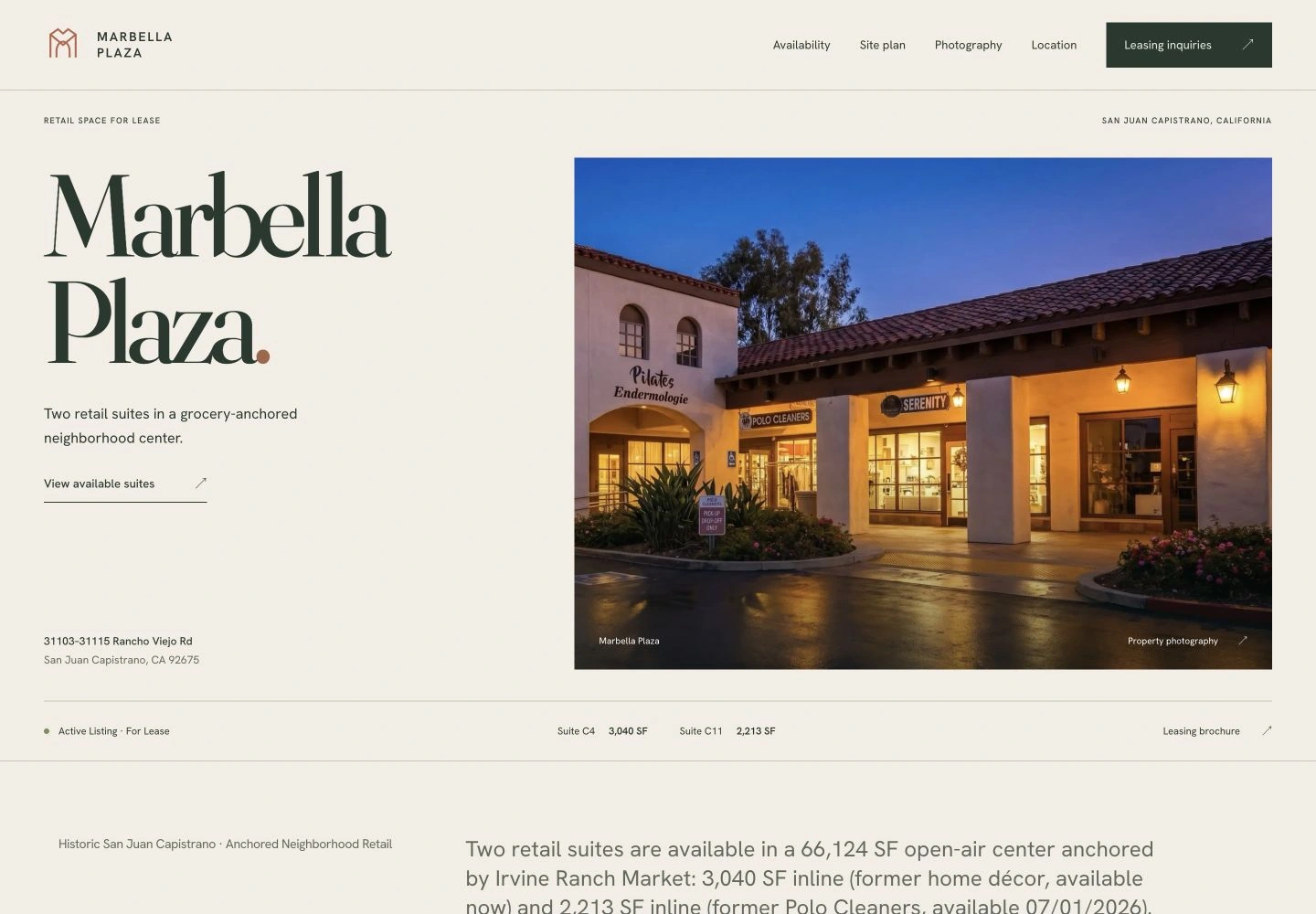
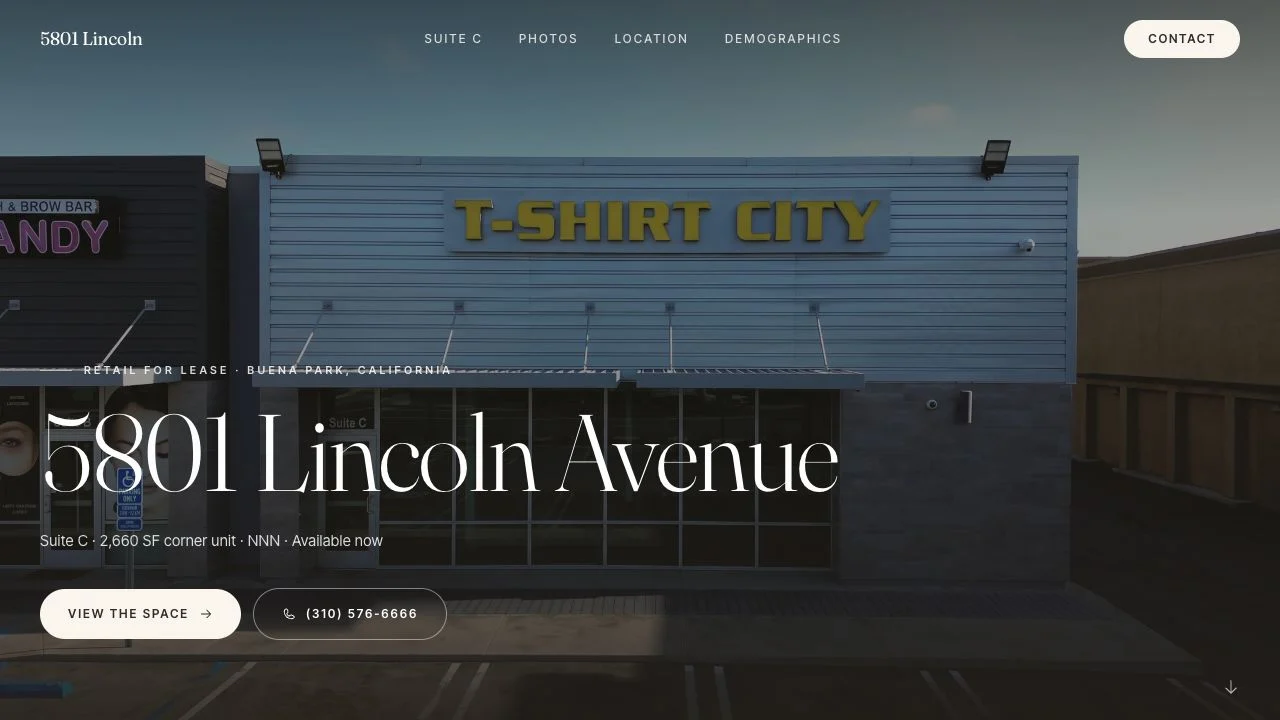
We build a website for one property: your photo gallery, property facts, plans, brochure download, and a broker inquiry form.
Included
- Your photo gallery, property facts, plans, and brochure download
- A broker inquiry form and a layout for desktop and mobile
- Many sites launch in about a week once the material is ready
“We own ten homes at Casa De Laguna and were still sending people to a site built in 2013. Noah pulled the photos and details out of the old site, designed a logo from the rooflines and the pond, and put the community, the homes and current availability in one place. It’s the first time the website has looked like the place we actually rent.”
A one-page property website using your approved content · Two revision rounds
We reply within an hour during business hours, and we only use your details to answer you.
Get a quote for a property websiteOr email Noah at hello@endcap.design
See the full service ↗Contact Endcap
LET’S
talk.
A website, a brand, or a complete set of materials.
We reply within an hour during business hours, and we only use your details to answer you.
Let’s talk or email Noah at hello@endcap.design