Property marketing
A commercial real estate marketing plan you can use.
For one property, the plan is a working list: the approved facts, the materials to make, where to publish them, who will answer inquiries, and when the information will be reviewed. Start there before choosing a campaign calendar.
1. Agree on the offer.
Write down the property, available space or sale interest, size, condition, asking terms or approved guidance, intended audience, and listing contact. Name the person who approves each fact. If an area, rent, or occupancy figure is still being checked, mark it as pending rather than repeating an unverified number across several channels.
For a brokerage, the same principle applies to the firm’s website: state the markets served, current listings, people, and services plainly. A property plan and a firm marketing plan have different owners and update cycles.
2. Build the materials around those facts.
A property website can hold current facts, plans, media, downloadable documents, and a direct inquiry route. A brochure gives someone a file they can forward or print. The portal listing and email should lead to the same approved offer. These are separate deliverables; choose the ones the assignment needs.
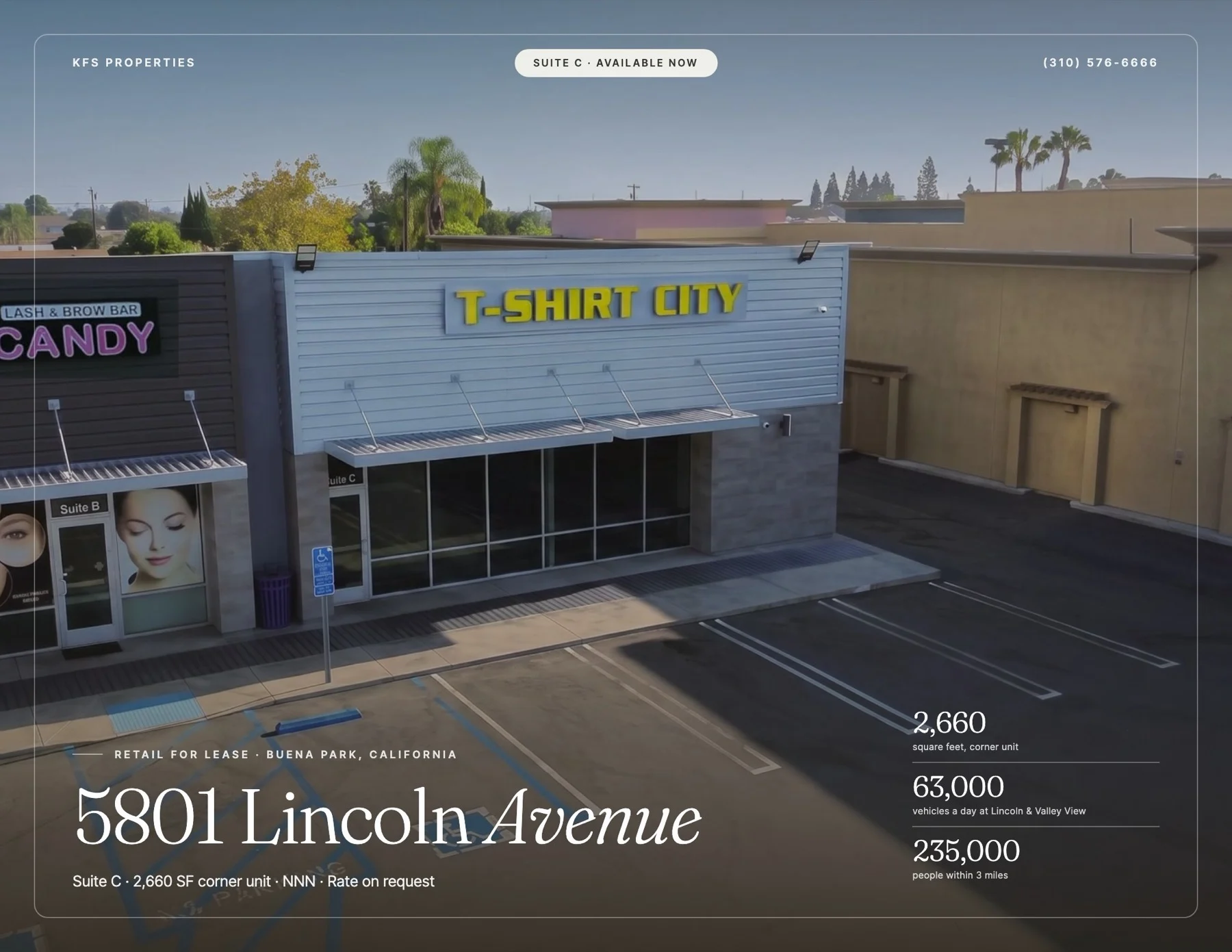
Property page
Keep approved availability, plans, photographs, and the inquiry path easy to find.
Brochure
Give each page a job. Keep the property facts and contact consistent with the website.
Distribution
Use the same current offer in portals, direct outreach, signs, and other chosen channels.
3. Choose channels for this assignment.
Start with the audiences the listing team can actually reach: brokerage contacts, appropriate listing portals, on-site signs, the owner’s or brokerage’s existing audience, and searchers looking for the property by name or address. Record who owns each channel and where responses go. An email campaign needs an approved contact list; a sign needs a short destination that works on a phone. There is no universal channel order or guaranteed return.
4. Use a review calendar.
- Before launch: collect the property files, confirm facts and rights to the media, agree on deliverables, and assign approval owners.
- At launch: publish the website or listing destination, check the inquiry route, distribute the approved brochure, and update selected portals and contacts.
- Each week: verify availability and terms, answer and route inquiries, fix broken links, and note which questions prospective tenants or buyers keep asking.
- When the offer changes: update the source information, then replace stale website text, portal fields, PDF, sign destination, and outreach copy as needed.
5. Measure the steps separately.
Search impressions tell you a page appeared in results. Site visits tell you it was opened. A form submission or direct call is an inquiry; a qualified conversation is a later step. Record the source when you can, but avoid crediting a lease or sale to a page view. Review the actual inquiries and the questions they reveal before adding more marketing channels.
Endcap can produce property websites, brochures and OMs, and related property media and branding. Our work shows the materials in context. We’ll review what you have and agree on the work, timing, and price before starting.
Work with Endcap Design
Listing marketing for a vacant space
We produce the photography, flyer, and website for a space, built around the material you already have.
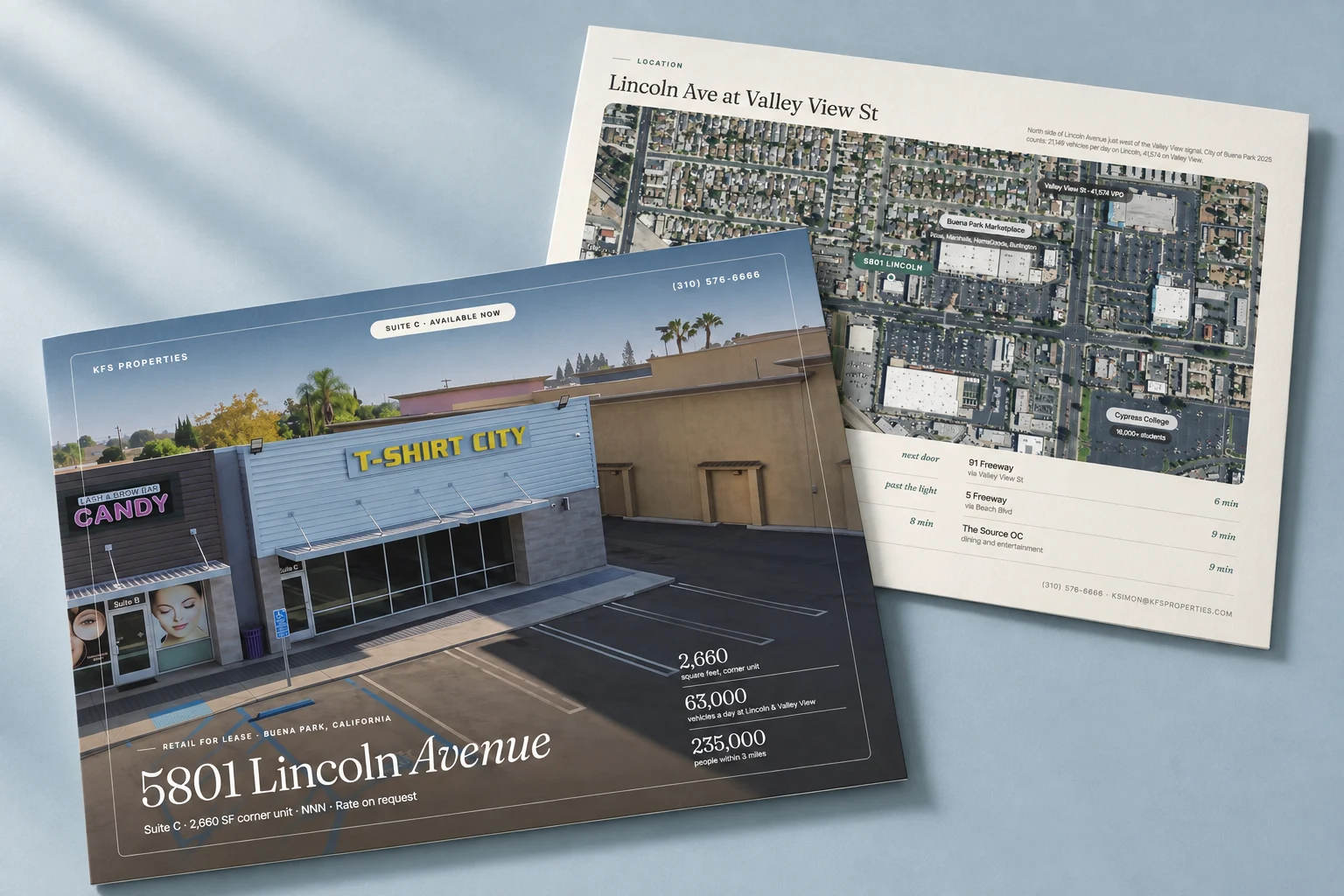
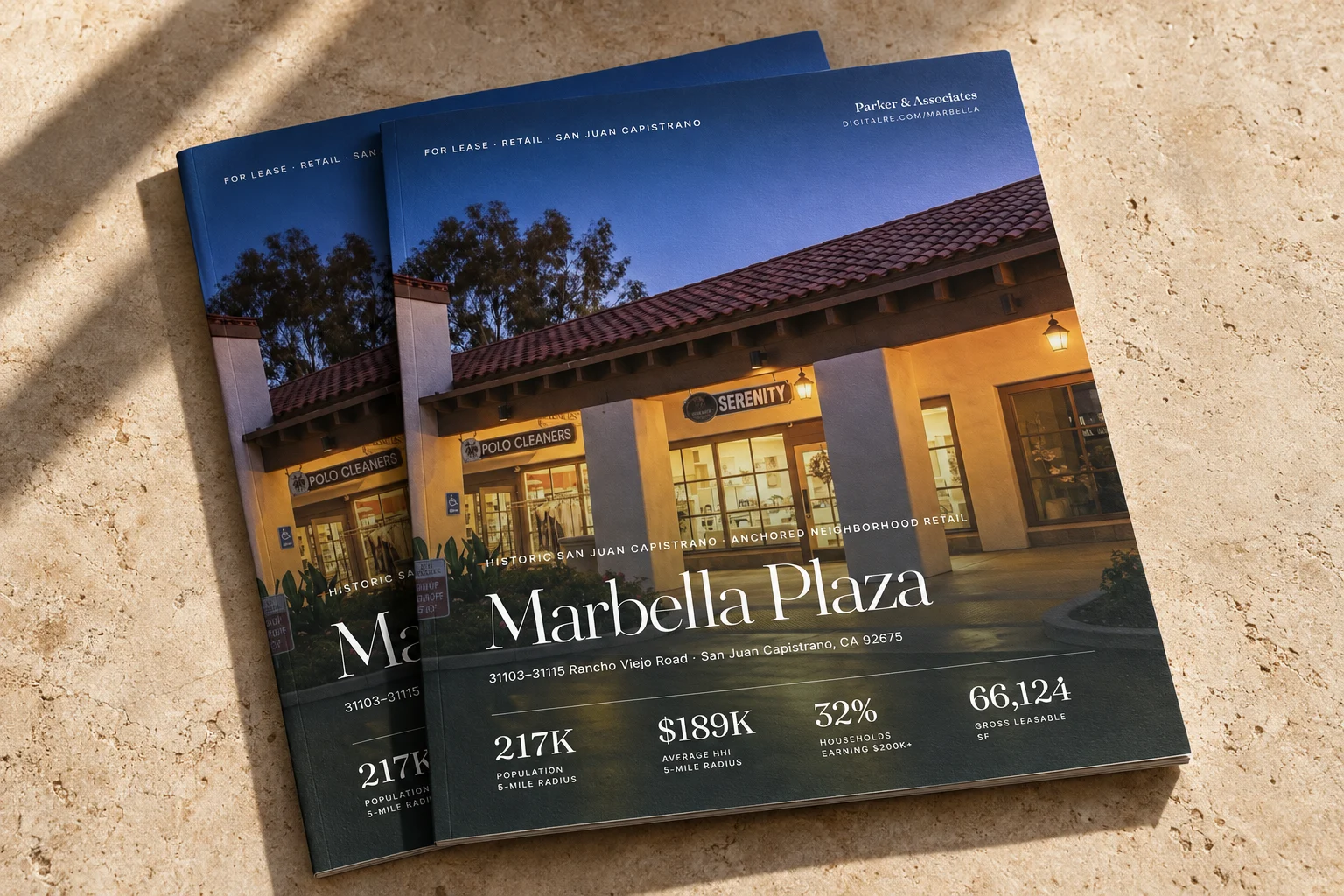
Included
- Photography of the space and the storefront
- A lease flyer or brochure with the suite size, plan, and leasing contact
- A property website when the listing needs one
“The Flyer is all that I need and it is outstanding.”
Photography, lease flyers, and property websites, quoted together or separately
We reply within an hour during business hours, and we only use your details to answer you.
Get a quote for your listingOr email Noah at hello@endcap.design
See the full service ↗Contact Endcap
LET’S
talk.
A website, a brand, or a complete set of materials.
We reply within an hour during business hours, and we only use your details to answer you.
Let’s talk or email Noah at hello@endcap.design