City of
Covington.
Speed hump community survey
Mailed flyer & survey website
September–October 2026
The project
SE 262nd Street,
Covington.
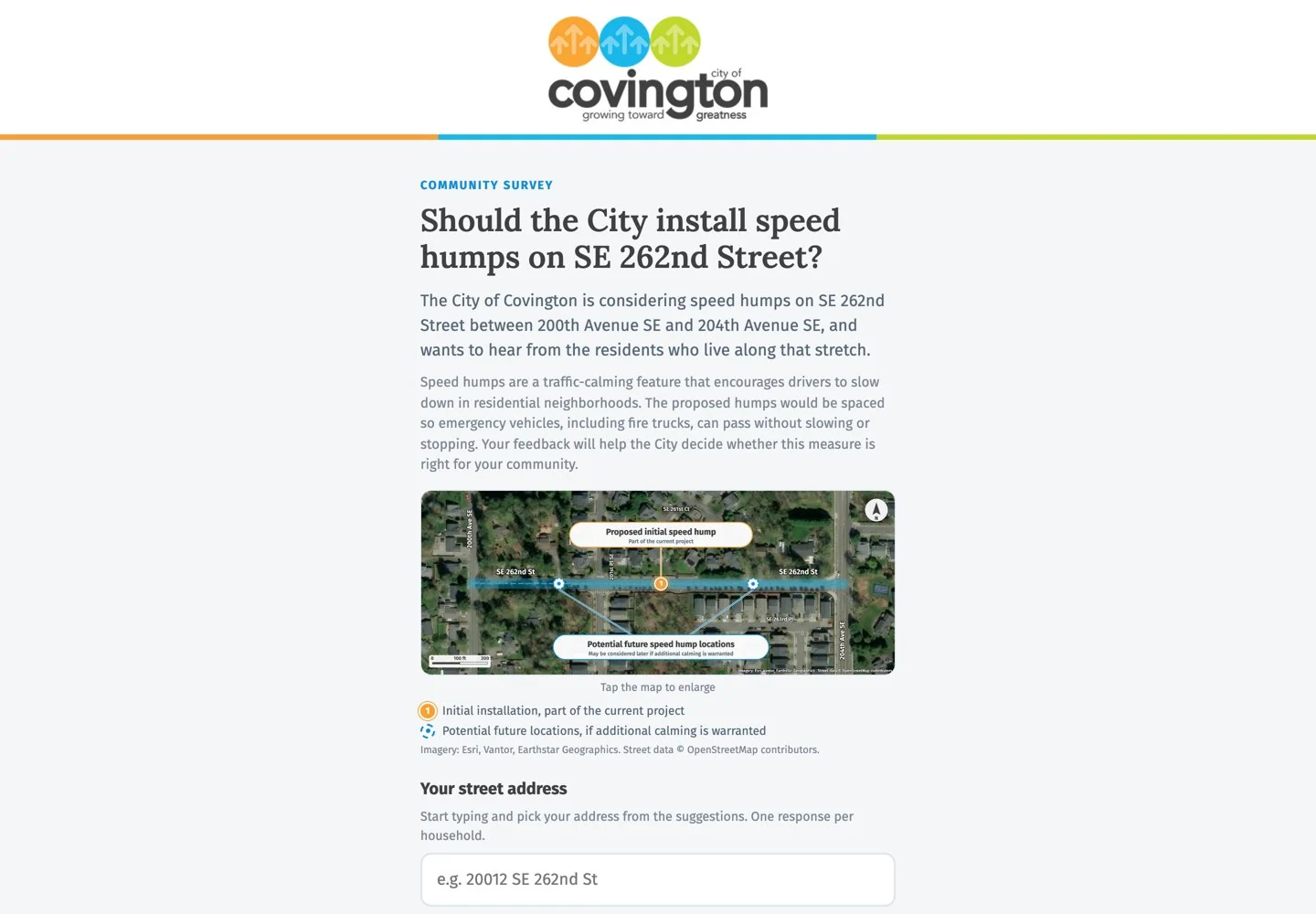
The City of Covington’s engineering team was considering speed humps on SE 262nd Street between 200th Avenue SE and 204th Avenue SE, and wanted to hear from the households along that block before deciding. We designed the flyer mailed to those households and built the survey website that its QR code opens. We did the work without a fee, for the City’s engineering team.
- Client
- City of Covington, Washington (engineering team)
- Dates
- September–October 2026
- Scope
- Mailed flyer, survey website & staff results page
- Fee
- None (unpaid project)
01 / The flyer
Mailed flyer.
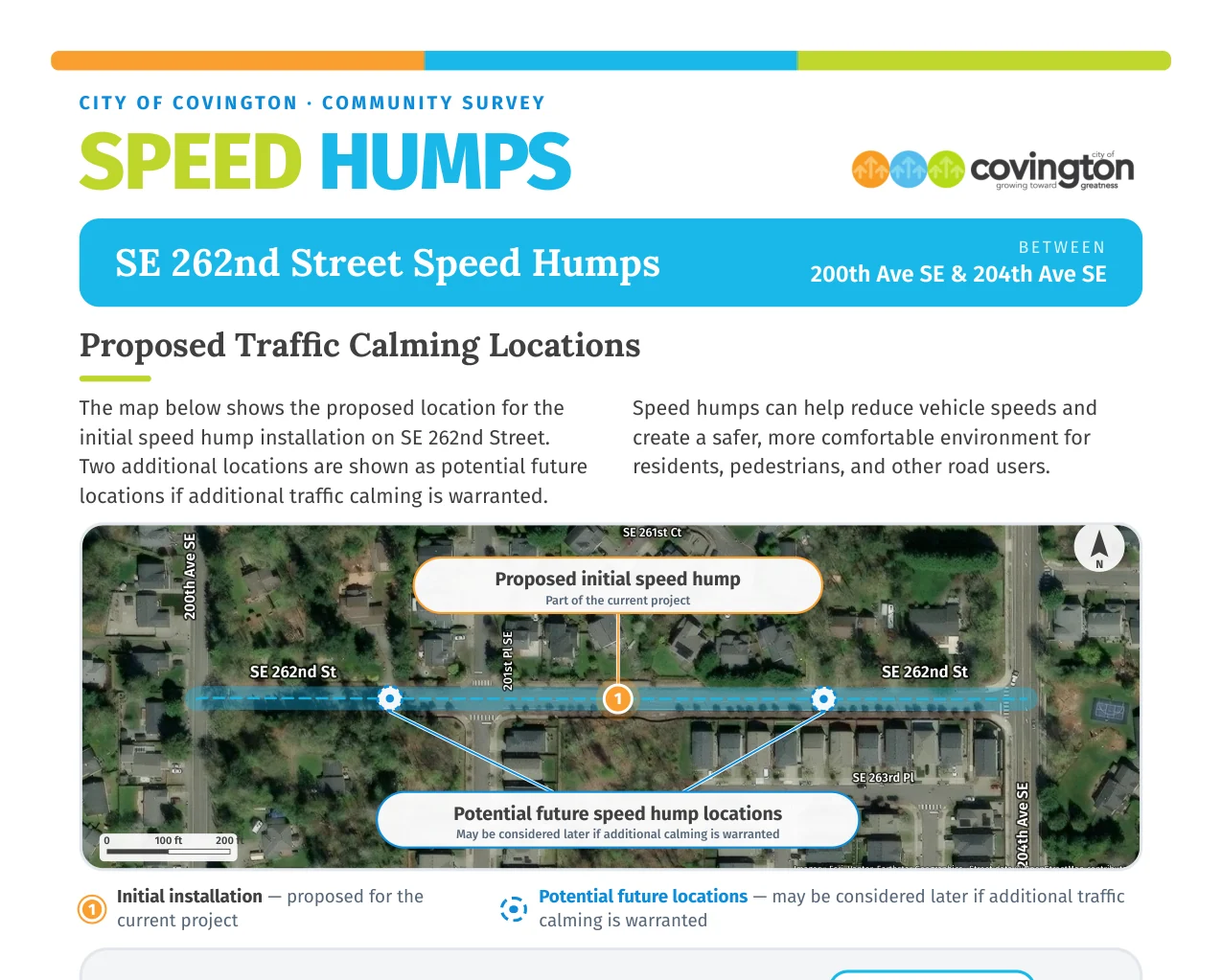
A letter-size flyer in the City’s colors for each household on the block. Its annotated aerial map shows where the first speed hump would go and two locations that could follow if more traffic calming is needed. Below the map, the flyer gives the response deadline and a QR code that opens the survey.
02 / The website
Survey website.
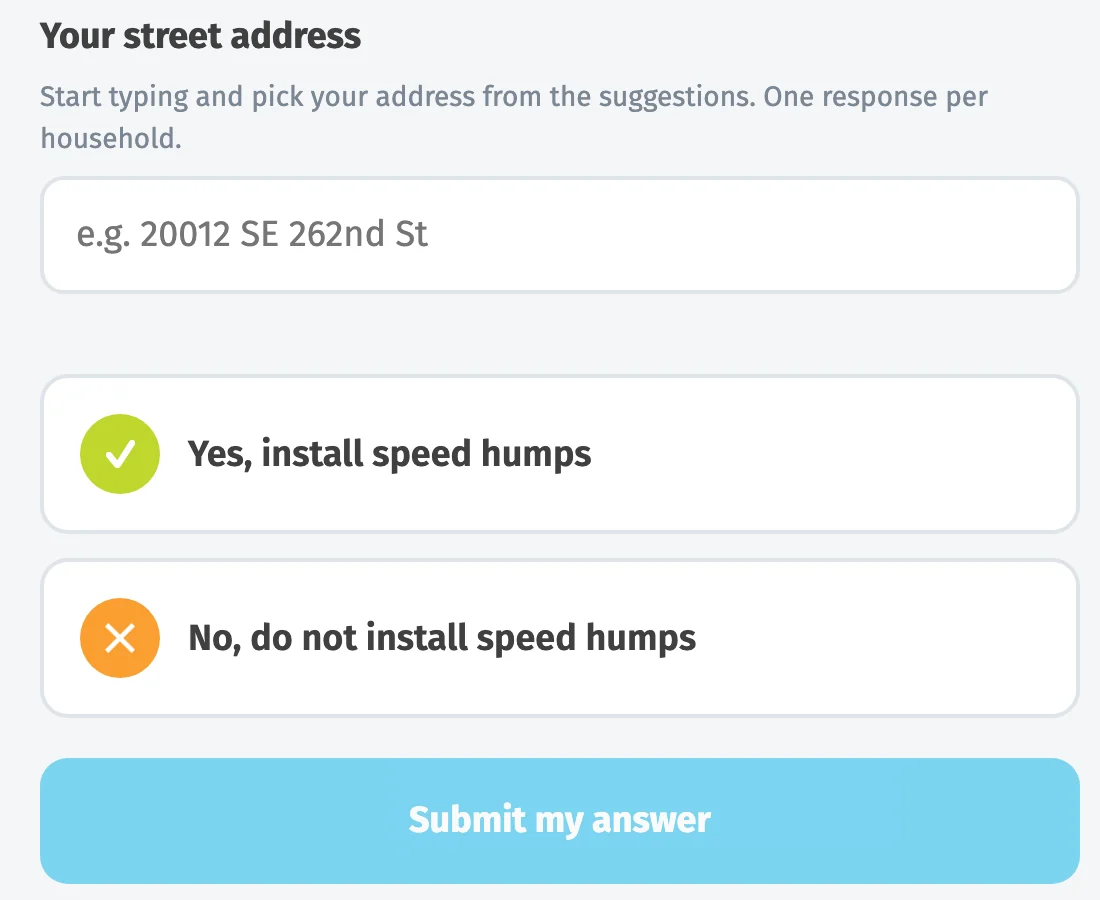
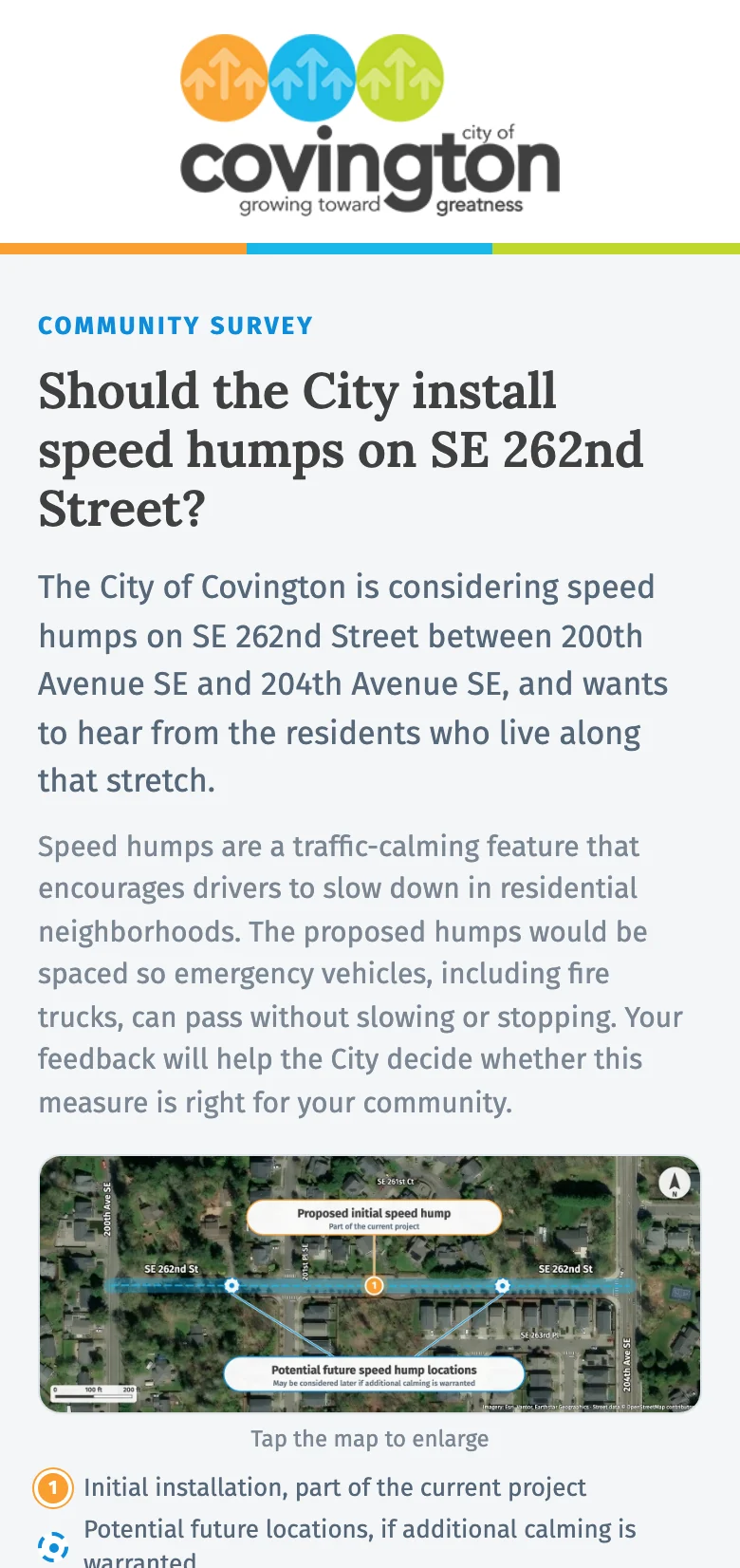
The page asks one neutrally worded question, with a short description of the proposal and the same map. Residents start typing their street address, pick it from the suggestions, and answer yes or no. The QR code opens the survey on a phone, so we designed the layout for a phone screen first.
03 / Behind the form
Responses and results.
The survey had to count each household once, give City staff results they could work with, and tell residents what it kept.
Websites for public agenciesOne per household
Address suggestions come from Google Places through the survey’s own server, so the API key never reaches the browser. The server accepts one response per address. An address typed without picking a suggestion is accepted when Google’s best match has the same house number, and is otherwise marked unverified for staff.
Results for staff
A password-protected results page groups the responses by distance from the block, separating households on the street from those nearby and farther away, and exports them to CSV.
What it stores
The page tells residents what is stored and why: the address, the answer, the time and the IP address, used to count each household once. It runs no analytics or advertising trackers.
Project context
This was unpaid work for the City’s engineering team, where our project manager works. The decision on the speed humps is the City’s.
Responses closed on October 9, 2026. The results belong to the City, and we do not publish them.
Next project