Services / Special districts

SPECIAL DISTRICT websites

Endcap is a web design studio in Laguna Hills. We fix and build websites for California special districts, joint powers agencies, and other small public agencies, with the current agenda one click from the homepage, the pages state law requires easy to find, and pages and documents designed and tested against WCAG 2.1 Level AA before the federal deadline.

548 days until April 26, 2028, when special district websites must meet the federal accessibility rule.

Meadow Creek Water DistrictPay a billBOARD MEETING · OCTOBER 21Current agenda (tagged PDF) and packetVIEW AGENDATRANSPARENCYCompensation report↗Financial transactions report↗Enterprise system catalog↗Budget and audits↗WCAG 2.1LEVEL AAChecked
Illustration of the kind of site we design for special districts. It is not a client project.

Two ways to work

TWO WAYS
to start

Most districts start with the first. Both begin with a short conversation and a written proposal that sets the scope, schedule, and price before any work starts.

01

Fix the site you have

For a site that serves staff and residents well enough but falls short on accessibility.

  • An accessibility check of the homepage and key pages, with axe-core and by hand with a keyboard and a screen reader
  • Fixes to the template and pages for what the check finds
  • The PDFs posted to the site checked for tags, a text layer, and a document language, and remediated where people still use them
  • An accessible template for agendas and packets, so each new one is ready to post
  • A monthly care plan that checks new pages and documents
02

A new site

For a site that is hard to update, out of date, or on a platform you want to leave.

  • Pages planned around what residents, member agencies, and the board look for
  • Templates designed and tested against WCAG 2.1 Level AA
  • The pages and documents you keep, moved, with old links redirected so they keep working
  • Training for staff, so agendas and notices go up without calling a developer
  • Hosting and a monthly care plan, or your current host if you prefer

What’s included

WHAT A DISTRICT SITE
includes

Every site is designed and built by Endcap, with the pages, forms, and integrations agreed in your proposal.

01

The current agenda, one click from home

The homepage links directly to the current agenda, posted in a searchable format at least 72 hours before each regular meeting, with the packet and past meetings a click away.

02

Transparency in one place

Compensation, financial transactions reports, the enterprise system catalog, budgets, and audits each have a page that is easy to find and easy to keep current.

03

Accessible documents

Agendas and packets are published as tagged PDFs or web pages, and older material moves to a clearly marked archive.

04

Board and meetings

Each director has a page with the division they represent, and the site carries a meeting calendar, minutes, and recordings with captions.

05

Services residents use

Pages explain how to start or stop service, pay a bill, report a problem, and read notices, and link to the billing and request systems you already use.

06

Contact and accessibility help

Contact details appear on every page, and an accessibility page tells people how to ask for help with anything they cannot use.

Details

California rules the site has to meet

General information to plan the site around. It is not legal advice; your counsel owns the final wording of any compliance language.

From our work

In October 2026 we scanned the homepages of 38 Orange County special districts and joint powers agencies for accessibility. The findings, the most common failures, and the steps that fix them are in our review.

Read the review
  • A website is requiredSince January 1, 2020, every independent special district must maintain a website that clearly lists its contact information, unless its board adopts a resolution each year with findings that a hardship prevents it (Government Code section 53087.8). Source
  • Agendas on the homepageFor meetings on or after January 1, 2019, an agency with a website must post the agenda on its homepage through a prominent, direct link that is not in a contextual menu, or through a direct homepage link to an agenda management platform that meets the statute’s conditions. The agenda must be in an open format that is searchable, downloadable, and machine readable (section 54954.2). Source
  • CompensationAn agency that reports compensation to the State Controller must post that information in a conspicuous location on its website, or link to the Controller’s Government Compensation in California site (section 53908). Source
  • Enterprise system catalogEvery local agency except a local educational agency (a school district, for example) must keep a catalog of its enterprise systems, update it every year, and post it in a prominent location on its website (sections 7922.710 and 7922.715). Source
  • Federal accessibility deadlineUnder the Justice Department’s ADA Title II rule, special district websites must meet WCAG 2.1 Level AA by April 26, 2028, after an April 2026 interim final rule extended the original date. Source

Method

HOW WE CHECK
a site

The same checks we ran on 38 Orange County agency homepages in October 2026, applied to your whole site rather than the homepage alone.

Read the review
  1. 01

    An automated scan

    Each page template is scanned with axe-core for the WCAG 2.0 and 2.1 Level A and AA rules, at desktop and phone widths.

  2. 02

    A check by hand

    Key pages are checked with a keyboard and a screen reader, because automated tools find only part of the problems, such as reading order, focus, and links that make sense out of context.

  3. 03

    The documents

    The PDFs linked from the site are checked for tags, a text layer, and a declared language, and listed with what each one needs.

  4. 04

    A written summary

    You get the findings in plain language, in the order that saves the most work, including the fixes your staff can make themselves.

38

agency homepages scanned

Orange County special districts and joint powers agencies, October 2026

84%

failed at least one automated check

32 of 38 homepages

10 of 11

homepages with an overlay still failed

with the overlay running

From our work

CITY OF
Covington

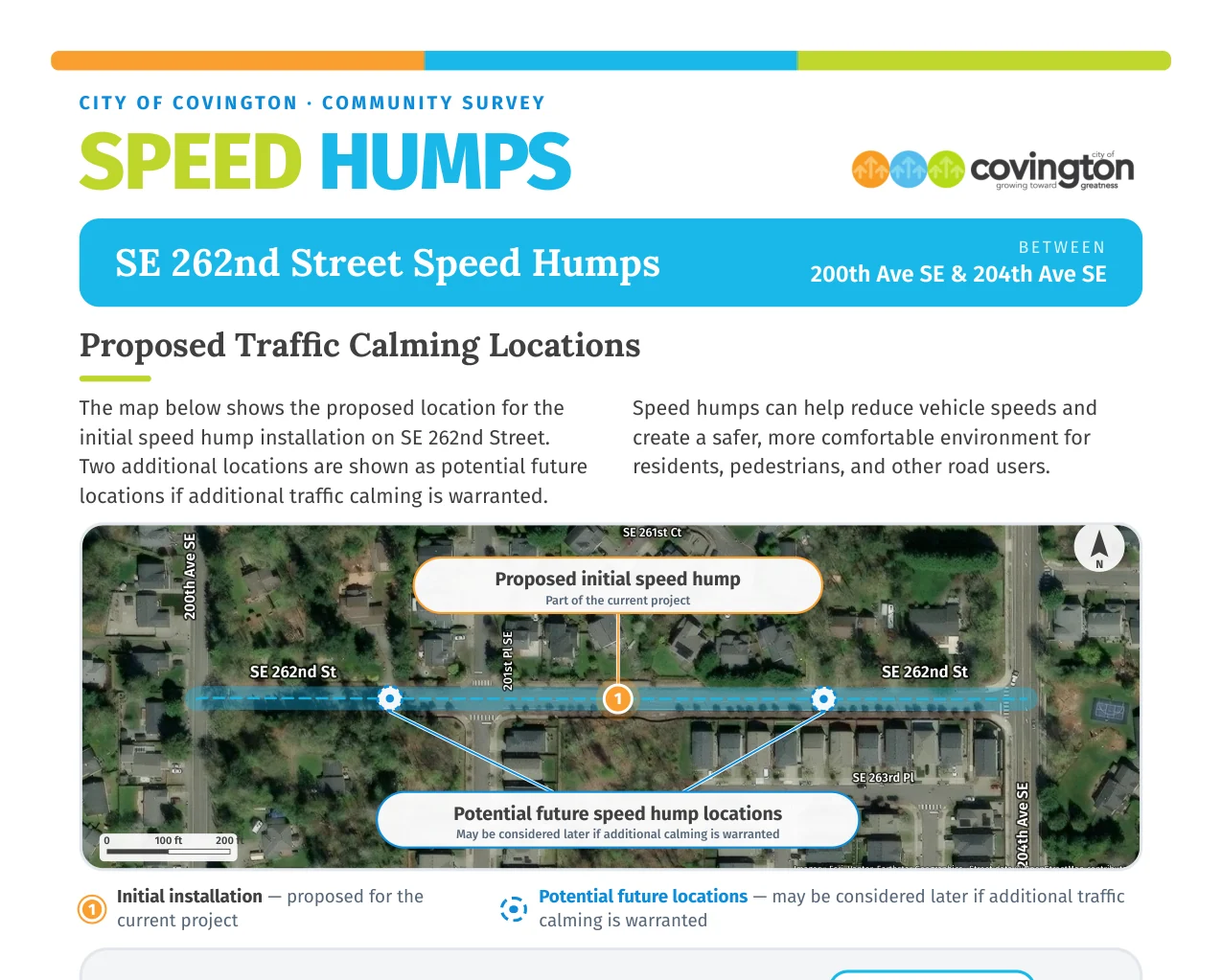
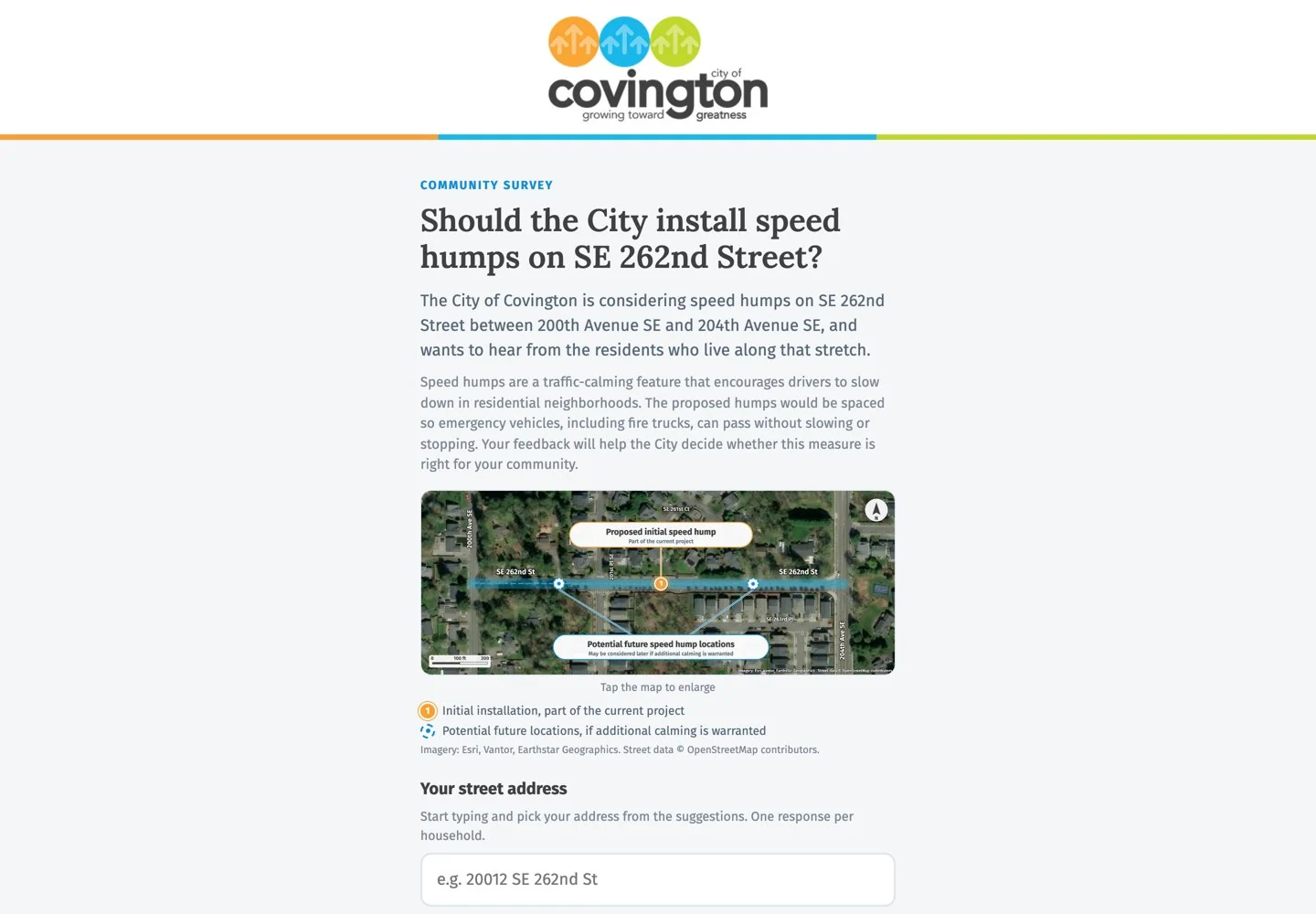
A mailed flyer and a survey website for the City of Covington, Washington, asking the households on one block of SE 262nd Street whether they wanted speed humps. Residents picked their address from suggestions, the site kept one response per household, and City staff had a password-protected results page.

We did the work without a fee, for the City’s engineering team, in September and October 2026.

Read the case study
The City of Covington speed hump survey at desktop width: the question, a short description of the proposal and the annotated aerial map
The top of the mailed flyer: the City of Covington logo, the title Speed Humps, and an annotated aerial map of SE 262nd Street

Purchasing

HOW AGENCIES
hire us

General information to plan around. It is not legal advice; your agency’s purchasing policy and counsel decide what applies.

  1. 01

    Small projects

    A fix-up project is often small enough for a general manager to approve within their purchasing authority, or through the agency’s informal quote process, without a formal RFP. Your purchasing policy sets the limits, and we work within them.

  2. 02

    Quotes in the form you need

    We provide a written quote, a proposal, or the forms an RFP or RFQ asks for, as a fixed fee or a not-to-exceed amount, with hours by phase when you ask for them.

  3. 03

    Registered on OpenGov

    Endcap is registered as a vendor on OpenGov Procurement, which many California agencies use to post bids and quote requests.

  4. 04

    Agreed in writing

    Scope, schedule, and price are agreed in writing before any work begins.

Process

HOW A PROJECT
runs

One person runs your project from the first call to launch, and you approve each stage before the next one starts.

  1. 01

    Talk it through

    A short call about the site, the documents you post, and what the board and staff need from it.

  2. 02

    Check and propose

    We check the site and send what we find, with a written proposal in the form your purchasing process asks for.

  3. 03

    Fix or build

    You review the work at each stage, and staff learn to post agendas and documents in the new templates.

  4. 04

    Care

    A monthly care plan keeps the software current and checks new pages and documents for accessibility.

FAQ

QUESTIONS,
answered

Anything else? Ask us directly or email Noah at hello@endcap.design.

Do we need a formal RFP to hire you?

Not always. Many agencies can approve a small project within the general manager’s purchasing authority or through an informal quote, and larger projects may need a formal solicitation. Your purchasing policy decides, and we can respond either way.

When does the ADA web rule apply to us?

Special district websites must meet WCAG 2.1 Level AA by April 26, 2028. Public entities serving 50,000 people or more have until April 26, 2027.

Can you fix our PDFs without rebuilding the site?

Yes. We check the PDFs posted to the site, remediate the ones people still use, and set up an accessible template so new agendas and packets are ready to post. Documents kept only for reference can move to a clearly marked archive.

Who looks after the site after launch?

Your staff post agendas, notices, and documents themselves. A monthly care plan covers software updates, backups, and accessibility checks of new pages and documents, and larger changes are quoted before we start.

Where is the site hosted?

On managed hosting in U.S. data centers, or on your agency’s current host if you prefer. Your agency owns the domain and the content.

How long does a project take?

A fix-up project is usually shorter than a new site. The proposal sets the schedule once we have seen the site, the documents, and your board calendar.

Can our staff post agendas and notices?

Yes. The pages staff update most, such as agendas, notices, and board pages, are set up so they can be posted without a developer, and documents go up in an accessible format.

Can you move us off our current platform?

Yes. We move the pages and documents you want to keep and set up redirects, so existing links to agendas, forms, and reports keep working.

What does a special district website cost?

Projects are quoted after a short conversation about the pages, documents, and systems involved. Scope, schedule, and price are agreed in writing before work begins.

Does an independent special district have to have a website?

Yes. Since January 1, 2020, Government Code section 53087.8 requires one, with contact information clearly listed. A board can exempt the district only by adopting a resolution each year with findings that a hardship prevents it.

Where does the agenda have to appear?

On the homepage, through a prominent, direct link to the current agenda that is not in a contextual menu such as a drop-down, unless the district links from its homepage to an agenda management platform that meets the conditions in section 54954.2. The agenda must be posted in a searchable, downloadable format.

Contact Endcap

LET’S
talk

A website, a brand, or a complete set of materials.
We reply within an hour during business hours, and we only use your details to answer you.

Let’s talk or email Noah at hello@endcap.design

Let’s talk Email